


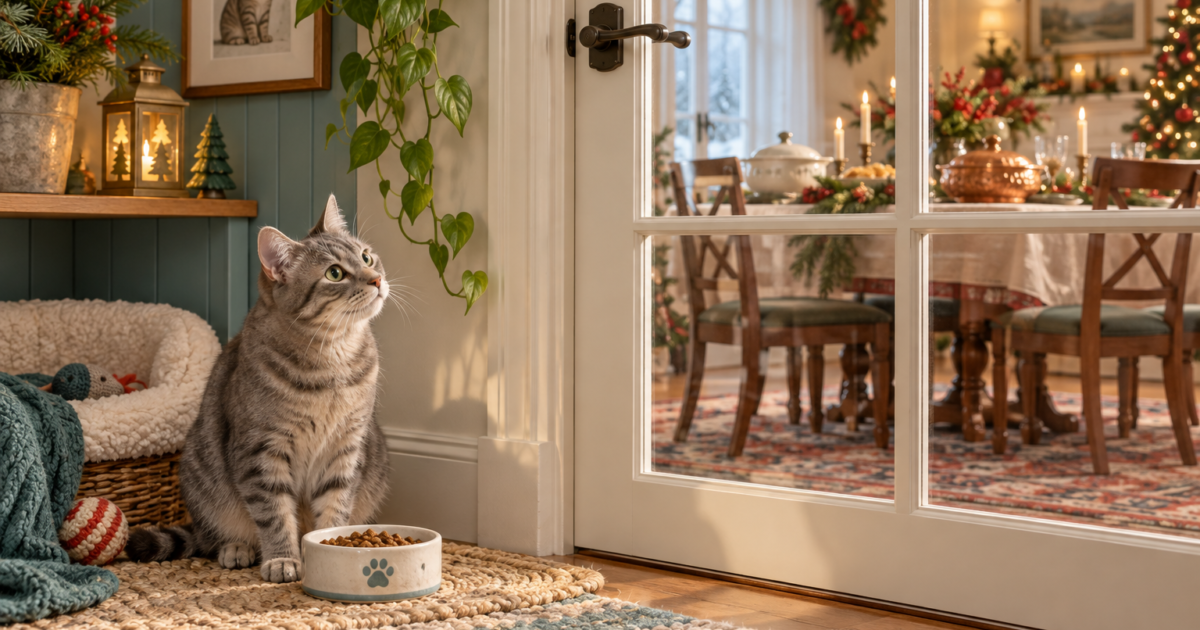
Keep holiday plates out of your cat’s reach and serve its usual food. Mixed dishes can hide unsuitable ingredients. If you suspect your cat ate something harmful, contact your veterinarian promptly with the ingredient list, approximate amount and time; do not wait for symptoms.
On this page
Which holiday foods should stay off the menu?
| Food or ingredient | Where to check | Why it matters |
|---|---|---|
| Onion, garlic and chives | Stuffing, gravy, sauces, seasoned meat | Alliums can damage red blood cells; cats are particularly susceptible. |
| Chocolate, cocoa and caffeine | Desserts, baking supplies, coffee, drinks | Can cause serious poisoning; concentration and amount affect risk. |
| Alcohol | Cocktails, drinks and alcohol-containing foods | Rapid absorption makes prompt veterinary advice important. |
| Raw yeast dough | Unbaked bread or pizza dough | Can expand in the digestive tract and produce alcohol. |
| Bones and raw meat or eggs | Carcasses, scraps and food preparation waste | Bones can injure or obstruct; raw foods can carry harmful bacteria. |
| Milk and rich dairy dishes | Cream, milk-based desserts | May cause digestive upset. |
Food hazards above are summarized from the ASPCA’s food safety guidance. This is a screening checklist, not an exhaustive list or a way to calculate a safe dose.
A kitchen plan for hosts and guests
- Before cooking: choose a place for the cat’s normal meal away from food preparation. Put a lid on the food-waste bin and clear a cupboard for leftovers.
- As dishes arrive: ask guests to keep packaging or a recipe available. A dish name alone may not identify its ingredients.
- Before serving: use one simple rule: guests do not feed the cat from their plates. Put a small labeled container of its usual approved treats with one responsible adult if treats are part of its routine.
- While eating: clear unattended plates and drinks. A counter or high shelf is not automatically inaccessible to a cat.
- During cleanup: account for bones, skewers, wrapping and food bags as well as the food itself. Store them securely before leaving the kitchen.
The FDA also warns about food bags and other household ingestion hazards.
What to do if your cat eats a questionable food
Move the food away and call your vet. In the United States, ASPCA Poison Control is available at 888-426-4435. Outside the US, use your local veterinary emergency service.
Have this information ready: your cat’s weight, health conditions, the product or recipe, how much may be missing, when it happened and any changes you noticed. Keep the wrapper or take a photo for the veterinary team. Follow their instructions about the next step.
Can cats eat turkey and gravy at Christmas?
A small piece of plain cooked turkey is a different choice from turkey covered in gravy, seasoning or fat. Cats Protection advises against human gravy and recommends removing skin and bones if offering turkey. A familiar complete cat food with a turkey flavor is another way to keep the meal routine recognizable. See Cats Protection’s Christmas dinner guidance.
“Plain” describes how the meat was prepared, not just how it looks on the plate. Ask whether it was cooked with seasoning, served in sauce or placed on a plate with stuffing. If the recipe is unclear, skip the sample and serve the cat’s usual meal. Cats with prescribed diets should follow their own veterinary feeding plan.
Which Christmas dinner dishes need an ingredient check?
Use the ingredient table earlier in this article together with the dish-level checklist below. The purpose is to help a host find hidden ingredients, not to classify every recipe as equally toxic.
| Dish | Question to ask | Hosting decision |
|---|---|---|
| Roast turkey or chicken | Was it seasoned, and are skin or bones present? | Keep the plated meal away from the cat; do not offer an unknown preparation. |
| Gravy, stuffing or sauce | Does the recipe contain onion, garlic or other unsuitable ingredients? | Do not let guests share a spoonful from their plate. |
| Dessert or hot drink | Are chocolate, cocoa, coffee or alcohol involved? | Clear cups and plates instead of leaving them unattended. |
| Bread preparation | Is yeast dough still raw? | Keep the preparation and proofing area inaccessible. |
| A gifted food hamper | Can the cat reach the contents through the wrapping? | Store it in a closed cupboard rather than under the tree. |
My cat ate stuffing with onion: what information does the vet need?
Contact your veterinarian promptly and describe the exposure rather than guessing a safe portion. The useful details are what the dish contained, the maximum amount the cat might have eaten, when it happened and the cat’s approximate weight. “A little Christmas dinner” is less informative than a recipe, package photograph and estimate of what is missing.
Keep the remaining food away from other animals while someone makes the call. If guests brought the dish, ask them for the recipe or ingredient label. Mention whether the cat may also have swallowed wrapping or another non-food item. Let the veterinary team decide what those details mean for your cat.
Safe Christmas treats for cats: keep the choice simple
A celebration does not require a new menu. You can present the cat’s normal meal in its familiar place, or use an approved portion of its usual food during a supervised game. A special bowl arrangement or a quiet play session can involve the cat without inviting everyone to offer table scraps.
If treats are already part of the feeding plan, put that day’s agreed amount in one labeled container. Explain to visitors that the container is the household total, not a portion for each person. This makes it easier to avoid several guests independently giving “just one more.”
Is every unsuitable holiday food poisonous?
No. The concerns differ: an ingredient may be toxic, a dish may cause digestive upset, or a bone or wrapper may cause a physical injury. That distinction is why the actual ingredient and exposure matter more than a generic list of holiday foods.
Common holiday food questions
Can my cat have turkey from the holiday plate?
A mixed plate may include seasoning, gravy or bones even when the meat looks plain. The easiest hosting rule is to keep the cat on its normal menu, especially with a prescribed diet.
What about grapes, raisins or sugar-free sweets?
Do not use them as cat treats. Some widely circulated toxicity claims are based on dogs and should not be copied into a cat-specific diagnosis. If your cat gets into one of these foods, give the actual product details to your vet rather than assuming either safety or a particular outcome.
Does a cat that looks normal still need advice?
Yes, seek advice about a suspected harmful exposure even if there are no obvious signs. The veterinary team can assess the ingredient, timing and amount.
Explore the holiday cat care planner
Research-based guidance. Sources checked September 9, 2026. How MeowBay researches its guides.

2 Comments on “Holiday Foods Cats Should Avoid: A Kitchen Safety Checklist”