


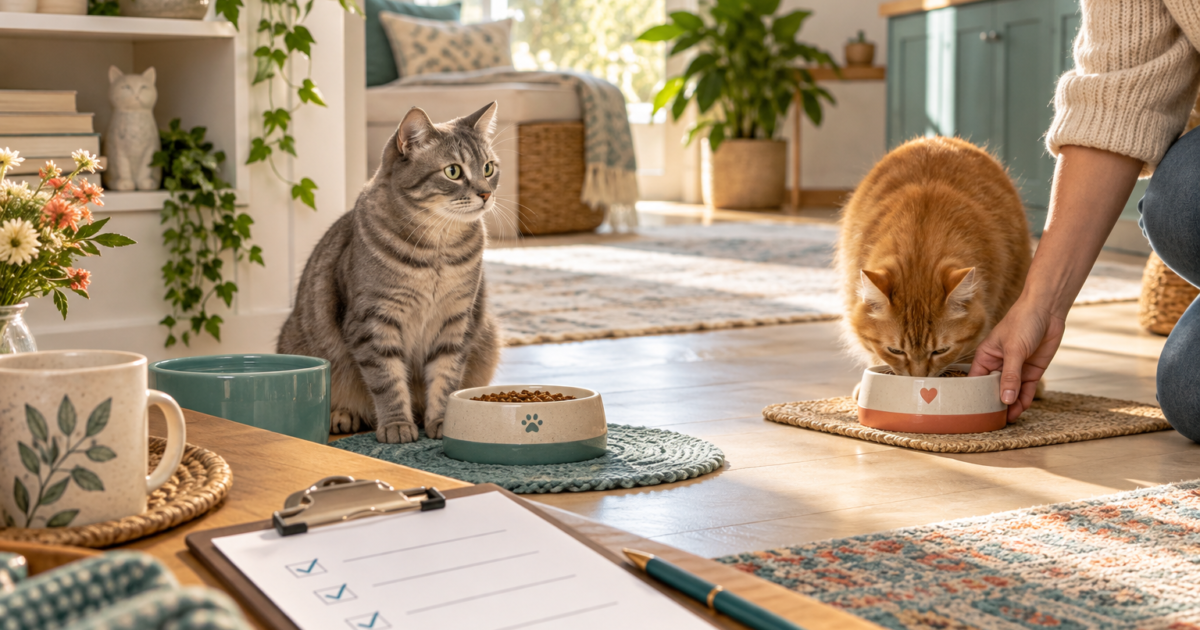
A useful cat sitter checklist explains who to check, what to feed, when to visit and how to get help. Make a separate routine for each cat, demonstrate it in person and leave one current copy beside the supplies. Arrange human visits even if you use an automatic feeder or camera.
On this page
How often should a cat sitter visit?
Cats Protection recommends at least two visits daily; kittens, older cats and cats with health needs may need more. Agree the schedule around your cat’s normal care and your veterinarian’s instructions. Familiar surroundings can make staying home a good option for many cats. Read Cats Protection’s holiday care advice.
Copy this handover before you leave
Fill in the fields below for your own household. Keep private access details in the sitter’s copy, rather than a public document.
| Information | What to write |
|---|---|
| Dates and visits | Departure, return, each agreed visit window and the backup sitter. |
| Each cat | Name, recent photo, identifying marks, usual hiding places and handling preferences. |
| Meals | Exact food, amount and unit, time, bowl location and which cat eats there. Label the measuring tool. |
| Medication | Veterinarian’s written directions, storage and administration demonstration; whom to call if a dose is missed or refused. |
| Water and litter | Locations, cleaning routine, spare supplies and waste disposal. |
| Home access | Tested key, alarm instructions, doors that must stay closed and a trusted local contact. |
| Emergency plan | Your numbers, regular vet, out-of-hours clinic, carrier location, transport and agreed treatment/payment arrangements. |
A repeatable checklist for every visit
- Locate each cat. Record who was seen and any unusual behavior; do not assume a full bowl means the cat is well.
- Check the previous meal. Note leftovers before serving the labeled portion. In a multi-cat home, watch that the intended cat can reach its food.
- Refresh and check supplies. Follow the water, bowl and litter instructions; note changes for the owner.
- Offer familiar interaction. Let a shy cat choose whether to approach. Use only the toys the owner has approved for that visit.
- Secure the home. Count cats before closing an internal door; check windows, outside doors and the agreed alarm setting.
- Send one clear update. Include visit time, each cat seen, food observations, tasks completed and anything needing a reply.
Automatic feeder backup plan
Write down the manual feeding method, power supply and refill instructions. Demonstrate what the normal display and portion look like. If a feeder stops working, the sitter needs a usable alternative, not only an app login. A camera view or dispensing notification cannot replace seeing the cat and checking the room.
For households separating dry diets, our PETLIBRO One RFID research review explains the collar-tag limits and ownership trade-offs. Introduce any new equipment while you are home.
Cat sitting instructions template for a multi-cat home
For multiple cats, write one feeding record per cat rather than one household total. Two empty bowls cannot tell the sitter which cat ate. Identify the cat, food, portion, location and observation separately. This is especially useful when a fast eater shares a home with a slower grazer.
Use names on the food containers and bowls, and attach a clear photo to the handover. If two cats look alike, point out a distinguishing mark during the visit. Avoid relying only on “the black cat” or “the friendly one,” because behavior around a new person can differ.
| Cat and identifying detail | Meal instructions | What the sitter records |
|---|---|---|
| Name: ____ Photo/mark: ____ | Food: ____ Amount and unit: ____ Time/location: ____ | Seen: ____ Food offered/left: ____ Concern or message: ____ |
| Name: ____ Photo/mark: ____ | Food: ____ Amount and unit: ____ Time/location: ____ | Seen: ____ Food offered/left: ____ Concern or message: ____ |
Can an automatic cat feeder replace a sitter on vacation?
No. A feeder can support meal timing; it cannot confirm that every cat is well, clean a litter tray or respond to an emergency. Keep the human visit plan and make the equipment instructions one part of the handover.
Before leaving, ask the sitter to complete a normal meal while you watch. Show the difference between a scheduled portion, a manual portion and a refill. Write down which action to take if the device is offline so the sitter does not repeatedly dispense food while trying to reconnect it.
- For a collar-tag feeder: demonstrate which cat and tag belong to the station, and leave the manual alternative accessible.
- For an app-controlled feeder: use its official sharing feature where available and explain what the sitter actually needs to do.
- For any feeder: label the approved food and portion tool. Do not start an unfamiliar device on departure day.
What should you tell a cat sitter before the first visit?
Walk through the visit in the order it will happen: entering, finding the cats, preparing food, refreshing supplies, interacting and leaving. Test the key in the actual door. Show the carrier instead of saying “it is in the cupboard,” and point out which cupboard contains supplies rather than household chemicals.
Separate urgent instructions from household preferences. Put the veterinary contacts and backup person at the top of the handover; keep details such as plant watering below the cat-care tasks. The sitter should be able to find the next action without searching a long message thread.
A cat sitter daily visit log you can copy
Visit date/time: ____ · Cats seen: ____ · Meals offered: ____ · Leftovers noticed: ____ · Water/litter tasks: ____ · Medication record per written directions: ____ · Owner contacted: ____ · Doors secured: ____.
Agree how updates will arrive and when the sitter should call instead of sending a routine message. For example, if the sitter cannot find a cat or cannot enter the home, the plan needs an immediate contact path. Do not leave that decision dependent on whether you happen to check your phone.
What if the return journey is delayed?
Write down who can cover an extra visit and how they obtain supplies and access. Confirm you are home before ending the care arrangement. A return date in a calendar is not confirmation that someone has actually taken over the cat’s care.
Questions to settle during the walkthrough
What if the cat hides?
Show the sitter the usual safe hiding places and agree a way to confirm the cat is present without chasing it. Decide in advance who to contact if the sitter cannot locate the cat.
What if I cannot be reached?
Leave a second decision-maker and discuss emergency arrangements with the clinic beforehand. The sitter should not have to invent your wishes during an urgent situation.
Should the sitter change food or medication?
Leave a clear rule to follow your written plan and contact the veterinarian about medical questions. Avoid last-minute experiments during an absence.
Equipment to consider for this routine
Choose by fit and household needs. These are research-based options, not hands-on test winners.
MeowBay may earn a commission from the paid links below, at no extra cost to you.
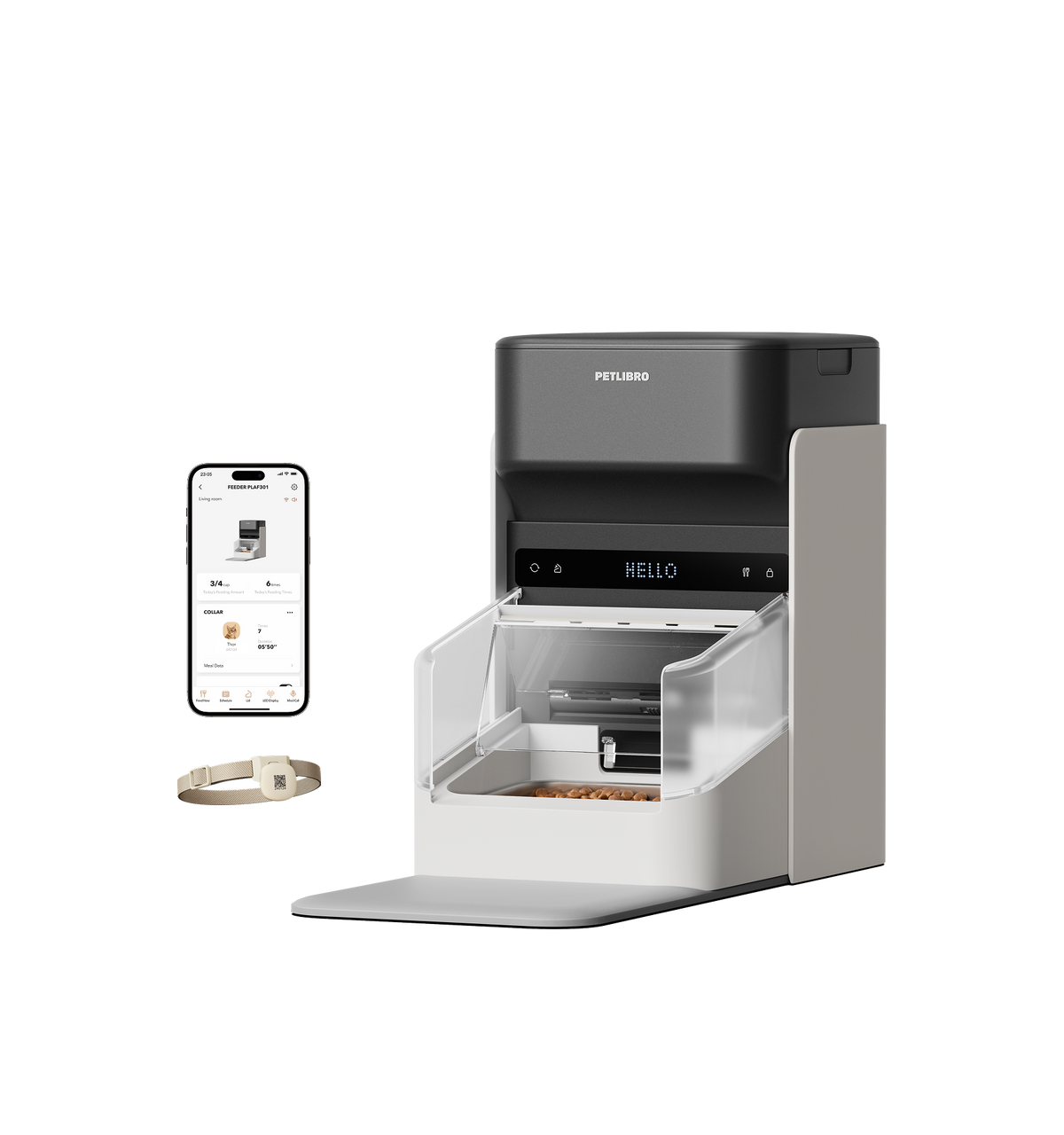
PETLIBRO One RFID Smart Feeder
For a dry-food routine where one cat needs a protected feeding station.
Before you choose: Uses its dedicated collar tag, not an implanted microchip. One paired tag per feeder; introduce it while you are home and retain human care and a manual feeding backup.
Check options at PETLIBROPaid link · Opens retailer website
Product details checked September 9, 2026. Retailer prices, sellers, availability and delivery terms can change; check the current listing.
Explore the holiday cat care planner
Research-based guidance. Sources checked September 9, 2026. How MeowBay researches its guides.

4 Comments on “Cat Sitter Checklist: Feeding, Visits and Emergency Notes”