


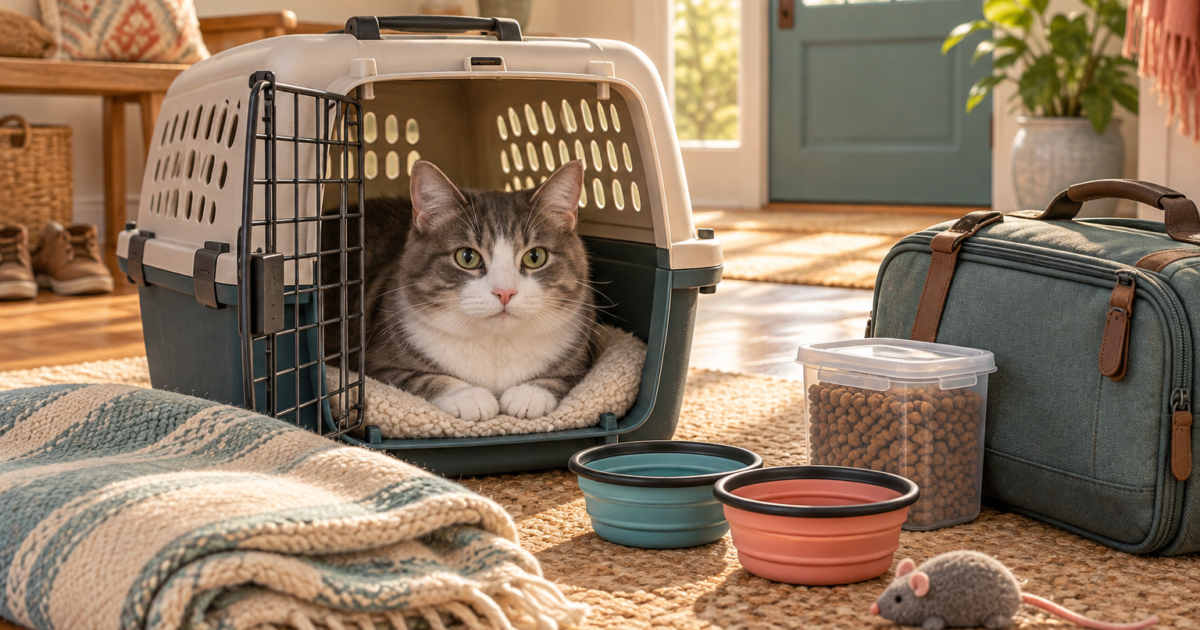
For an optional holiday, first compare travel with care at home. If travel is necessary, plan around a secure carrier, your cat’s existing care needs and a safe room at the destination. Confirm transport and accommodation requirements before booking.
On this page
Should you take your cat or arrange a sitter?
Cats Protection notes that most cats find travel stressful and recommends limiting trips to those that are necessary. If your cat becomes very distressed, discuss options with your vet. Read its travel guidance.
| Plan | What must be workable? |
|---|---|
| Care at home | A reliable sitter, an agreed visit schedule, access and emergency backup. |
| Travel with you | Carrier preparation, transport arrangements, necessary records and a secure destination. |
| Medical needs | A veterinarian-approved care plan whichever option you choose. |
Prepare the carrier before departure day
Choose a sturdy, ventilated carrier with room for your cat to stand and turn. Leave it open in a familiar room with familiar bedding so your cat can explore it ahead of time. Introduce car travel gradually when practical. Keep the cat contained while driving and secure the carrier appropriately; never let the cat roam inside a moving vehicle. Cats Protection’s carrier guide explains selection and handling.
Pack by access order
Separate the things needed during a delay from supplies that can stay with your luggage. This example packing list helps avoid unloading the whole car to find one item.
- Within reach: veterinary contacts, prescribed medication and instructions, carrier supplies, spare absorbent liner, cleanup materials and waste bags.
- For planned stops: familiar food and water, bowls, litter tray and familiar litter.
- For arrival: bedding, the usual food, toys, cleaning supplies and enough medication for the agreed plan.
- For identification: current cat photo and the contact details associated with its identification.
- For the booking: written pet acceptance, relevant carrier requirements and any required health documents.
Use a stop and arrival checklist
- Plan your route and care checks in advance. Do not leave the cat unattended in a parked car.
- Keep doors and windows secure when handling the carrier. Do not open it in an exposed parking area.
- On arrival, prepare a closed, checked room before opening the carrier. Check escape routes and inaccessible hiding gaps.
- Set out the familiar supplies and agree a door rule with everyone sharing the accommodation.
- Allow the cat to emerge at its own pace; keep the routine as recognizable as possible.
Traveling with a cat long distance by car: plan around care stops
Build the route around secure handling and your cat’s care needs, not just the fastest driving time. Know where supplies are stored, who supervises the cat during a stop and what you will do if the journey takes longer than expected. The plan should still work when the weather changes or a booked room is unavailable.
UC Davis recommends checking that the carrier is functional and labeled, and packing extra food, water, medication and other supplies for delays. Its travel handout also emphasizes preventing escape when a cat is out of the carrier. Read UC Davis’s Traveling with Cats handout.
How to choose the right cat carrier size
A carrier needs to accommodate your cat comfortably as well as fit the transport arrangement. Compare your cat’s measurements with the usable interior dimensions, and check the manufacturer’s weight limit. A product’s external length or a photograph of a similar cat does not establish a fit.
| Check | Why it changes the decision |
|---|---|
| Usable interior | Allow room for the cat to stand, turn and rest; account for the bedding you will use. |
| Door arrangement | Front and top access may suit different handling routines. Test latches before the trip. |
| Cleaning access | Make sure a soiled liner can be replaced without improvising in an exposed area. |
| Car placement | Check how the carrier is secured according to its instructions. |
| Transport acceptance | An airline or operator may have separate requirements; a general product claim is not route-specific approval. |
A cat road trip checklist organized by timing
Before the travel day
Confirm the destination accepts cats and identify a suitable arrival room. Inspect the carrier, review medications and feeding with the vet where needed, and check identification details. Put essential supplies in a bag that can be reached without unloading every suitcase.
Before starting the vehicle
Check the carrier closure, ventilation and placement. Account for each cat individually. Give passengers a simple rule about opening the carrier, and make sure no bag or coat will fall against it during the drive.
At a planned stop
Check the cat and the condition of the carrier. Keep escape prevention central to any water, food or litter arrangement. If handling the cat is necessary, establish a secure enclosed situation first and keep everyone informed about doors and windows. Do not open the carrier beside traffic or in an open parking lot.
How do you manage a cat litter box on a road trip?
Bring the cat’s familiar litter, a usable tray, a spare liner and disposal supplies. Decide where and how the tray can be offered securely before setting off. The existence of a tray in the luggage does not solve the practical problem of using it during a stop.
There is no useful promise that every cat will wait a fixed number of hours. Plan checks and ask your vet about individual needs, especially with a health condition. Avoid interpreting a stressful journey as a reason to ignore a concern about urination or distress.
Traveling with two cats: make two identifiable care plans
Label supplies and records for each cat, and do not assume one cat’s tolerance of travel predicts the other’s. Check carrier capacity and the suitability of each transport arrangement. At the destination, keep track of where both cats are before anyone opens an external door.
Is a road trip the right holiday choice for every cat?
No. When the trip is optional, compare it with a reliable sitter who can maintain the familiar home routine. Our cat sitter checklist and feeding handover helps you assess that alternative.
Travel questions that need an individual answer
Can I give my cat something to make it sleep?
Ask your veterinarian. Do not choose a human medicine, another animal’s prescription or a dose from an online comment. The FDA warns that medicines intended for people or other pets can be harmful.
Should I change feeding times before the trip?
Ask the vet how to handle food and medication for your cat, particularly with illness, a prescribed diet or motion sickness. There is no single fasting plan suitable for every cat.
Does this guide cover airline and border rules?
No. Those depend on the route, carrier and destination. Check the transport operator and the destination’s official animal-entry guidance before paying for travel; allow time for any documents or veterinary appointments.
Equipment to consider for this routine
Choose by fit and household needs. These are research-based options, not hands-on test winners.
MeowBay may earn a commission from the paid links below, at no extra cost to you. As an Amazon Associate, MeowBay earns from qualifying purchases.
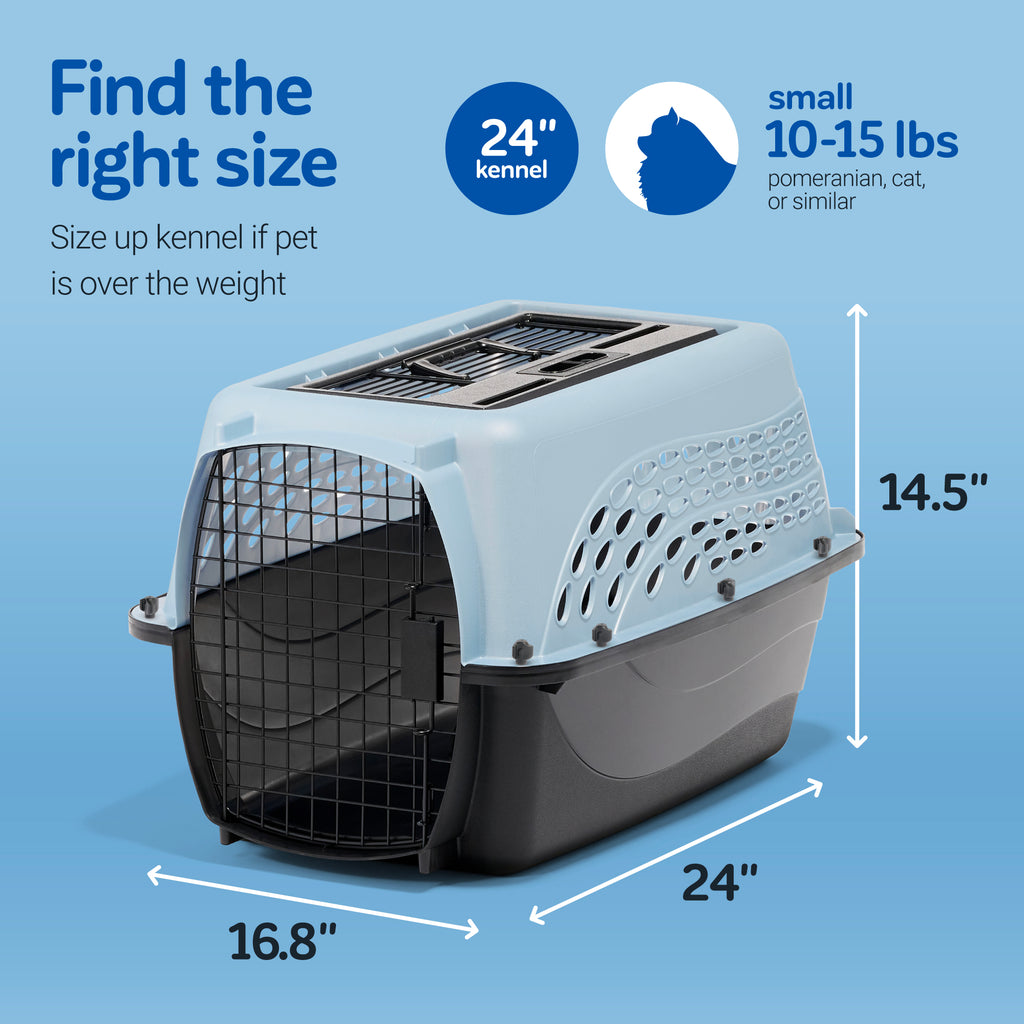
Petmate Two Door Kennel — 24-inch blue
A rigid carrier option with both front and top entry for a planned journey.
Before you choose: Measure your cat and check the selected model before ordering. Petmate lists a 21 × 14.5 × 13.5-inch interior for the 24-inch model and a weight limit up to 15 lb. Confirm transport requirements separately; this is not a crash-test or airline-acceptance claim.
Check options on AmazonPaid link · Opens retailer website
Product details checked September 9, 2026. Retailer prices, sellers, availability and delivery terms can change; check the current listing.
Explore the holiday cat care planner
Research-based guidance. Sources checked September 9, 2026. How MeowBay researches its guides.

2 Comments on “Cat Travel Guide: Carrier, Packing and Holiday Planning”