


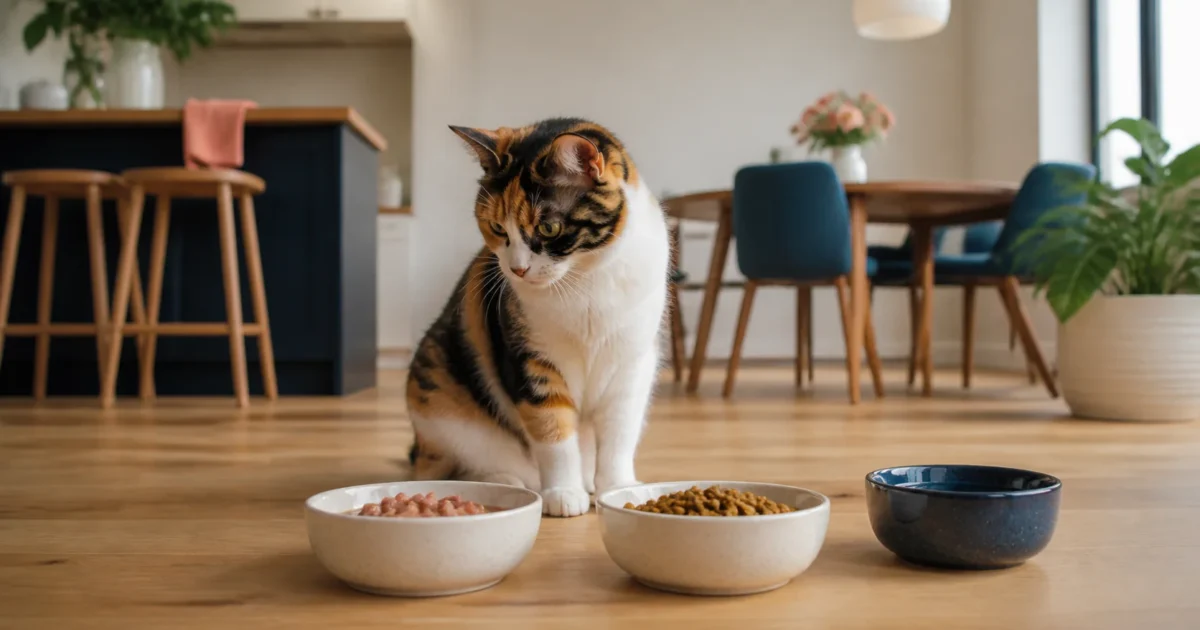
Wet and dry cat food can both be appropriate when the product is complete and balanced for your cat’s life stage and the portion fits the individual cat. Wet food usually supplies much more water; dry food is convenient, calorie-dense, and easy to use in measured puzzles or feeders. The better choice depends on health, hydration, calorie needs, preference, budget, and what you can feed consistently.
Editorial note: This research-led comparison is general education, not an individualized diet plan. Cats with kidney, urinary, dental, digestive, allergy, diabetes, weight, or other medical concerns need veterinary guidance.
Wet vs dry cat food at a glance
| Factor | Wet food | Dry food |
|---|---|---|
| Moisture | Typically high; Cornell notes canned food has at least 75% moisture | Typically low; Cornell describes roughly 6–10% water |
| Calorie density | Often lower per gram because of water, but check the label | Often higher per gram, so small measuring errors matter |
| Serving and storage | Opened portions need prompt refrigeration and safe handling | Convenient to measure and store when kept cool, dry, sealed, and within date |
| Feeding tools | Works with bowls, lick mats, and wet-food feeders designed for safe temperature control | Works easily with puzzles, timed feeders, and food-search activities |
| Preference | Texture and aroma appeal to many cats | Some cats prefer the texture and grazing format |
The first check matters more than format
Look for a nutritional adequacy statement saying the food is complete and balanced for the correct species and life stage. A food marked for intermittent or supplemental feeding is not intended to be the sole everyday diet unless a veterinarian directs its use. Our guide to reading cat food labels shows exactly where to look.
Where wet food has a practical advantage
Wet food contributes meaningful water through meals. Cornell notes that cats eating wet food may drink less because the food itself supplies water, while cats eating dry food usually obtain more of their water by drinking. That does not mean every cat must eat wet food, but hydration is a legitimate decision factor.
Wet textures may also be easier or more appealing for some cats. However, a cat with dental pain still needs a veterinary examination; changing texture does not diagnose or treat the cause.
Where dry food has a practical advantage
Dry food is convenient to weigh, divide into small meals, place in food puzzles, and dispense with many automatic feeders. It also tends to be more calorie-dense, so the portion may look small. Measure the actual daily ration rather than repeatedly topping up the bowl.
Ordinary dry kibble should not be treated as a substitute for dental care. A specific dental diet may have evidence and design features for a defined purpose, but crunching standard kibble is not the same as brushing or professional dental assessment.
Can you feed both wet and dry?
Yes, if both foods fit the cat and the combined calories are controlled. Do not feed a full wet ration plus a full dry ration. Decide the daily energy allocation, then divide it across formats. Keep the total stable while you observe weight, body condition, stool, appetite, and tolerance.
Mixed feeding can provide moisture at one meal and dry-food convenience or puzzle use at another. Consistency is more useful than constantly switching brands or recipes in response to marketing.
How to compare nutrients fairly
The guaranteed analysis is printed on an as-fed basis, meaning it includes moisture. A wet food may therefore appear lower in protein simply because it contains more water. FDA explains that foods with very different moisture levels should be converted to a dry-matter basis before comparing percentages. For most households, nutritional adequacy, calorie content, tolerance, and professional advice are more actionable than chasing the highest protein number.
Choose wet, dry, or mixed using this checklist
- Is it complete and balanced for the cat’s life stage?
- Does a veterinarian recommend a specific diet or texture for a health condition?
- What is the calorie content per can, pouch, cup, or gram?
- Can you measure and store it safely every day?
- Does the cat eat it reliably and maintain an appropriate body condition?
- Is fresh water always available in accessible locations?
For the next step, read how much to feed an indoor cat and how often cats should eat. For product-selection context, compare our affordable cat food options or use the broader research-led best cat food guide.