
An indoor cat-friendly home gives a cat safe choices: places to hide, climb, scratch, rest, play, drink, eat and toilet without unnecessary competition. The goal is not to fill every room with products. It is to place the right resources where your cat can use them comfortably.
Choose the part of indoor life you want to improve

Enrichment and play
Match activities to behaviors such as chasing, climbing, hiding, foraging and observing.

Scratching and furniture
Use location, height, stability and surface preference to offer a better legal scratching choice.
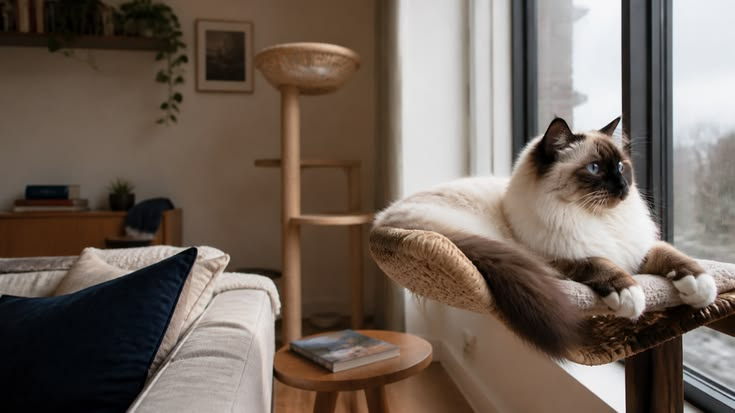
Window and vertical spaces
Check mounting, window fit, load limits, landing space and safe access before buying a perch.

Daily routine
Build predictable anchors around meals, play, quiet time, litter checks and observation.

Multi-cat homes
Reduce bottlenecks by separating food, water, litter, resting and escape routes.
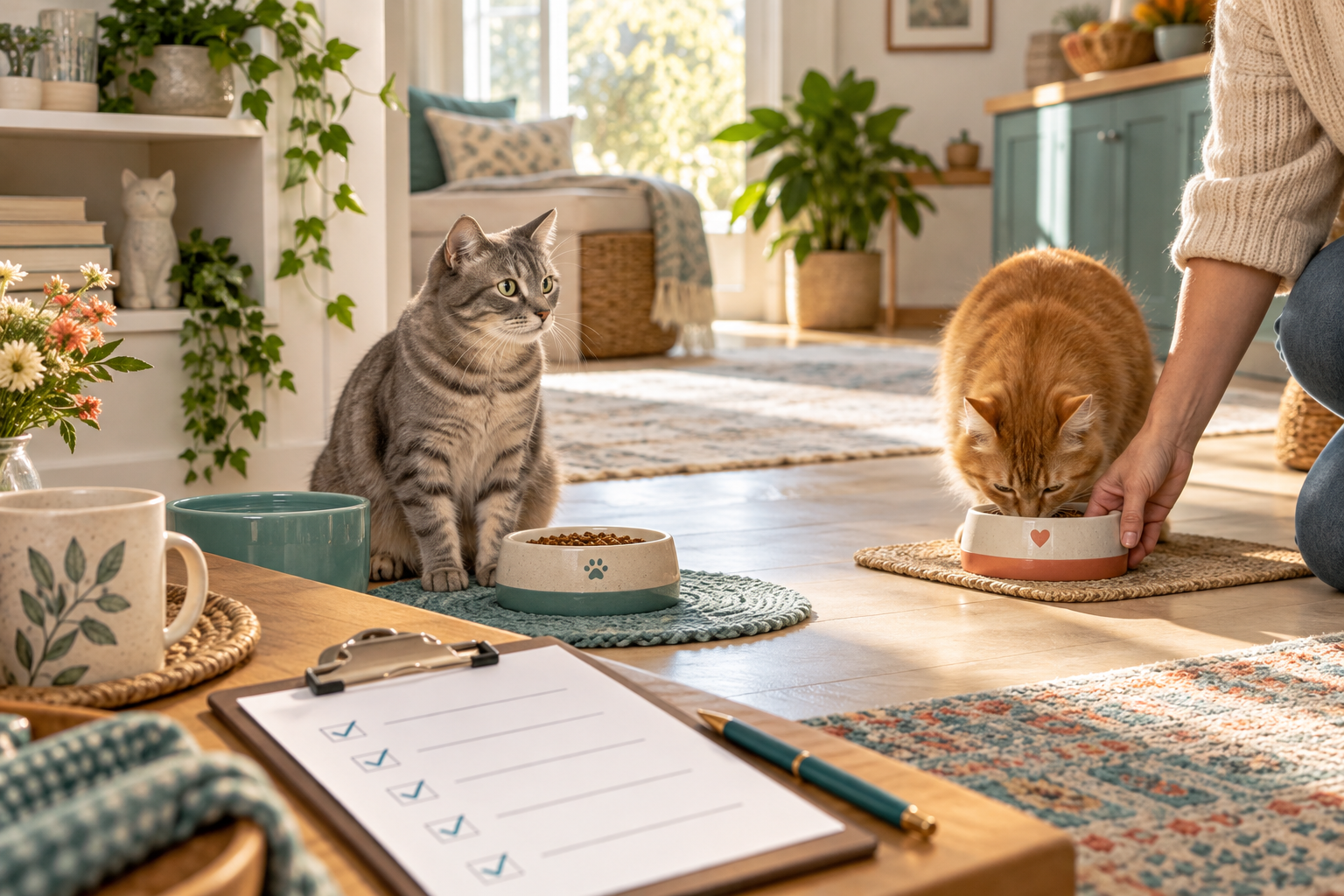
Sitters, travel and holidays
Document the routine, supplies, contacts, medication instructions and emergency plan.
A room-by-room indoor cat home audit
| Area | Check | Improve first |
|---|---|---|
| Food | Can each cat eat without being blocked or watched by another cat? | Separate stations and record what each cat eats. |
| Water | Are bowls or fountains away from litter and easy to approach? | Add a second water point and keep the pump and bowl accessible for cleaning. |
| Litter | Can a cat enter, turn, dig and leave without passing a rival? | Spread boxes across locations instead of lining them up as one resource. |
| Rest | Are there warm, quiet and elevated choices? | Add a stable perch or protected bed with an easy route down. |
| Scratch | Is the scratcher stable and placed where scratching already happens? | Match vertical or horizontal posture and the preferred texture. |
| Play | Does the routine include short, repeatable opportunities to chase, pounce or forage? | Rotate a small set of safe activities rather than leaving everything out. |
Resource placement matters more than product count
Two bowls side by side can still function as one guarded station. Three litter boxes in one small room can still create a single bottleneck. Place resources so a cat can approach, use and leave without being cornered. In multi-cat homes, observe doorways, narrow halls and favorite resting zones for blocking or staring.
Use purchases to solve a measured problem. A fountain can add another water location, but it also adds pump cleaning and filter costs. A feeder can protect a schedule, but it cannot replace daily welfare checks. A camera can show activity, but it cannot confirm that a cat is healthy.
When behavior deserves a veterinary conversation
Environmental improvements can support normal behavior, but they do not diagnose illness. Sudden nighttime vocalization, reduced jumping, new house-soiling, appetite or drinking changes, withdrawal, aggression or a major routine change should be discussed with a veterinarian. For older cats, nighttime vocalization can have several medical or cognitive causes and needs an individual assessment.
Plan your next small improvement
- Choose one observable problem: blocked access, unstable scratching, weak routine or unused space.
- Record where and when it happens for seven days.
- Change one variable: location, surface, height, spacing or timing.
- Watch whether the cat uses the new choice without prompting.
- Keep what works and remove clutter that does not help.
Useful next steps: track food and water, compare automatic feeders, plan water fountains, or prepare with the holiday cat care guide.
Sources and verification
Last reviewed: October 3, 2026. MeowBay independently researches product fit, upkeep and ownership tradeoffs. Veterinary sources inform the safety context; this guide is not a substitute for veterinary care.