


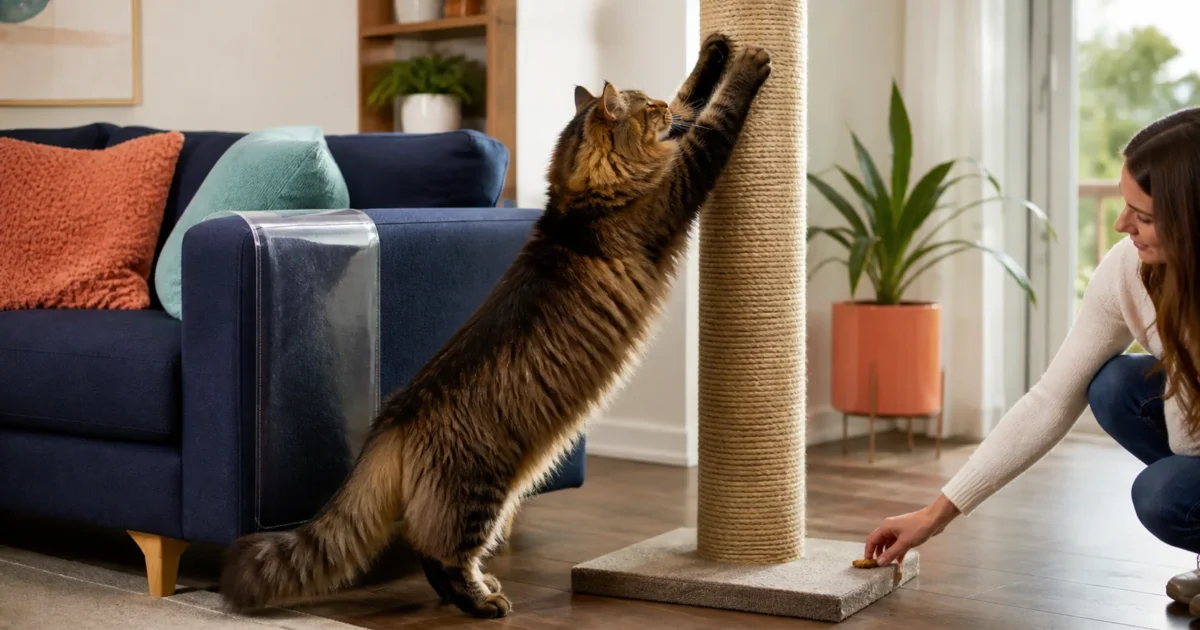
Your cat scratches furniture because scratching is normal feline behavior. It stretches the body, maintains claw health, and leaves visual and scent signals in important locations. The solution is to make an acceptable surface more useful than the sofa—not to punish the cat for being a cat.
Behavior changes can have medical causes. A sudden increase in scratching, a change from vertical to horizontal scratching, limping, damaged claws, or reluctance to stretch deserves veterinary attention.
Why the sofa wins
Furniture is often stable, tall, textured, and placed exactly where a cat wants to mark: near a route, doorway, window, social area, or sleeping place. A short, wobbling post hidden in a spare room cannot compete.
Cats also have individual preferences. One may want vertical sisal, another horizontal cardboard, wood, carpet, or an angled surface. Older cats with mobility changes may shift to a lower or horizontal scratcher.
The four-part redirect plan
1. Match the current behavior
Observe the furniture location, scratch direction, material, and height. If the cat stretches fully upright on the sofa, choose a post taller than that stretch. If the cat scratches carpet, offer a stable horizontal scratcher.
2. Put the scratcher beside the target
Location is part of the behavior. Place the new surface immediately next to the scratched corner, not across the room. Also add scratchers near favorite sleeping spots because cats often scratch after waking.
3. Protect the furniture temporarily
Use a fitted furniture protector or throw while the new habit develops. FelineVMA advises against punishment and notes that some aversive methods can increase fear or distress. The goal is to reduce the old surface’s convenience while the better option is easy to find.
4. Reward the behavior you want
Reward voluntary scratcher use with a small treat, play, or preferred attention. You can draw interest with a toy near the post, but do not place the cat’s paws on it or force scratching.
How many scratchers does a home need?
There is no universal number. Provide options in the places the cat spends time, and more in multi-cat homes so one cat cannot control access. Include different orientations until preference is clear. Replace or repair surfaces that have become unstable, while remembering that a well-used worn texture may still be attractive.
Common reasons the new post fails
- It wobbles when the cat puts full weight on it.
- It is too short for a full stretch.
- It is in a quiet corner instead of the marked location.
- The texture does not match the cat’s preference.
- The sofa remains easier and more rewarding.
- The cat was frightened or forced near the post.
Do nail caps, trimming, or declawing solve it?
Regular nail care may reduce damage but does not remove the need to scratch. Nail caps require correct sizing, monitoring, and replacement and are not a training plan by themselves. FelineVMA strongly opposes declawing; it is an amputation procedure associated with pain and behavior concerns, not a furniture-protection technique.
When scratching may signal distress
A noticeable increase—especially around doors, windows, or multi-cat routes—can occur with territorial or social stress. Check for outdoor cats, blocked resources, staring, chasing, or changes in the home. Our two-cat introduction guide includes resource separation and signs of tension.
Build the broader environment with safe space, separated resources, play, and choice. If furniture and space are limited, see our research-led scratching posts for apartments.
Sources
- FelineVMA: Training Techniques for Undesirable Scratching
- FelineVMA: Claw Friendly Scratching Resources
- FelineVMA: Setting Up the Environment for Success
Match the scratcher to the behavior you see
| Your cat scratches… | Try first |
|---|---|
| The upright sofa corner | A tall, rigid vertical post placed directly beside that corner. |
| A rug or carpet edge | A stable horizontal scratcher with a similar resistance. |
| After waking | A scratcher beside the favorite sleeping place. |
| Near a doorway | A stable scratcher in that communication route rather than hidden elsewhere. |
Reward use of the suitable surface and protect the furniture while the new habit forms. Avoid punishment, which does not provide an acceptable alternative. The Feline Veterinary Medical Association recommends environmental setup and positive reinforcement in its behavior guidance. Connect scratching with climbing, rest and play in the Indoor Cat Living guide.