


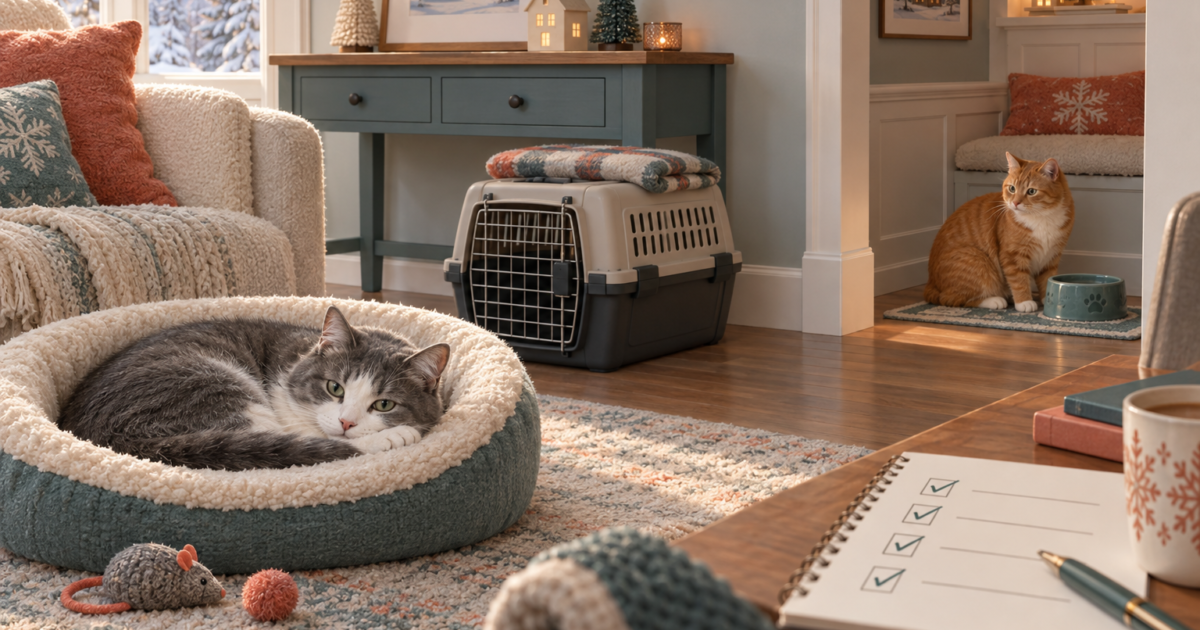
Quick answer: For many cats, the least disruptive holiday plan is staying at home with a dependable sitter visiting at least twice daily. Boarding can work when home visits are unreliable or qualified on-site care is needed. Travel is usually best reserved for a necessary move or a cat comfortable with transport. Keep the routine familiar, secure seasonal hazards and leave a written emergency plan.
Should your cat stay home, board or travel?
Start with your cat’s health, temperament and normal routine, then compare the care you can reliably arrange. Familiar surroundings may suit a cat who finds transport stressful. Boarding provides supervised care in one place and may be preferable when dependable home visits are unavailable. An optional short holiday often adds travel disruption without benefiting the cat.
| Plan | May suit | Check before booking |
|---|---|---|
| Sitter at home | A cat settled in familiar territory. | At least two daily visits for a typical healthy adult, visit length, references, access, medication experience and a backup. |
| Live-in sitter | A cat needing more company or closer observation. | Overnight expectations, references, house rules, emergency authority and a trial meeting. |
| Boarding | When reliable home care is unavailable or on-site coverage is needed. | Cleanliness, escape controls, separation, staffing, medication policy, vaccine requirements and emergency procedures. |
| Travel | A necessary move or a cat comfortable with the journey. | Veterinary advice, carrier fit, identification, destination rules, lodging and an emergency clinic. |
Cats Protection recommends a sitter visit at least twice daily. Kittens, seniors and cats with medical or behavioral needs may need more frequent or longer care. Ask your veterinarian to set the plan when medication or close monitoring is involved.
Can you leave a cat home while you go on holiday?
Only when a dependable person provides in-person care during the trip. A camera cannot clean a litter box, a feeder cannot recognize illness, and water can spill or a device can jam. Cats Protection gives about 12 hours as an occasional upper limit for a healthy adult cat alone; kittens, seniors and cats with additional needs require shorter intervals. A vacation needs a sitter, trusted carer or suitable boarding—not a larger dispenser.
Can I leave my cat alone for two weeks?
No. Arrange dependable human care throughout the trip, typically at least twice-daily visits for a healthy adult cat and more for cats needing closer care. Leave extra food, litter and medication for a delay, name a backup carer and authorize the sitter to contact your veterinarian. Use MeowBay’s cat sitter checklist for the handover.
How do you choose a cat sitter?
Ask your veterinary clinic for referrals, then check references, cat-care experience, insurance where relevant, cancellation terms and who will actually enter the home. Meet the sitter and have them practice the routine before you leave. For boarding, inspect the facility, ask about overnight staffing and emergencies, and read the agreement before paying.
Leave one written plan with:
- Each cat’s photo, normal behavior, hiding places and microchip details.
- Food type, measured portions, feeding times, water locations and supplies.
- Litter-box locations, cleaning instructions and changes that warrant a call.
- Veterinarian-approved medication instructions; the sitter should never improvise a dose.
- Tested keys or codes, alarm steps, door and window rules and backup access.
- Your regular and emergency veterinarian, transport plan, local backup and emergency spending authorization.
Request an update that reports exceptions, not only a photo. Missed meals, vomiting, absent urine, breathing changes, difficulty moving or equipment failure should trigger the agreed response. A camera cannot prove how much a cat ate or whether another pet took the food.
How do you make your home safe for cats during the holidays?
Set up a quiet retreat before guests arrive with familiar bedding, water, litter and a hiding place. Tell guests who controls the door, do not allow table feeding and keep gift bags and human medication inaccessible.
| Hazard | Safer action |
|---|---|
| Lilies | Keep true lilies and daylilies out of a cat household. Suspected exposure is urgent: call a veterinarian immediately. |
| Chocolate, alcohol, caffeine, onion and garlic | Keep food and drinks away from cats, brief guests and clear plates promptly. |
| Tinsel, ribbon and string | Skip tinsel, put gift ribbon away and store wand toys after supervised play; swallowed linear material can cause a dangerous obstruction. |
| Wires, batteries, candles and ornaments | Cover cords, secure batteries, use flameless candles and keep breakables out of reach. |
| Tree and tree water | Anchor the tree, block access to its reservoir and check cords and fallen items daily. |
| Plants and décor | Check plant identity first; choose artificial or confirmed cat-safe décor when uncertain. |
Read the ASPCA holiday-safety guidance and the FDA list of potentially dangerous items. MeowBay’s focused guides cover holiday foods cats should avoid and Christmas tree cat safety.
If you suspect poisoning or your cat swallowed a dangerous object, contact a veterinarian or animal poison service immediately. Do not induce vomiting or give a home remedy unless a veterinary professional instructs you to.
Should you take your cat on holiday?
For an optional short trip, many cats are better cared for at home. If travel is necessary, introduce the carrier early, update microchip details, bring veterinary records and confirm airline, border and lodging rules in advance. Secure your cat in a carrier in the vehicle, never leave them alone in a parked car, and ask your veterinarian about motion sickness or anxiety. Never give human medication or sedate a cat without veterinary direction.
Pack familiar food, water, bowls, medication, litter, waste bags, absorbent pads and cleaning supplies. Follow MeowBay’s cat travel guide for preparation, the journey and arrival.
When should you arrange holiday cat care?
- Before booking: compare home care, boarding and necessary travel; check medical and destination requirements.
- Several weeks before: reserve care, inspect the service, confirm policies and name a backup.
- One to two weeks before: practice the routine, test home access and assemble extra supplies.
- Before guests arrive: set door, food and quiet-room rules; secure decorations and hazards.
- The day before departure: confirm visits and contacts; leave the final handover and emergency authority.
- During and after: review updates and check appetite, water, litter use and behavior when you return.
Holiday cat care: frequently asked questions
Where can I leave my cat when I go on holiday?
Choose a sitter at home, a trusted friend or family member, a live-in sitter or a reputable boarding facility. Match the option to your cat’s health and temperament, verify the caregiver and keep a backup plan.
How often should a cat sitter visit?
Plan at least twice-daily visits for a typical healthy adult cat, long enough to feed, refresh water, clean litter and observe the cat. Kittens, seniors and cats with medical or behavior needs may need more frequent care set with a veterinarian.
Is a cat sitter or boarding better?
A sitter may preserve familiar surroundings; boarding may provide dependable on-site coverage. Neither is always best. Check the actual service and fit it to the cat.
Can an automatic feeder replace a cat sitter?
No. A feeder may support meal timing but cannot assess health, clean litter, restore spilled water or provide urgent transport. Have a person check the cat and equipment.
Will my cat run away if I go on holiday?
Your absence alone does not mean a cat will escape, but visitors and changed routines create opportunities. Update microchip details, secure doors and windows and tell the sitter what to do if the cat gets out.
Related MeowBay checklists
- Cat sitter checklist
- Cat travel guide
- Holiday foods cats should avoid
- Christmas tree cat safety
- Christmas gifts for cats
- Indoor cat enrichment planner
Decide who takes over each holiday failure
The normal care schedule and the failure schedule should be written together. Check these scenarios with the caregiver before leaving.
| Decision or record | How to apply it |
|---|---|
| Access fails | A key does not work or the agreed caregiver cannot attend: named backup and contact sequence. |
| Equipment fails | Feeder, fountain or litter robot stops: manual supplies, instructions and a person who can act. |
| The cat changes | Unusual intake, litter use or behavior: veterinary contact and the agreed authority to seek care. |
Keep personal contacts and access instructions in a private handover. An appliance with a multi-day capacity is not a reason to remove the human visit plan or rely on a remote alert being seen.
Two practical resources for a quieter holiday routine
- DIY cat advent calendar: 24 activities and free MEWBY printable cards — choose suitable play, rest and interaction ideas without adding a daily pile of treats.
- Self-warming versus heated cat beds — compare fit, cleaning and electricity cost before changing a resting setup.
Sources and editorial notes
This is research-based general information, not veterinary advice. Consult a veterinarian who knows your cat for medical or medication decisions. See the MeowBay editorial policy.
6 Comments on “Holiday Cat Care: Sitter, Travel & Safety Checklist”