


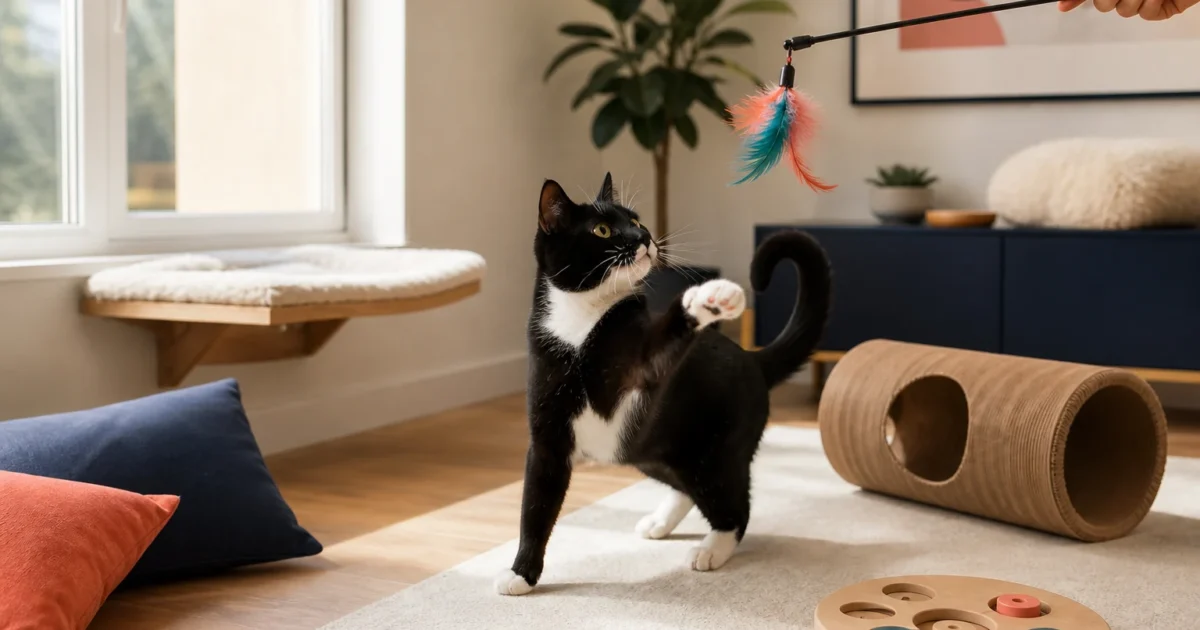
Useful indoor cat enrichment ideas include easy food puzzles, supervised wand play, stable scratching surfaces, secure window lookouts and quiet hiding places. Start with one option your cat can approach and leave freely. Match it to your cat’s interests, mobility and the space available; expensive equipment is not required.
This library contains 21 ideas to choose from, with low-cost starting points and practical limits. For a schedule rather than more ideas, use the daily enrichment plan.
Safety note: Supervise string, ribbon, elastic, wand toys, and any object that could be chewed or swallowed. Stop an activity if your cat shows fear or frustration. Sudden behavior changes can have medical causes and deserve veterinary attention.
Start with the environment, not a shopping list
Before adding gadgets, check the foundations in our indoor-cat happiness plan: safe retreats, separated resources, vertical space, scratching choices, play, and predictable positive interaction. Enrichment works best when those basics are already accessible.
Which enrichment idea fits your cat and home?
Use this as a starting-point comparison, not a score or a diagnosis. Watching what your cat chooses is more useful than buying every category.
| Your starting point | Try first | What to check |
|---|---|---|
| Small apartment | A stable scratcher or an accessible lookout | Keep walkways and exits clear; measure the usable space. |
| Cat enjoys searching for food | An easy puzzle with part of the normal meal | Confirm the cat can retrieve food; keep normal feeding available. |
| Little interest in toys | A different movement or a quiet hiding option | Watching is a response too. Do not force participation. |
| Senior cat or limited mobility | A floor-level activity and easy-access resting place | Avoid making a jump the price of participation; ask your vet about painful movement. |
| More than one cat | Separate activity locations | Watch whether one cat blocks the other’s access or exit. |
| Small budget | A clean cardboard hideout or a familiar toy used differently | Remove staples and loose tape; stop use if pieces are chewed or swallowed. |
21 practical indoor cat enrichment ideas
Hunting and food enrichment
- Turn one meal into an easy food puzzle. Begin with an open or loosely filled puzzle so success comes quickly.
- Scatter a measured portion of dry food. Use several safe, easy-to-find locations instead of adding extra calories.
- Hide small portions in paper cups or an egg carton. Remove anything the cat tears or tries to swallow.
- Add an optional food-search station. Keep the familiar meal location available. Start nearby and easy to reach, especially for cats with mobility limits.
- Use a lickable food activity when appropriate. Count it as part of the daily ration and follow the cat’s dietary plan.
Interactive play
- Use a wand toy like prey. Let it pause, hide, dart, and be caught rather than waving it continuously in the cat’s face.
- Offer short play sessions. Several brief opportunities can suit feline activity patterns better than one exhausting session.
- Rotate toy types. Put some toys away and reintroduce them later to restore novelty.
- Try a lightweight toss toy. Some cats chase or retrieve soft balls and springs.
- End with a catch. Allowing successful capture can make interactive play more satisfying.
Vertical and visual enrichment
- Add a stable window perch. Make sure the window and screen are secure.
- Create a simple climbing route. Use stable furniture, shelves designed for cats, or a well-anchored cat tree.
- Place a bed at different heights. Let the cat choose between elevated observation and concealed rest.
- Change the view safely. Move a perch only if the new position does not expose the cat to persistent outdoor-cat stress.
Scratch, scent, and texture
- Offer vertical and horizontal scratching. Place stable scratchers near sleep areas and routes the cat already uses.
- Keep familiar scent available. Avoid washing every bed and blanket on the same day.
- Introduce safe cardboard. Boxes can support hiding, resting, scratching, and exploration.
- Offer cat-safe grass or plants. Confirm plant safety before bringing anything into the home.
Choice and social enrichment
- Teach a simple behavior with rewards. Target training, coming when called, or entering a carrier can add mental work and practical value.
- Create a quiet observation station. A box or perch in the room lets a cat join household activity without being handled.
- Let the cat initiate contact. Predictable, consent-based interaction is enrichment too.
Optional equipment: buy for an activity your cat already enjoys
Equipment is optional. The recommendation below is based on manufacturer information and household fit, not MeowBay hands-on testing. MeowBay may earn a commission from the paid link, at no extra cost to you. As an Amazon Associate, MeowBay earns from qualifying purchases.
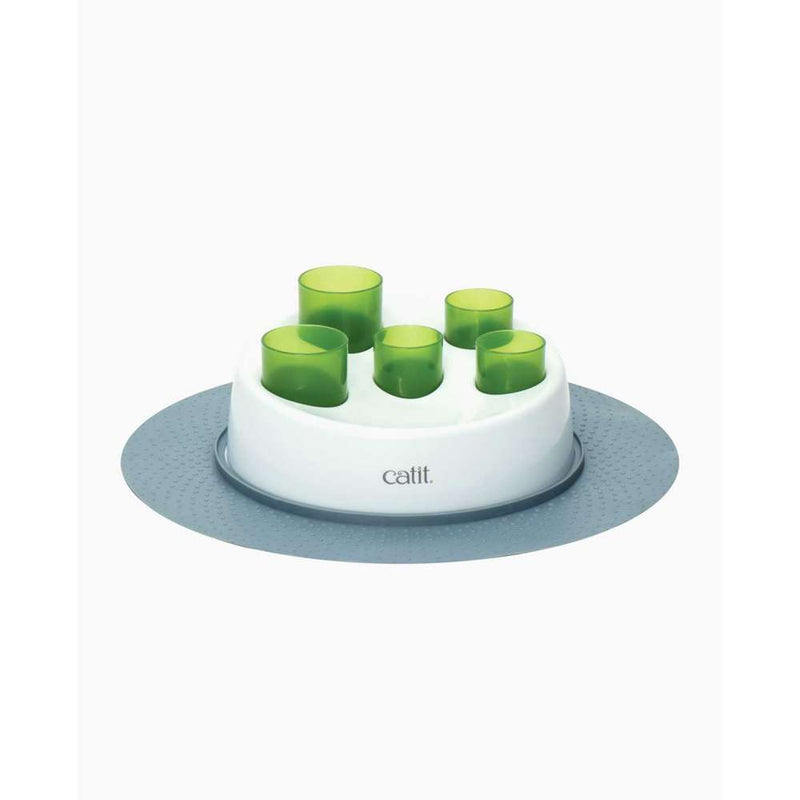
Catit Senses Digger: for pawing out dry food
Why consider it: its removable cups provide a food-retrieval activity for cats that already investigate food with a paw. Catit lists five cups in two sizes and a base designed to collect stray pieces.
Main limitation: this is not a timed dispenser or a selective-access feeder. It will not reserve a meal for one cat in a shared household. Introduce an easy setup and confirm your cat can obtain food.
Before buying: check the 37 × 37 cm footprint, food suitability and cleaning instructions against your setup. The manufacturer’s product information provides the specifications.
View Catit Senses Digger on Amazon →
Paid link. Check the exact model, seller, price and availability at the retailer.
Already own a PETLIBRO Pixie Mouse? It is a moving-toy option, not a replacement for interaction. Use PETLIBRO’s model-specific setup and care guidance to check modes and maintenance, and supervise its introduction. This is a manufacturer support link, not a verified purchase offer. MeowBay has a PETLIBRO affiliate relationship; it does not determine which enrichment ideas we recommend.
Turn your chosen ideas into a routine
For a morning-to-evening schedule and a seven-day observation log, follow our daily indoor cat enrichment plan. This page is your activity library; the plan helps you decide when to offer the activities your cat enjoys.
You do not need to present all 21 ideas every day. Choose one activity from three categories—food search, active play, and environment—then rotate. Keep a quick note of what your cat approaches, ignores, or uses only at a particular time. This turns enrichment into observation rather than guesswork.
How to avoid frustration
- Make new puzzles easy before increasing difficulty.
- Introduce one change at a time and keep familiar options available.
- Do not force a cat onto a new tree, bed, or perch.
- Use the cat’s measured daily food rather than adding unlimited treats.
- Adapt height and movement for kittens, seniors, and cats with health limitations.
If your cat is difficult to engage, read signs your indoor cat may be bored and how to plan indoor-cat exercise. A steady indoor routine can make activities easier to predict and repeat.
Indoor cat enrichment questions
What can I do to stimulate my indoor cat?
Offer choices for play, food searching, scratching, observation and rest. Start with one accessible activity, such as a familiar toy or an easy puzzle, and let your cat decide whether to engage. Introduce changes gradually instead of filling the room with new objects. Ohio State’s toy guidance describes different play preferences and the value of variety.
How to tell if a cat is understimulated?
There is no single behavior that proves understimulation. Changes in activity, vocalization, grooming or interaction can have several causes. Record what has changed and consult your vet about new or concerning behavior before assuming boredom. Cats Protection’s boredom guidance stresses checking for medical causes first. Use enrichment as support, not a diagnosis or treatment.
What are inexpensive DIY enrichment ideas?
Try a clean cardboard box with an easy exit, a paper bag with its handles removed, or a familiar toy offered in a new way. Inspect materials and supervise introductions. Do not use items that your cat shreds or swallows. Food-based activities should use part of the normal ration rather than unlimited additional treats.
What enrichment can I leave while I am at work?
Keep familiar resting places, secure lookouts and stable scratchers accessible. Leave only objects you have checked for appropriate independent use with your cat. Put string, ribbon and wand toys away after supervised play. A toy, feeder or camera does not replace daily human care.
How much enrichment does an indoor cat need each day?
There is no universal number of toys or mandatory play duration for every cat. Offer manageable opportunities and adjust to interest and ability. For timing and a seven-day observation log, use our daily indoor cat enrichment routine rather than trying all 21 ideas each day.
Sources and research notes
Research and product details checked September 19, 2026. The household-fit table is MeowBay’s editorial synthesis; it is not a clinical assessment. Product availability can change. This article is an activity library, not a veterinary treatment plan or a record of product testing.