


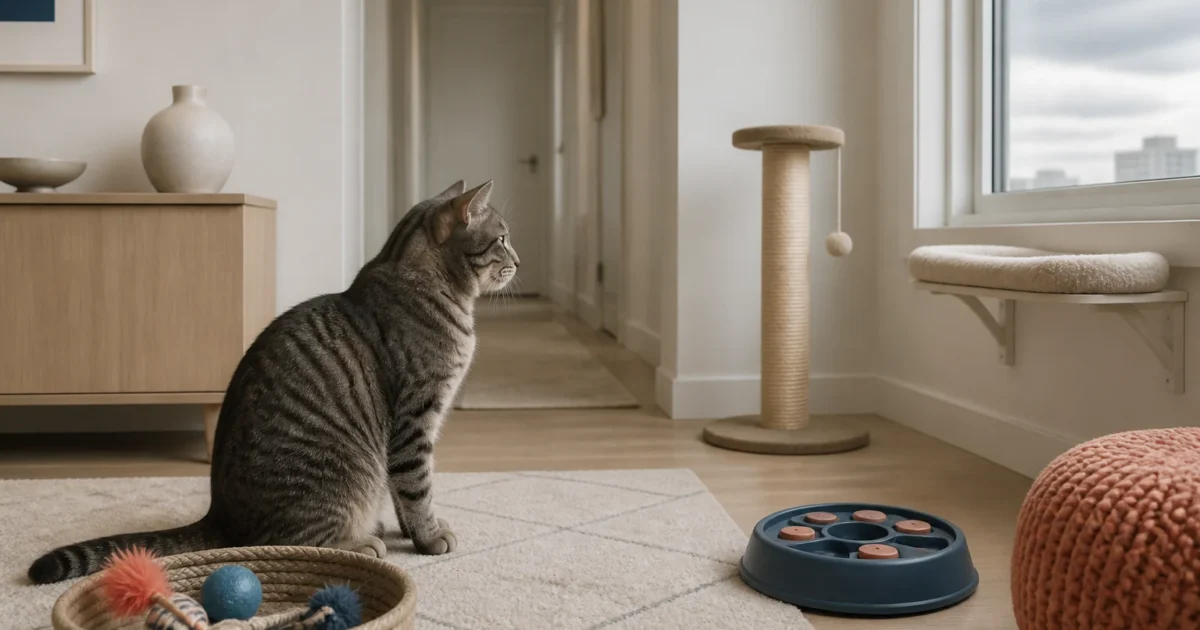
Possible signs of boredom in an indoor cat include persistent attention-seeking, destructive scratching, restless pacing, waking the household for activity, or losing interest in the environment. But none of these signs proves boredom: pain, illness, anxiety, fear, and conflict can produce similar changes.
Important: Contact a veterinarian when a behavior is sudden, persistent, severe, or accompanied by appetite, weight, grooming, mobility, vomiting, elimination, or sleep changes. Do not treat a medical problem as boredom.
9 clues that an indoor cat may need more stimulation
1. Repeated attention-seeking that is hard to redirect
A cat may follow, vocalize, paw, or interrupt activities because interaction has become the most interesting event in the home. First check food, water, litter, comfort, and health. Then test whether predictable play and foraging reduce the pattern.
2. Destructive scratching in high-traffic areas
Scratching is normal, not bad behavior. A cat repeatedly using furniture may lack a stable scratcher of the preferred height, angle, texture, or location. Place an appropriate scratcher beside the chosen furniture before trying to move it gradually.
3. Restless pacing or room-to-room searching
Some cats patrol because the environment offers little variety. Persistent pacing can also signal stress or discomfort, especially in older cats, so context matters.
4. Intense nighttime demands
Cats naturally have active periods around dawn and dusk. A quiet day with few opportunities to move can contribute to nighttime play or vocalization. A short evening play sequence followed by a meal may help build a more workable rhythm, but new nighttime vocalization warrants a health check.
5. Overly rough play with people or other pets
Hands and ankles can become substitute prey when appropriate outlets are limited. Do not punish or continue hand play. Redirect early to a supervised wand or toss toy, allow successful catches, and give other pets escape routes.
6. Rapid loss of interest in every toy
Toys left on the floor continuously can become background objects. Rotation and interactive movement often matter more than quantity. Lack of interest can also reflect pain, fear, or illness.
7. Excessive sleeping plus little curiosity when awake
Cats sleep many hours and sleep alone is not evidence of boredom. The more useful question is whether the cat shows normal interest, movement, grooming, eating, and interaction during awake periods. A meaningful drop from that cat’s baseline deserves attention.
8. Repetitive or compulsive-looking behavior
Repeated licking, chewing, tail chasing, or fixed routines should not be casually labeled boredom. These behaviors can have medical and behavioral causes and should be discussed with a veterinarian.
9. Weight gain combined with low activity
An unstimulating routine may reduce movement, but calorie intake and health are also central. Use measured food and ask a veterinary professional about body condition and a safe plan before increasing exercise aggressively or restricting food.
How to test the boredom hypothesis safely
- Record the pattern for one week. Note time, trigger, duration, and what happened immediately before and after.
- Add one predictable activity. Try a short supervised play session or easy food puzzle at the time the pattern usually starts.
- Improve one environmental choice. Add a refuge, perch, scratching surface, or second resource location.
- Compare with the cat’s baseline. Look for a trend, not one perfect day.
- Escalate concerns. Seek veterinary help for sudden, severe, or persistent changes.
A simple response plan
Use our indoor cat enrichment ideas to select activities, then fit them into a sustainable daily routine. The broader five-pillar indoor-cat plan helps you check that play is not being used to compensate for poor resource placement or lack of safe space.
For active play, avoid chasing a universal minute target. Read how much exercise an indoor cat needs and adjust sessions to age, ability, health, and interest.