


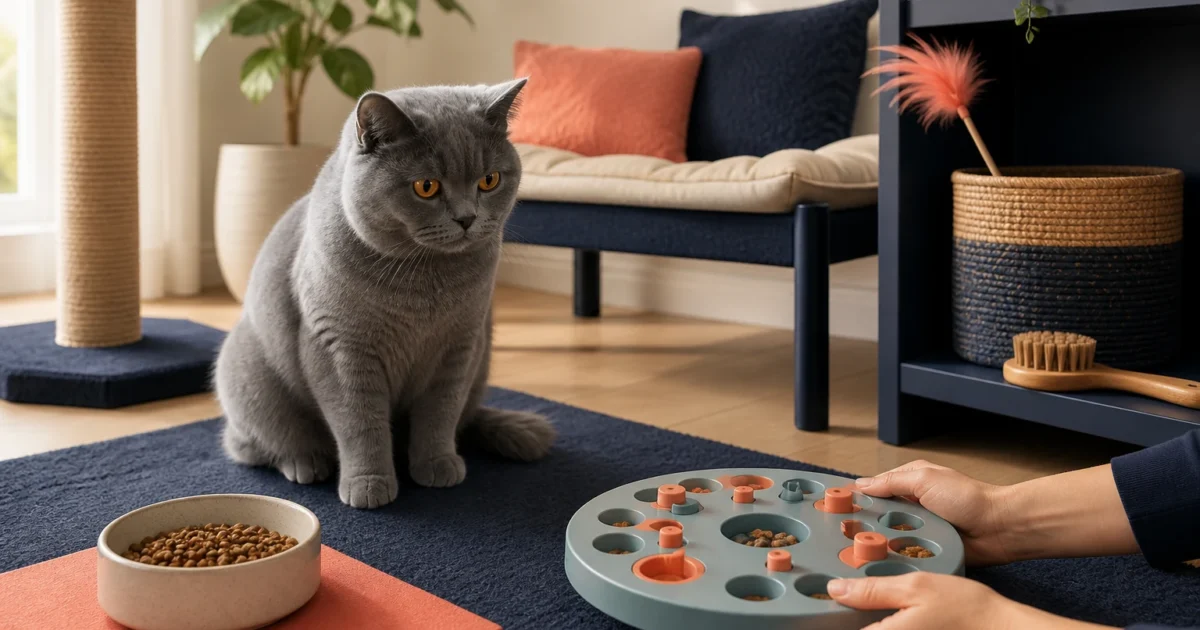
A useful indoor-cat routine is predictable but flexible. It gives the cat reliable access to meals, clean litter, rest, play, observation, and positive interaction without requiring every event to happen at the exact minute. Build the routine around the cat’s natural active periods and your real household schedule.
Health note: A routine supports observation but does not replace veterinary care. Sudden changes in eating, drinking, elimination, grooming, movement, sleep, or behavior should be assessed appropriately.
Why routine helps indoor cats
Predictability can reduce uncertainty and makes it easier for people to notice change. It also prevents enrichment from becoming an occasional weekend project. The goal is not rigid control; the cat should still have choices about where to rest, whether to interact, and how to use the environment.
The six parts of a practical routine
1. Meals and water checks
Use measured portions that fit the cat’s nutrition plan. Refresh water and check bowls or fountains daily. Some meals can be delivered through an easy puzzle or food search, but keep a familiar feeding option while the cat learns.
2. Litter-box care
Scoop on a consistent schedule and use the moment to notice changes in urine, stool, frequency, or box avoidance. Keep boxes accessible and avoid making every box temporarily unavailable during cleaning.
3. Short interactive play
Plan play when the cat is naturally alert—often around morning or evening. Use a supervised toy, imitate prey movement, let the cat catch it, and store string-like toys afterward. Read our guide to indoor-cat exercise instead of forcing a universal duration.
4. Independent enrichment
Rotate safe toys, cardboard, puzzles, and observation opportunities. Our list of indoor cat enrichment ideas includes low-cost options and a simple rotation method.
5. Calm positive interaction
Offer contact in the form the cat prefers: play, grooming, training, lap time, cheek rubs, or simply sharing a room. Let the cat initiate or leave. Predictable interaction should not become forced handling.
6. A quick observation check
Notice appetite, water use, litter habits, grooming, mobility, social behavior, and interest in normal activities. You do not need a complicated tracker; a brief awareness of the individual cat’s baseline is valuable.
Example routine for a working household
- Morning: water and litter check, measured meal, two to five minutes of play or food search.
- During the day: safe window access, refuge, scratcher, puzzle, and independent toys; no unattended strings.
- After work: calm greeting, resource check, and a short interactive play sequence.
- Evening: measured meal, grooming or training if welcomed, litter scoop, then quiet settling time.
This is a framework, not a prescription. Shift the order to the cat’s medical needs, feeding plan, activity pattern, and household reality.
Routine for multi-cat homes
Do not assume all cats want to eat, play, or rest together. Provide separated resources and individual interaction where possible. Watch for subtle blocking: one cat staring at a doorway, guarding a perch, or controlling access to food can disrupt the other cat’s routine without an obvious fight.
How to change a routine without creating stress
- Keep essential resources available in familiar places.
- Move meal or play times gradually when possible.
- Introduce one new puzzle, food, litter, or furniture item at a time.
- Offer the new option beside the familiar one.
- Watch for avoidance, fear, appetite change, or litter-box problems.
A weekly reset
Once a week, rotate toys, inspect scratchers and climbing furniture, wash selected bedding while leaving other familiar-scent items, and review which activities the cat actually used. If the cat seems disengaged, use our guide to possible signs of boredom. The broader indoor-cat happiness framework helps you check the environment beyond the schedule.