


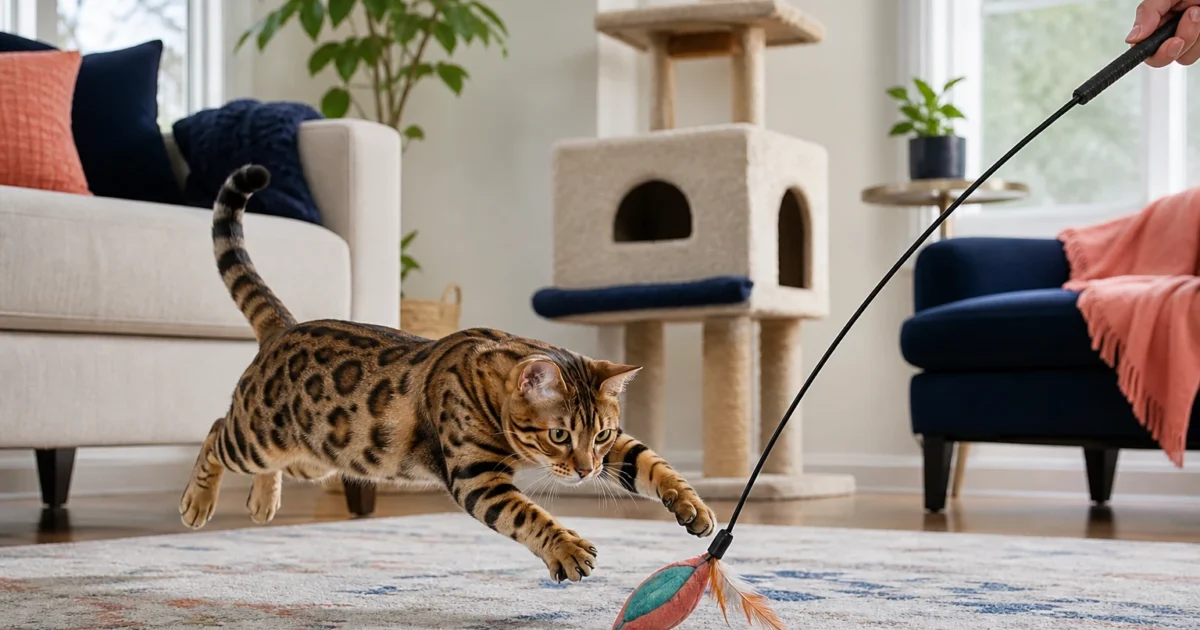
There is no single evidence-based exercise duration that fits every indoor cat. A practical plan is to offer multiple short opportunities for active play and movement each day, then adjust to the cat’s age, health, body condition, ability, and interest. Quality matters: stalking, chasing, pouncing, climbing, and catching are more useful than forcing continuous motion.
Health note: Ask a veterinarian before changing activity substantially for a kitten, senior cat, overweight cat, flat-faced breed, or cat with heart, breathing, joint, neurologic, or other health concerns. Stop if you see open-mouth breathing, collapse, unusual weakness, pain, or distress.
Why exact minute targets can mislead
Cats differ widely. A young athletic cat may choose several energetic bursts, while a senior cat may prefer slow stalking, gentle reaching, and short walks between resources. Published feline-environment guidance emphasizes opportunities to perform normal predatory and play behavior, not one mandatory workout number.
Instead of chasing a fixed target, ask three questions:
- Does my cat receive several chances to move and play?
- Can my cat perform a full sequence—watch, stalk, chase, pounce, and catch?
- Is activity stable or improving relative to this cat’s normal baseline?
A practical daily exercise framework
Offer short active-play sessions
Begin with a few minutes at a naturally alert time. Use a supervised wand toy close to the ground, vary speed, hide it briefly, and allow frequent catches. End before the cat becomes frustrated or exhausted. If the cat remains eager, add another short session later rather than turning play into forced endurance.
Add movement to meals
Place part of a measured ration in an easy food puzzle or several safe locations. This adds searching and walking without adding calories. Make the first attempt simple, especially for a cat new to puzzles.
Build movement into the home
Stable perches, scratchers, climbing routes, and separated resources encourage voluntary movement. The route must suit the cat: a senior with arthritis may need low steps, non-slip surfaces, and easy access rather than a tall vertical challenge.
Exercise by life stage
- Kittens: Offer frequent supervised play with safe toys and plenty of recovery. Prevent access to swallowable pieces and dangerous heights.
- Healthy adults: Combine interactive hunting play, food-search activities, scratching, and vertical movement.
- Seniors: Preserve gentle daily movement with accessible routes, warm rest, traction, and low-impact play. Reduced movement can be a pain sign, not simply aging.
- Overweight cats: Pair activity with a veterinarian-guided nutrition plan. Do not crash-diet cats.
Signs the level may be appropriate
The cat engages willingly, recovers normally, retains interest in later sessions, and moves without obvious discomfort. Over time, you may see more confident exploration and a steadier routine. Not every session needs to be intense.
When to stop or seek help
End the session if the cat hides, freezes, becomes distressed, limps, breathes abnormally, or cannot move normally. Open-mouth breathing in cats is not a routine fitness goal. Contact a veterinarian for a meaningful or sudden drop in activity, difficulty jumping, stiffness, weight change, or behavior that suggests pain.
Make the plan sustainable
Choose two or three activities from our indoor cat enrichment list and attach them to an existing daily routine. If low activity appears alongside other changes, review possible boredom signs and medical look-alikes. Exercise is one part of the full five-pillar indoor-cat plan.