


Research-based pre-buy guide · Product research: August 25, 2026 · Shipping terms updated: September 9, 2026
One cat stealing the other cat’s food?
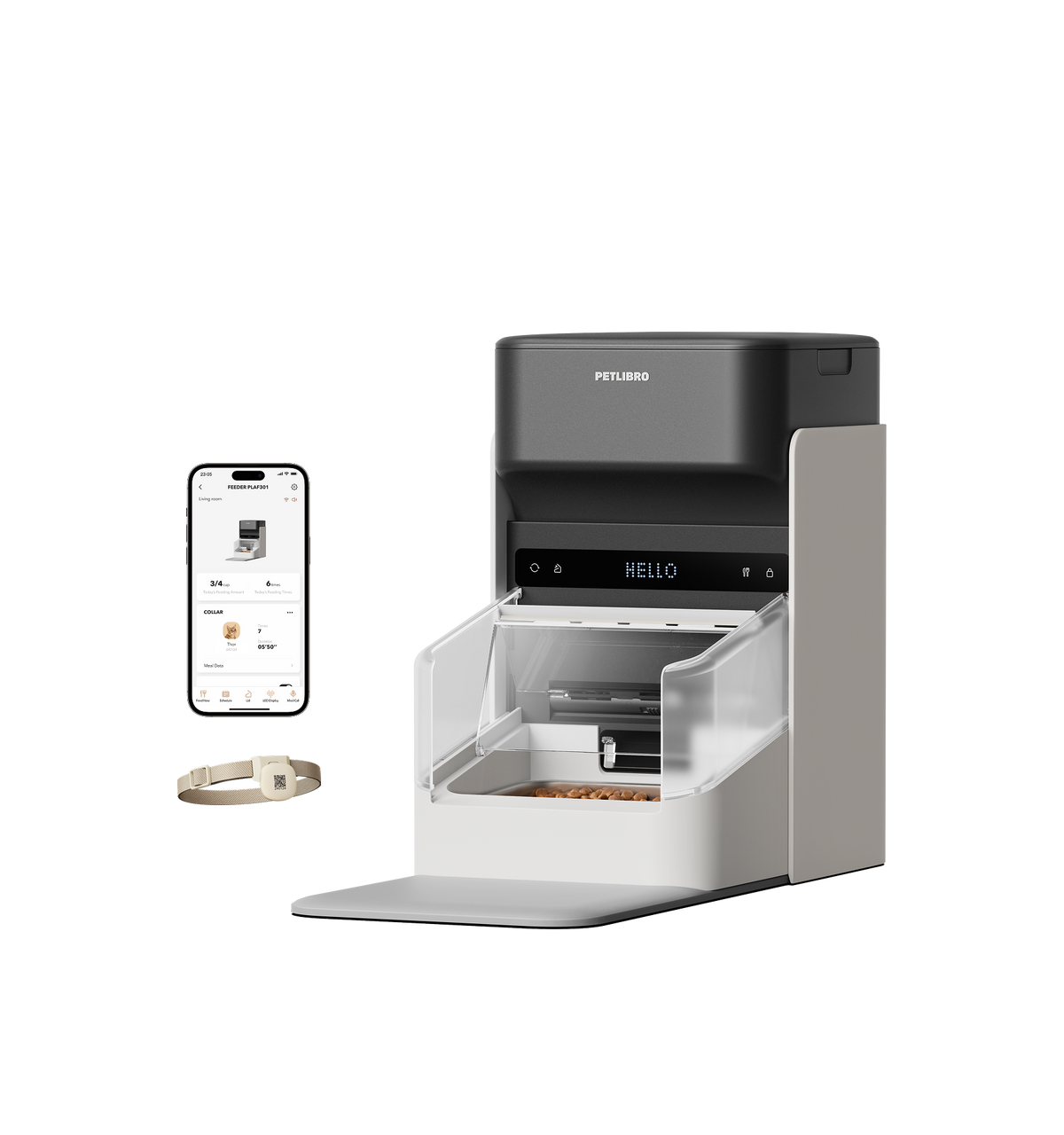
PETLIBRO One RFID may reduce the need to supervise every dry-food meal—if collar-tag access fits your cats. A standard automatic feeder controls when food appears; this model is designed to control which tagged cat can reach it.
MeowBay verdict: a specialist option for dry-food stealing—not an implanted-microchip feeder and not a one-device solution for several protected diets.
Start with the real problem
Two portions do not create two protected meals.
If one cat finishes quickly and moves to the other bowl, scheduling alone does not prevent access. One RFID combines scheduled dispensing with a moving bowl cover that responds to one dedicated PETLIBRO tag.

→
→
How the access idea works
The paired cat approaches wearing the dedicated RFID tag.
The reader mat verifies the tag and allows the lid to unlock.
The food is not left permanently open to every cat in the room.
60-second buyer check
Buy it for the right household. Skip it for the wrong one.
Good fit when
- One cat repeatedly steals another cat’s dry food.
- A slow grazer needs protected access.
- The protected cat comfortably wears the supplied tag.
- You want scheduling and selective access together.
- You can give each protected diet its own station.
Skip it when
- You have one cat with no access problem.
- Your cats comfortably share the same dry food.
- You require implanted-microchip recognition.
- Your cat cannot tolerate a collar or moving lid.
- You feed wet food.
- You expect several tags to unlock one feeder.
- You want battery-only Wi-Fi operation.
What is documented
The useful features—and their limits.
Selective access
The reader mat verifies one dedicated collar tag before the lid unlocks. It does not read implanted microchips or other brands’ tags.
Scheduled dry meals
PETLIBRO advertises up to 10 meals or snacks daily and a 3 L tank for 2–15 mm dry kibble.
Feeding records
The app records feeding and access events. Treat logs as household context—not proof of health or exact consumption.
Outage backup
Three D batteries can preserve meal schedules. Wi-Fi and reset functions are disabled during battery-only use.
Choose by problem, not technology
Which feeder type actually fits?
Standard automatic feeder
Best for: timing and portions
- Scheduled dry meals
- Usually lower cost
- No wrong-cat barrier
Best match for this problem
PETLIBRO One RFID
Best for: tagged-cat dry-food access
- Scheduling plus access control
- One dedicated collar tag
- Dry food only
Implanted-microchip bowl
Best for: collar-free access control
- Reads compatible microchips
- Scheduling varies
- Wet-food options may exist
Cost reality
Price the protected setup—not only one device.
Also allow for three D backup batteries per unit, cleaning time, floor space and any optional PETLIBRO Care plan you deliberately choose. Current offers can lower the purchase price, but they can expire without notice.
Ownership details buyers can miss
- Place multiple One RFID feeders at least 10 inches apart.
- Keep compatible fountains at least 5.9 inches away.
- Inspect the reader-mat connection regularly.
- Introduce the moving cover gradually for a cautious cat.
- Continue observing eating behavior; the feeder is not veterinary treatment.
Before checkout
Questions that change the buying decision.
Does it read an implanted microchip?
No. PETLIBRO states that One RFID works only with its dedicated collar tag.
Can two tags unlock the same feeder?
No. PETLIBRO states that one feeder synchronizes with one tag. Separate protected diets normally require separate units.
Can it hold wet food?
No. It is specified for dry kibble between 2 and 15 mm.
What happens when the internet fails?
Saved schedules are designed to continue. Battery-only operation preserves scheduled feeding but disables Wi-Fi and the reset button.
How heavy is the tag?
PETLIBRO lists it at 4.2 g and supplies it on a snap-release collar.
Is setup difficult?
Setup includes assembling the feeder, attaching the reader mat, pairing the dedicated tag, connecting the app and creating a schedule. A cautious cat may also need gradual training around the moving lid.
Does the feeder prove exactly how much a cat ate?
No. Feeding and access records provide useful context, but they are not medical evidence or a substitute for observation.
MeowBay bottom line
Worth considering for food stealing—when the collar-tag trade-off works.
The strongest reason to buy One RFID is not the app. It is the combination of scheduled dry meals and access designed around one tagged cat. Choose it when that directly removes daily meal supervision. Skip it when you need wet food, implanted-microchip access or a collar-free solution.
Check Current Price at PETLIBRO Paid link
Shipping and purchase terms checked September 9, 2026: PETLIBRO advertises free standard shipping on orders over $99 to the contiguous United States, a 30-day money-back guarantee and a 24-month warranty. Alaska, Hawaii and U.S. overseas territories are excluded from shipping. Conditions apply; verify the current checkout price, delivery eligibility and return terms before ordering. Read the official shipping policy.
Source and evidence
official PETLIBRO One RFID product page. Checked August 25, 2026. Specifications, price, shipping and warranty statements are manufacturer information, not independent MeowBay test results.

4 Comments on “PETLIBRO One RFID Feeder Review: Is It Worth It for Food Stealing?”
Comments are closed.