


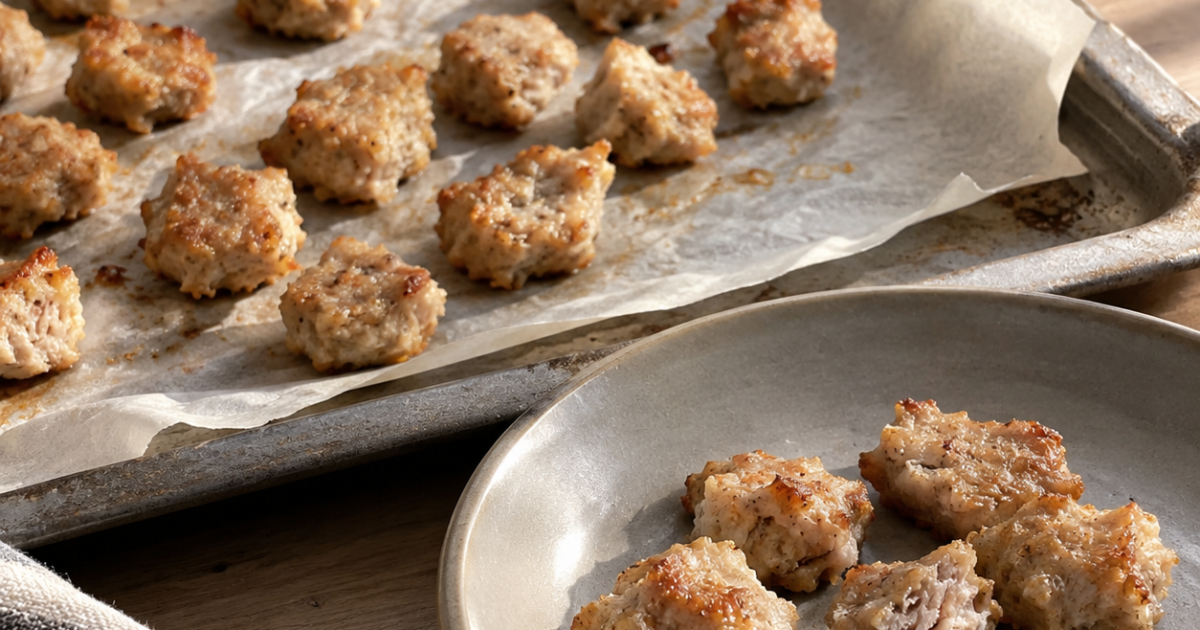
Quick answer: Use plain boneless turkey cooked to 165°F, egg, and a little oat flour. Mince it finely, bake small pieces until set, and exclude skin, gravy, stuffing, onion, garlic, and seasoning.
Turkey can be a useful treat protein, but holiday turkey is often surrounded by ingredients that do not belong in a cat recipe. The safest approach is to reserve an unseasoned piece before brining, rubbing, stuffing, or saucing the human meal.
This version works year-round with plain cooked turkey. It is separate from the Christmas star-shaped variation so this page can focus on the base technique and food-safety decisions.
Why this version is practical
- The recipe starts with a separately cooked plain portion.
- Small pieces make a lean meat easier to chew.
- The formula works outside the holiday season.
- It avoids ambiguous leftovers and pan drippings.
Ingredient decisions that matter
Brining matters: Meat from a brined or injected turkey may contain more sodium even if the surface looks plain.
Dark versus white meat: Dark meat is moister and richer; white meat is leaner and may need a teaspoon of water.
Leftovers are not automatically safe: Contact with stuffing, gravy, onions, or garlic makes the ingredient unsuitable.
Plain Turkey Cat Treats
Small baked treats made with fully cooked unseasoned turkey, egg, and oat flour.
- Prep
- 15 minutes
- Cook
- 14–18 minutes
- Total
- 45 minutes including cooling
- Yield
- About 28 small bites
- Storage
- Refrigerate 3–4 days
Equipment
- Mixing bowl
- Fork or food processor
- Parchment-lined baking sheet
- Measuring cups and spoons
- Food thermometer when starting with raw animal protein
Ingredients
- 1 cup (about 140 g) plain cooked turkey (165°F; skin, bones, and seasoning removed)
- 1 large egg
- 1/3 cup (about 34 g) plain oat flour
- 1–2 teaspoons water (if needed)
Instructions
- Confirm the turkey: Use meat cooked plain to 165°F. Remove bones, skin, fat pockets, and every trace of gravy or seasoning.
- Preheat: Heat the oven to 325°F and line a baking sheet.
- Mix: Mince turkey finely, mix with egg, then add oat flour. Add water by the teaspoon only if the mixture remains crumbly.
- Shape: Press into a thin rectangle and cut small squares, or roll tiny balls and flatten them.
- Bake and cool: Bake 14 to 18 minutes until set. Cool fully and refrigerate promptly.
What “done” should look and feel like
The cooled bite should hold together and break without becoming a hard shard. Since the turkey is pre-cooked, the bake sets the egg and dries the surface rather than cooking a raw meat center.
Mince across the grain and keep pieces uniform. Long turkey fibers pull treats apart when rolled too large.
How much to serve
Start with one small piece. Holiday days often involve multiple family members offering food, so designate one person to track the cat’s treats.
Because ingredient brands and treat sizes vary, calculate calories from the labels you actually use. Divide the batch total by the number of finished pieces, then fit that amount inside your cat’s daily treat allowance rather than guessing.
Storage and food-safety plan
Refrigerate 3–4 days in a sealed container or freeze for up to one month. Do not mix fresh treats with an older batch.
Discard any portion that develops an unusual smell, visible moisture, mold, or texture change. When in doubt, throw it away; home-baked treats do not contain the preservatives used in many commercial products.
Useful substitutions—and what not to substitute
- Use chicken only through the chicken recipe.
- Plain water can correct dryness.
- Do not use gravy, stuffing, cranberry sauce, deli turkey, smoked turkey, or turkey seasoned for people.
Common problems and fixes
Using “plain-looking” holiday turkey
Confirm how it was brined, injected, rubbed, stuffed, and cooked. If uncertain, do not use it.
The dough shreds
Mince the turkey more finely or pulse briefly before mixing.
Too many family treats
Set aside the day’s total portion and ask everyone to give from the same container.
When this recipe is not the right choice
Skip if the turkey preparation history is uncertain, or if the cat has a poultry allergy, veterinary diet, pancreatitis history, or strict sodium or calorie restriction.
Frequently asked questions
Can I use Thanksgiving turkey?
Only if a portion was kept completely plain before brining, seasoning, stuffing, gravy, or sauces.
Can cats eat turkey skin?
Leave it out. It adds fat and may carry seasoning.
Can I use ground turkey?
Yes if it is cooked plain to 165°F, drained, cooled, and measured after cooking.
Can these replace dinner?
No. They are treats, not a complete diet.
How do I keep them soft?
Use uniform small pieces, avoid excess flour, and check the tray early.
Safety references
These sources support the general treat, hygiene, ingredient-avoidance, and cooking-safety guidance on this page. They do not constitute veterinary approval of this individual recipe.