

Looking for everyday meals? Compare complete cat foods →
Quick answer: The safest homemade cat-treat approach is a tiny, fully cooked recipe made from plain ingredients your cat already tolerates. Treats should remain under about 10% of daily calories and should never replace complete and balanced cat food.
Start with the right kind of recipe
Choose by the cat’s normal protein history, the texture they can safely manage, and the amount you can portion consistently. A short ingredient list is easier to audit, but “homemade,” “grain-free,” or “few ingredients” does not automatically mean healthier. The useful question is whether every ingredient has a purpose and fits the individual cat.
This collection focuses on treats rather than complete homemade diets. Cats have precise nutrient requirements, and a daily diet should not be improvised from online recipes. Keep the normal complete food unchanged unless a qualified veterinary professional has formulated a different plan.
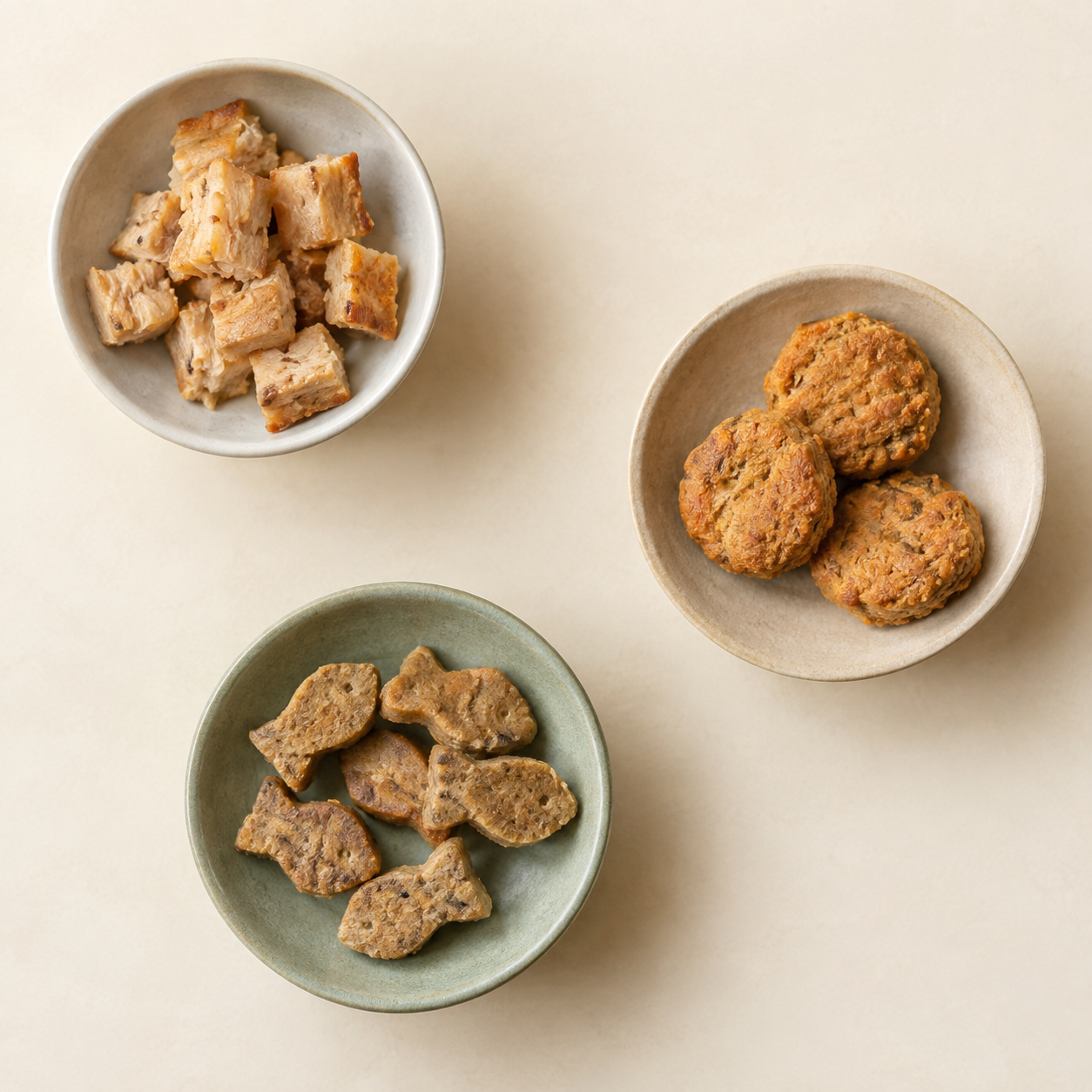
20 homemade treat recipes and guides
Occasional treats only. Choose a format, then open the full recipe for ingredients, portions and storage guidance.
Baked and small-batch treats
 Baked · Tuna3-Ingredient TunaView recipe →
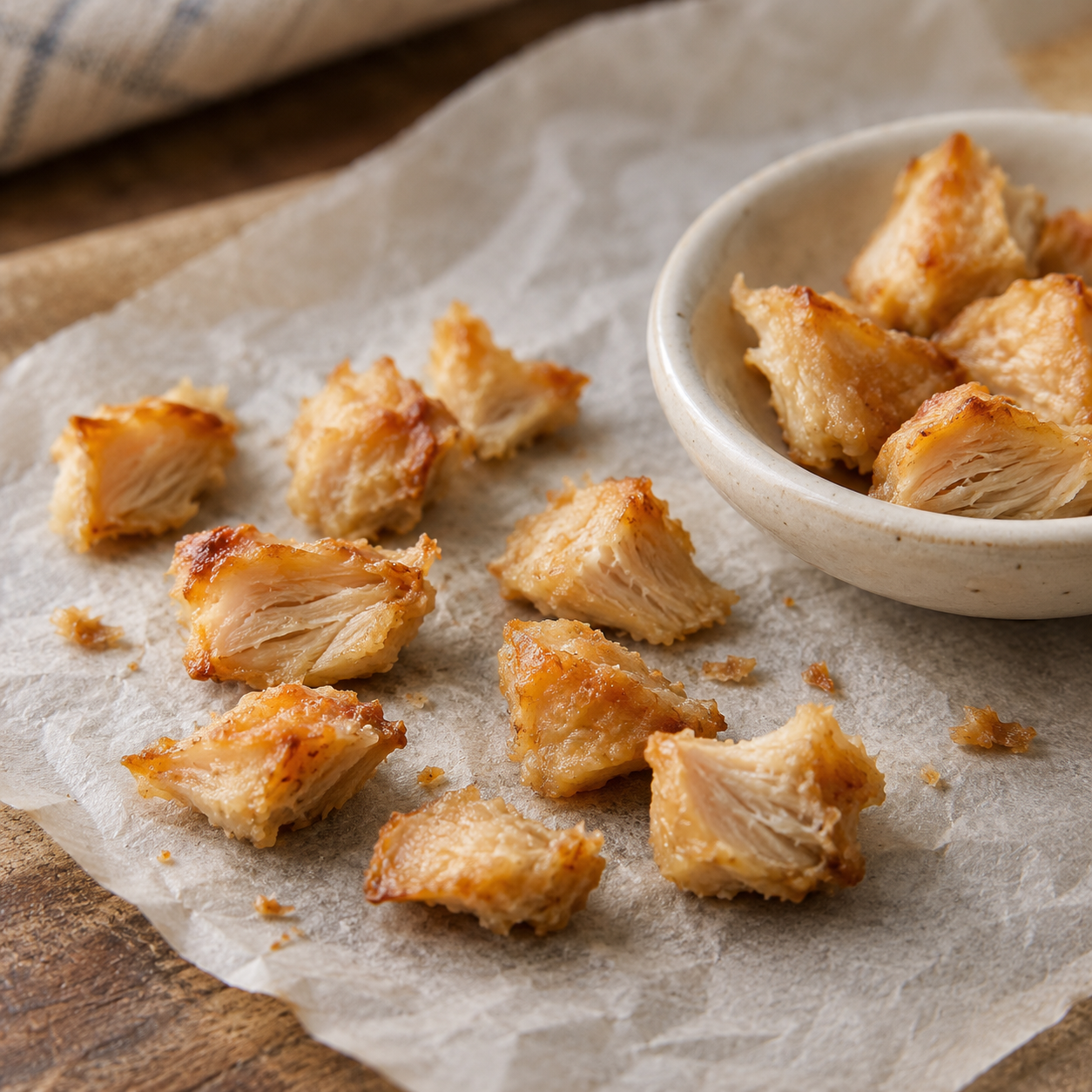 Baked · ChickenChicken BitesView recipe →
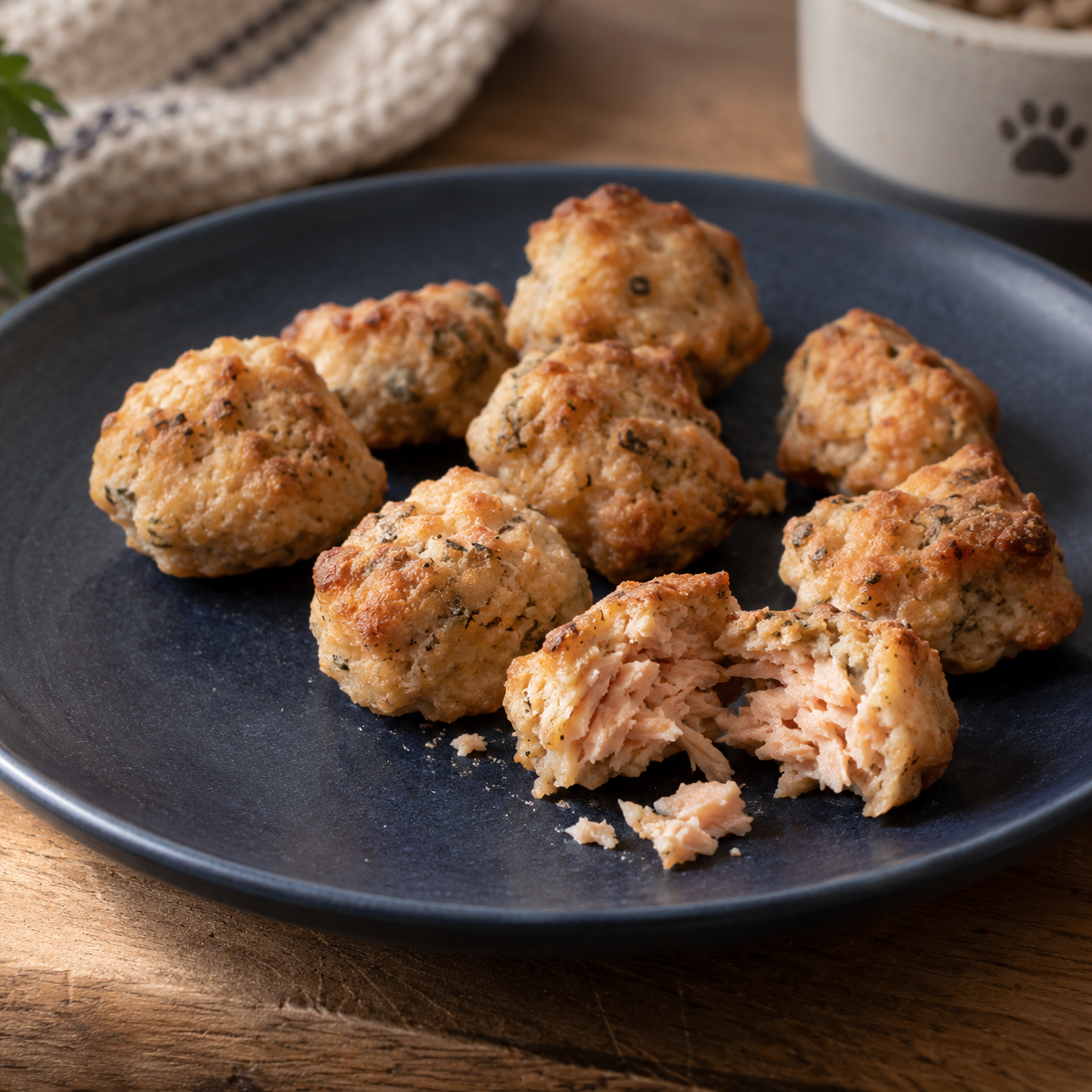 Baked · SalmonSalmon BitesView recipe →
 Baked · FishTuna & PumpkinView recipe →
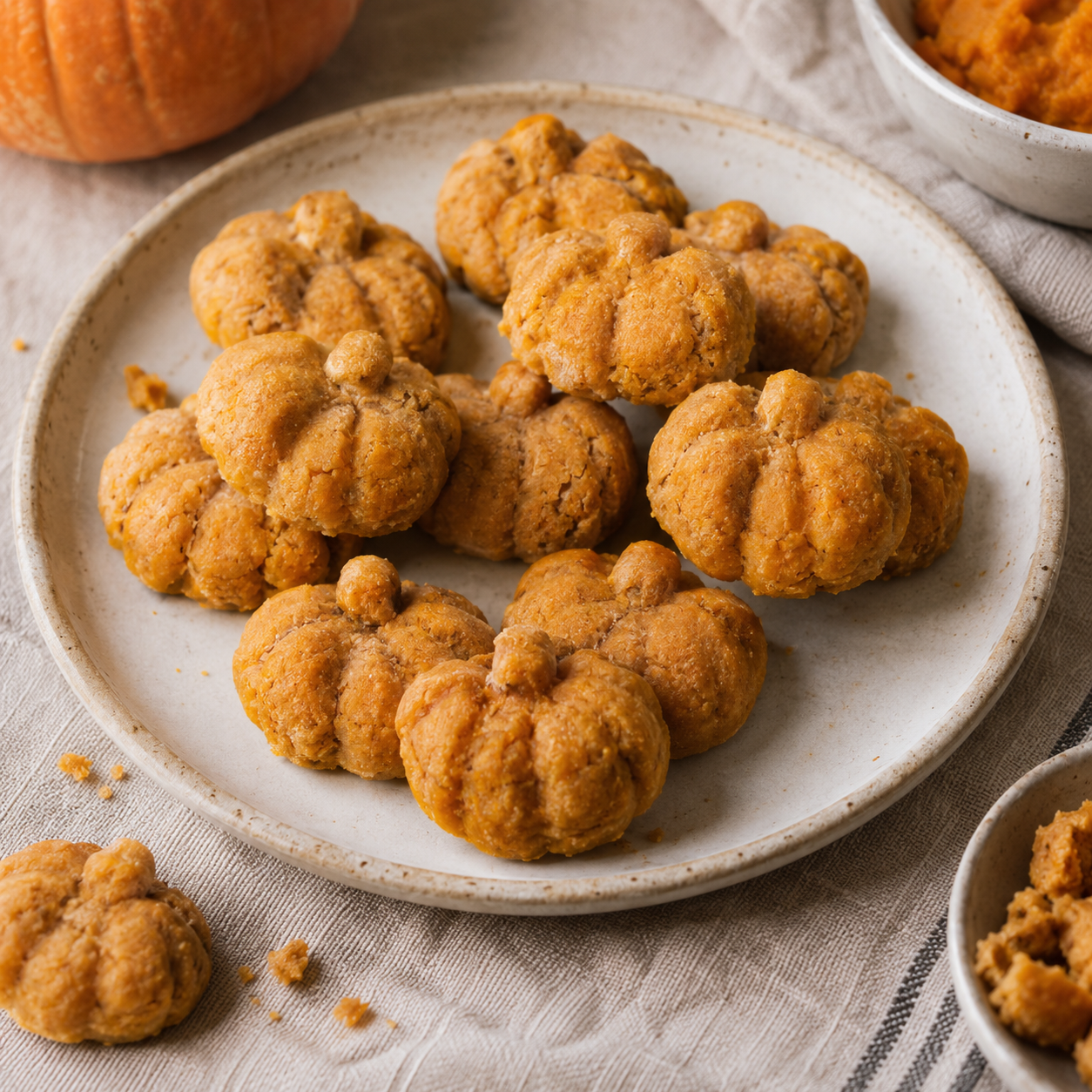 Baked · PumpkinPumpkin TreatsView recipe →
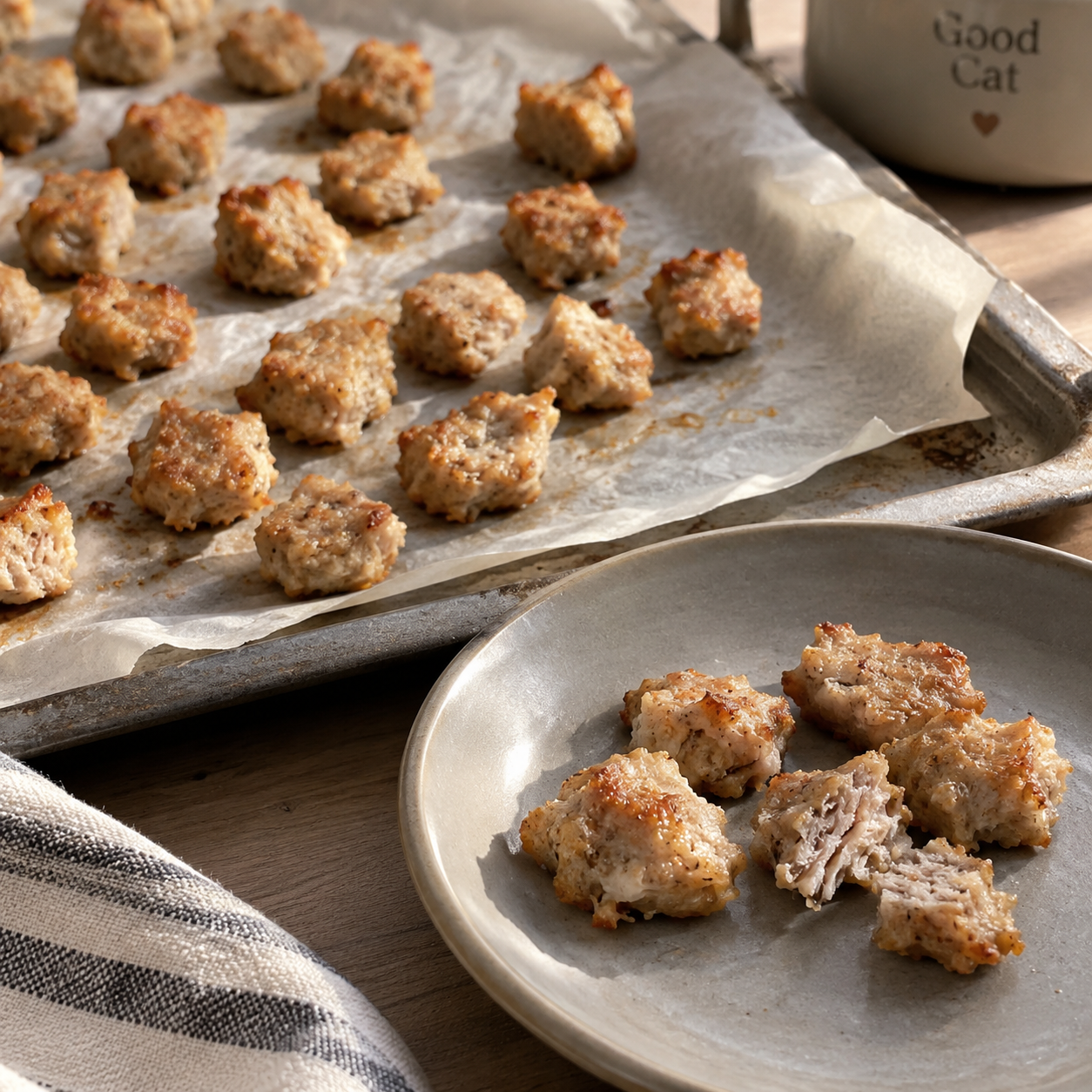 Baked · TurkeyTurkey BitesView recipe →
 Baked · PoultryChicken & EggView recipe →
 Baked · TunaCatnip Tuna TreatsView recipe →
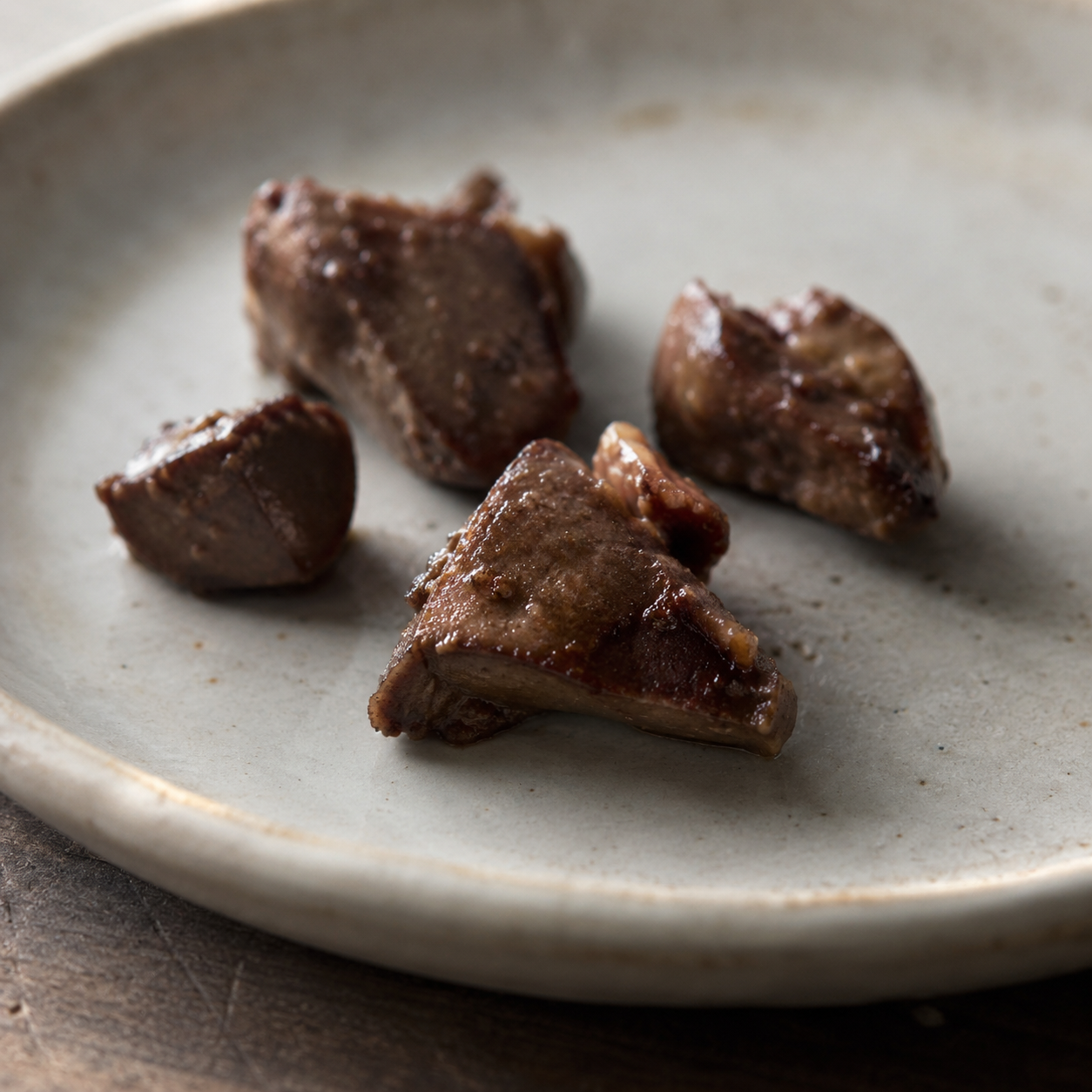 Occasional · LiverLiver TreatsView recipe →
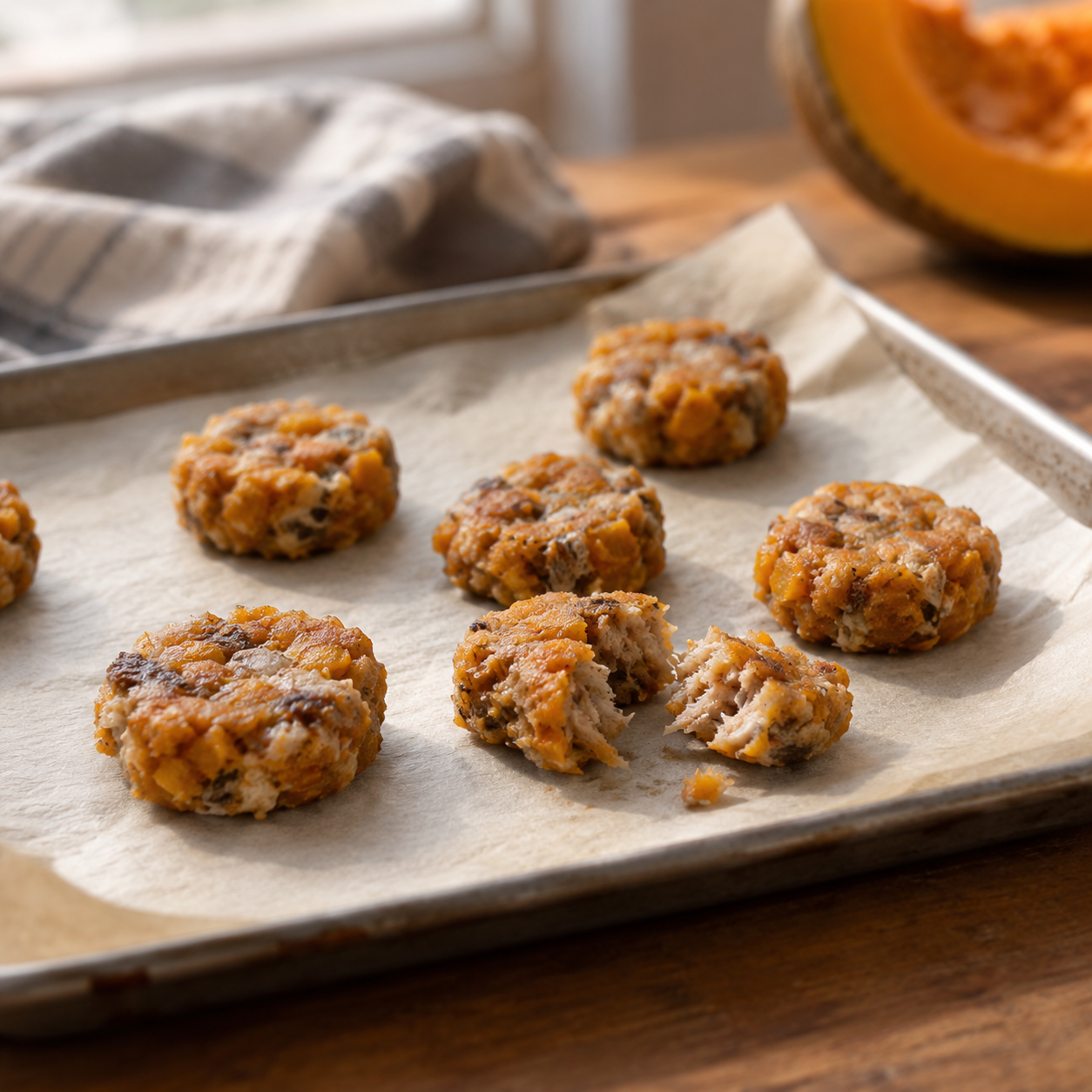 Baked · FishSardine & PumpkinView recipe →
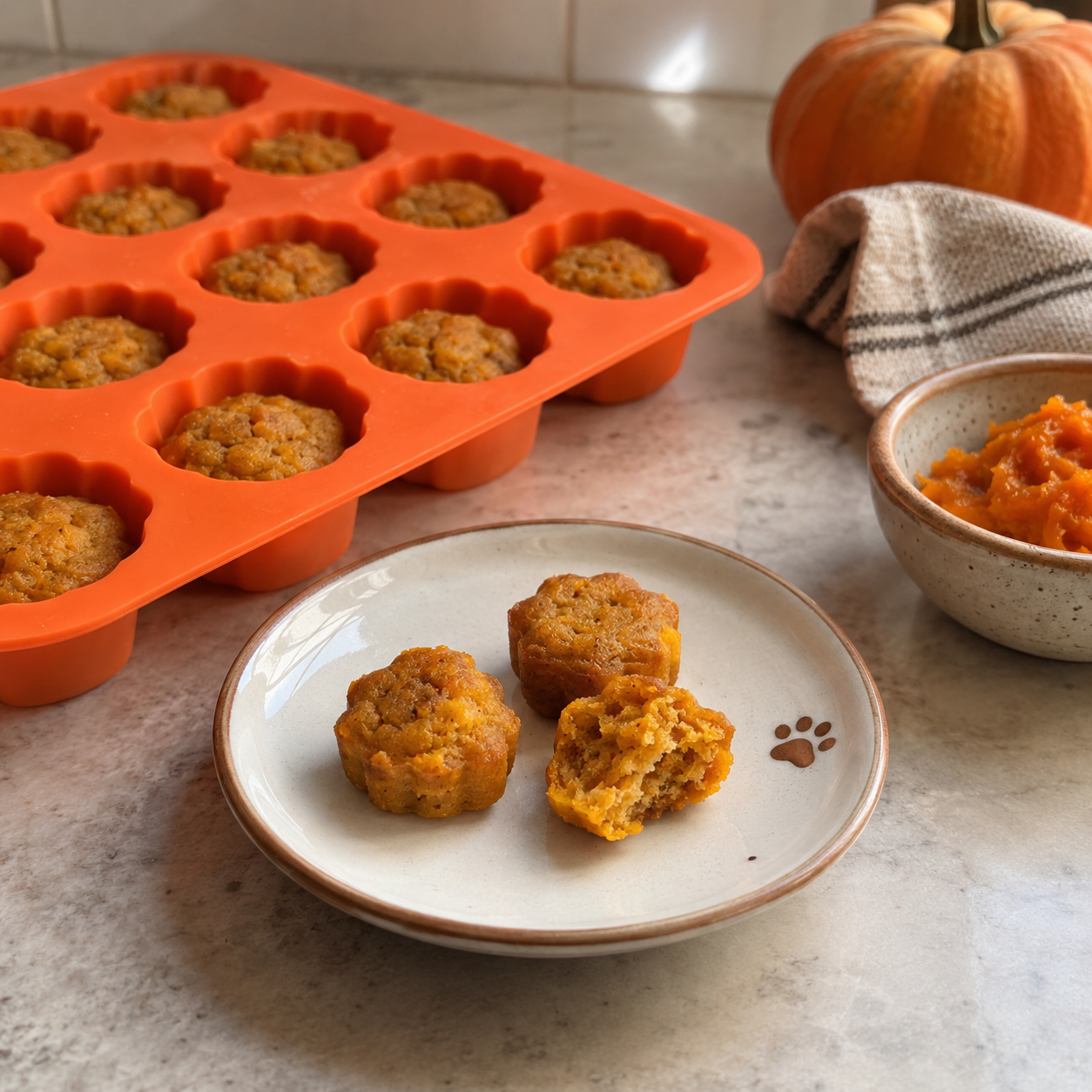 Baked · PumpkinPumpkin Mini MuffinsView recipe →
Soft and frozen treats

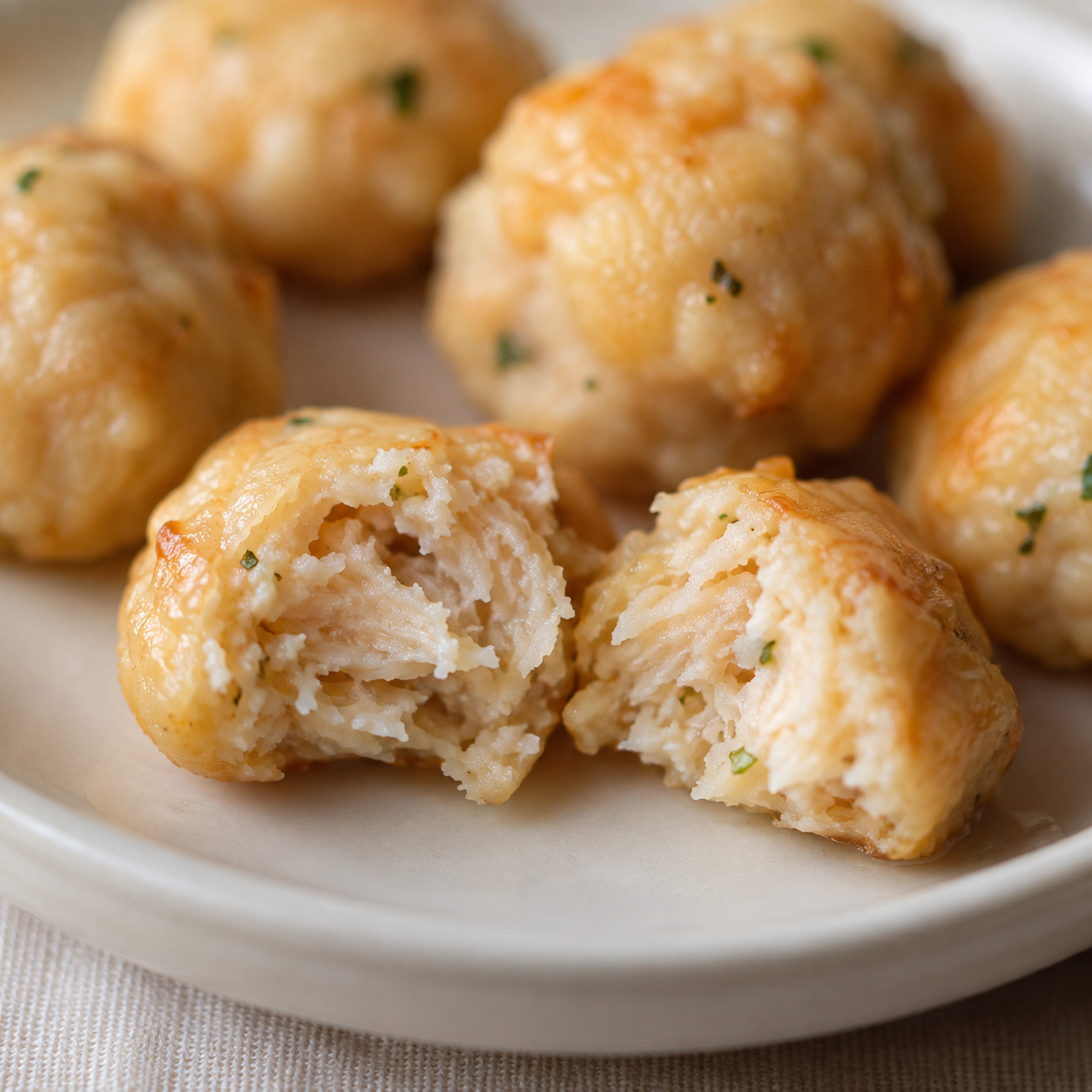
Birthday and seasonal treats

Choose by ingredients and preferences
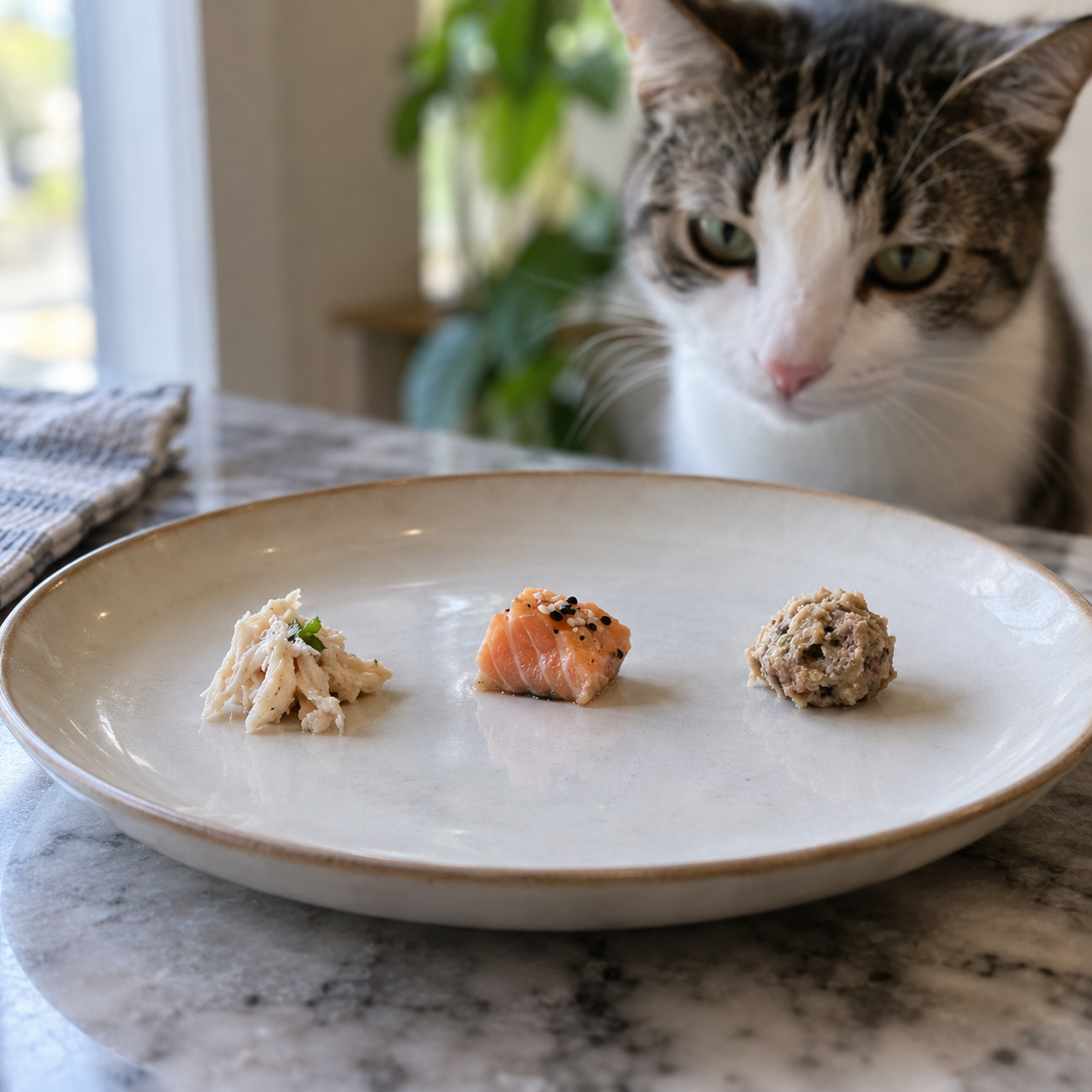
How to choose without guessing
For the shortest ingredient list
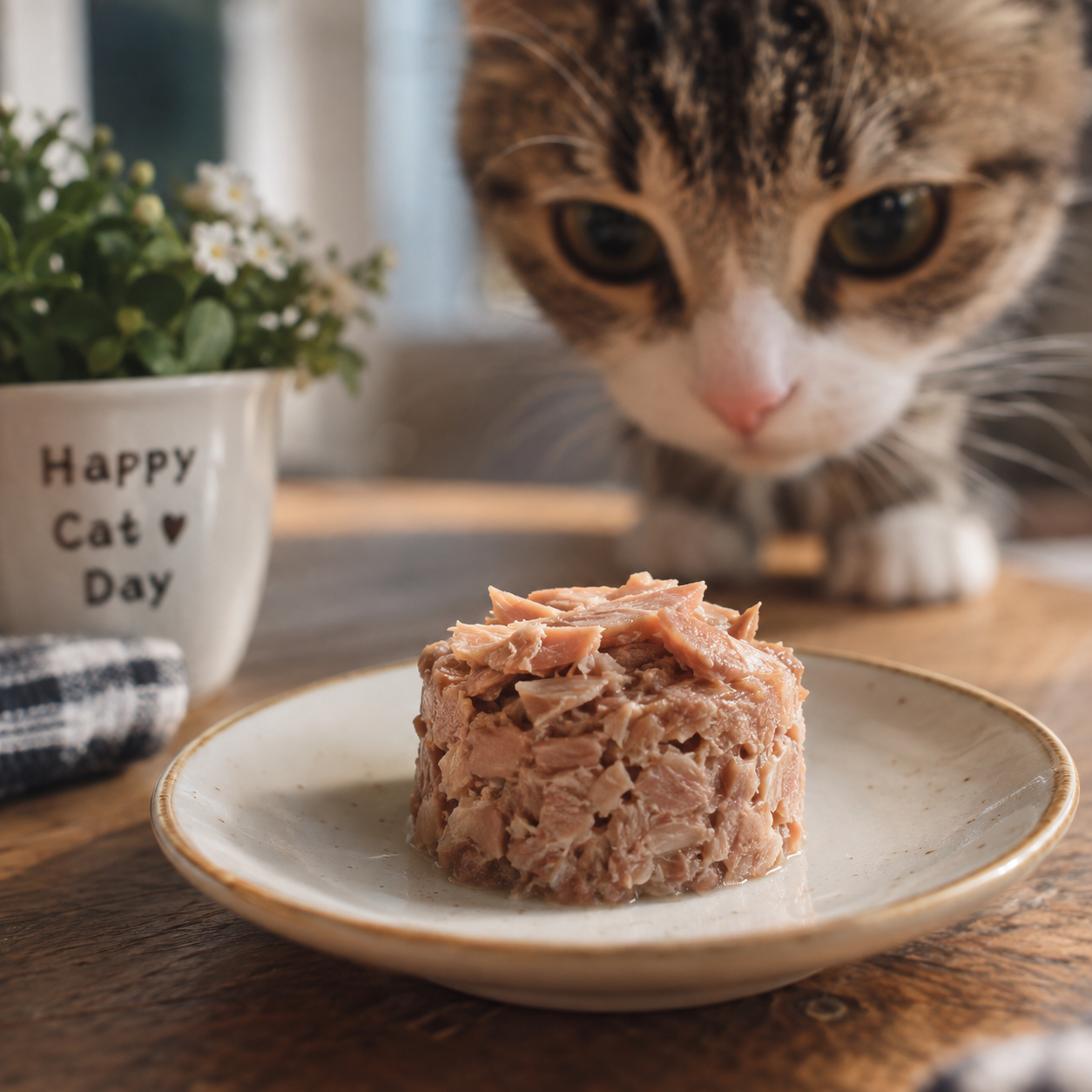
Start with the three-ingredient tuna recipe, then calculate calories from the exact labels and finished yield.
For a poultry option
Use the chicken recipe only when plain chicken and egg already fit the cat’s diet. Avoid rotisserie meat, skin, gravy, stock, and seasoning.
For a softer or colder format
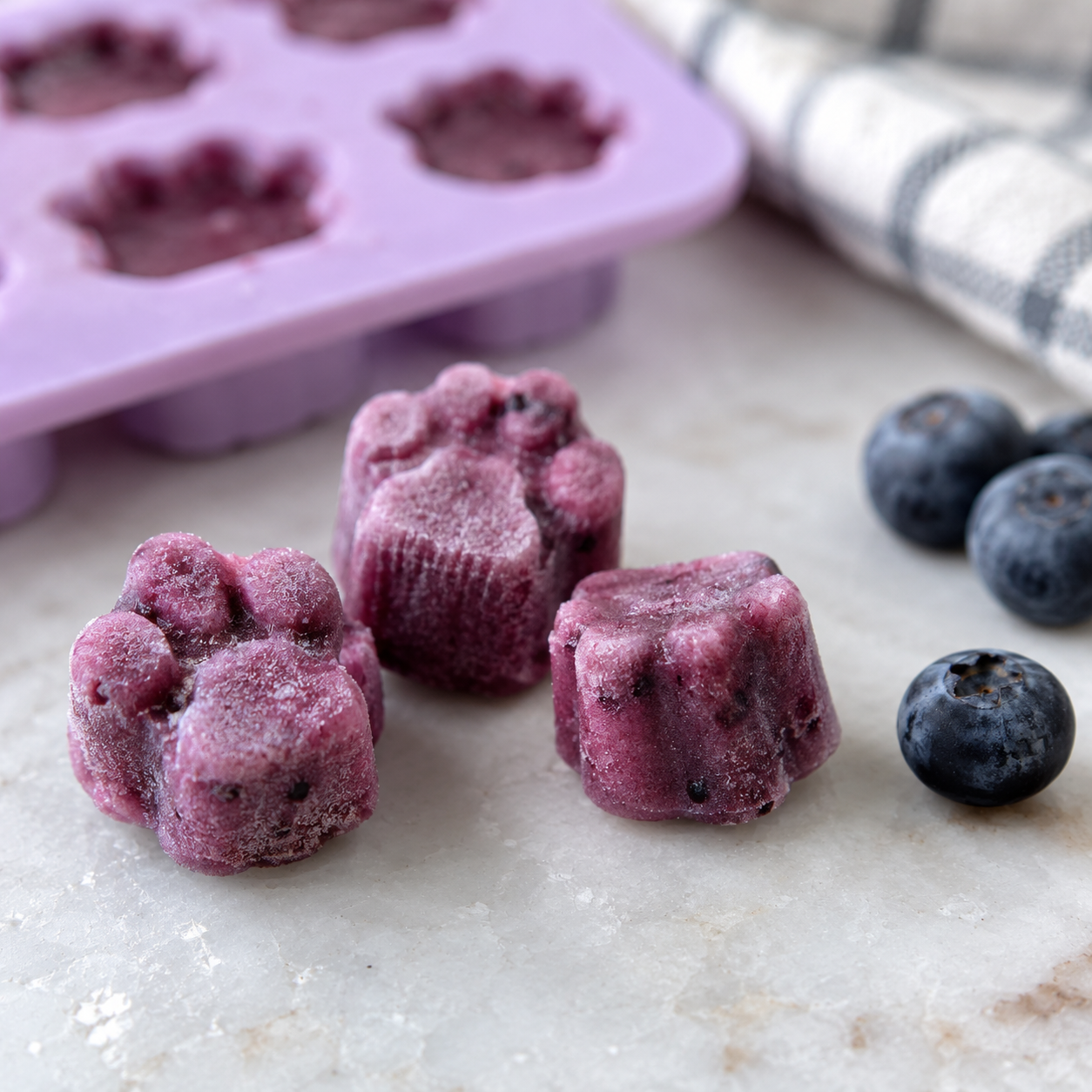
Frozen tuna dots can offer a supervised texture change, but they are not hydration therapy and should soften before serving. Cats with dental pain or swallowing difficulty need veterinary assessment rather than a recipe workaround.
For celebrations
The tuna birthday cake is deliberately small and divided into several servings. A birthday does not justify sugar, dairy frosting, candles near the cat, or an oversized portion.
For a selective eater
The picky-cat roundup uses a one-bite preference test. Sudden food refusal, weight loss, vomiting, drooling, hiding, or apparent pain needs prompt veterinary attention.
The portion rule that matters most
WSAVA advises that treats should make up no more than about 10% of daily calories, leaving at least 90% for complete and balanced food. That limit includes every commercial treat, homemade bite, food topper, and table extra combined. Because brands and finished piece sizes differ, calculate the batch from the labels actually used and divide by the measured yield.
Begin with a fragment or one pea-size piece. Introduce one new recipe at a time and watch for vomiting, diarrhea, itching, facial swelling, or appetite changes. Stop the new treat and contact a veterinarian when a reaction is suspected.
Ingredients MeowBay leaves out
Do not add onion, garlic, chives, chocolate, caffeine, alcohol, grapes, raisins, xylitol, nutmeg, salty broth, gravy, seasoning blends, sugar, dairy frosting, or decorative toppings. Use plain cooked animal proteins, inspect fish for hard fragments, and avoid raw meat, raw fish, and raw egg.
Storage is part of the recipe
Homemade treats do not have the validated shelf stability of packaged products. Cool cooked treats promptly, refrigerate them in a clean sealed container, freeze surplus in measured portions, and discard anything with unusual odor, moisture, mold, or texture change. Never assume that a dry surface makes home-oven “jerky” shelf-stable.
Frequently asked questions
Can homemade treats replace cat food?
No. These recipes are occasional extras and are not complete and balanced diets.
Are three ingredients automatically healthier?
No. Ingredient suitability, total calories, preparation, and the cat’s main diet matter more than ingredient count.
Can kittens eat these recipes?
Ask the kitten’s veterinarian first because growth diets leave little room for extras.
Safety references
These sources support the general treat, hygiene, ingredient-avoidance, and cooking-safety guidance on this page. They do not constitute veterinary approval of this individual recipe.