


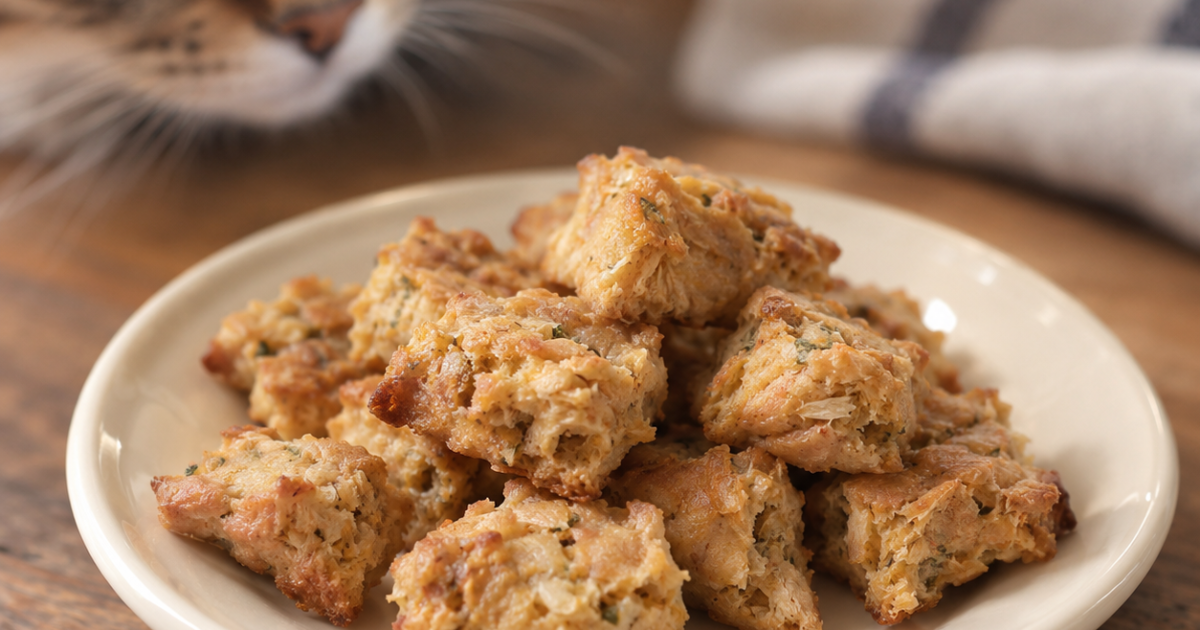
Quick answer: Add only 1/2 teaspoon of plain dried catnip to a small batch of tuna, egg, and oat-flour treats. Bake tiny pieces, cool fully, and offer one while observing the cat’s response.
Catnip is not a universal upgrade. Some cats show no response, while others become excited, relaxed, or overstimulated. The recipe therefore uses a measured amount and keeps the first serving deliberately small.
The tuna provides the food aroma; catnip is only an optional sensory accent. Use dried catnip sold for cats—not a garden blend containing pesticides, essential oils, or unidentified herbs.
Why this version is practical
- Catnip quantity is measured rather than added by eye.
- The batch remains primarily a tuna treat.
- Small pieces reduce both treat calories and catnip exposure per serving.
- The article addresses behavioral response instead of promising excitement.
Ingredient decisions that matter
Catnip source: Choose a product labeled for cats with catnip as the only ingredient.
Catnip response: Genetics and age influence whether a cat responds; indifference is normal.
Essential oils are not substitutes: Never use concentrated catnip oil in this recipe.
Measured Catnip Tuna Bites
Tiny baked tuna treats containing a modest, clearly measured amount of plain dried catnip.
- Prep
- 12 minutes
- Cook
- 12–16 minutes
- Total
- 42 minutes including cooling
- Yield
- About 24 small bites
- Storage
- Refrigerate 3 days
Equipment
- Mixing bowl
- Fork or food processor
- Parchment-lined baking sheet
- Measuring cups and spoons
- Food thermometer when starting with raw animal protein
Ingredients
- 1 can (5 oz / 142 g) no-salt-added tuna in water (drained well)
- 1 large egg
- 1/2 cup (about 50 g) plain oat flour
- 1/2 teaspoon plain dried catnip (cat product with no added oils)
Instructions
- Prepare: Heat the oven to 325°F and line a baking sheet.
- Mix the base: Mash tuna and egg, then fold in oat flour to make a soft dough.
- Add catnip: Crush the measured catnip between clean fingers and distribute it evenly through the entire batch.
- Shape and bake: Cut or pinch pea-size pieces and bake 12 to 16 minutes until set.
- Cool and assess: Cool fully. Offer one small piece in a calm area and observe rather than immediately offering more.
What “done” should look and feel like
The treats should be dry at the edges and set in the center. Catnip leaves may darken slightly, but the treats should not be baked until the fish is deeply browned.
Crush the catnip immediately before mixing to release aroma, then distribute it through the batch rather than sprinkling a concentrated pile on top.
How much to serve
Offer one small piece. If the cat becomes agitated, mouthy, or uncomfortable, stop and use a plain treat another day. Do not combine the serving with a large catnip play session.
Because ingredient brands and treat sizes vary, calculate calories from the labels you actually use. Divide the batch total by the number of finished pieces, then fit that amount inside your cat’s daily treat allowance rather than guessing.
Storage and food-safety plan
Refrigerate for up to 3 days or freeze for one month. Label the container clearly so these are not confused with plain tuna treats.
Discard any portion that develops an unusual smell, visible moisture, mold, or texture change. When in doubt, throw it away; home-baked treats do not contain the preservatives used in many commercial products.
Useful substitutions—and what not to substitute
- Omit catnip entirely for a plain version.
- Use silver vine only under separate product-specific guidance, not as a one-for-one culinary substitute.
- Do not add catnip essential oil, mixed herbal tea, cannabis products, or garden herbs treated with chemicals.
Common problems and fixes
Adding catnip by eye
Measure it. More is not necessarily more appealing and makes the serving inconsistent.
Expecting every cat to respond
Treat non-response as normal; do not increase the amount to force a reaction.
The cat becomes overstimulated
Remove the treat, provide space, and do not offer catnip again until discussing the response with a veterinarian if it was concerning.
When this recipe is not the right choice
Skip for cats that react poorly to catnip, cats with fish or egg allergies, cats on therapeutic diets, and cats whose veterinarian recommends avoiding stimulating products. Keep catnip away from pregnant cats unless a veterinarian says otherwise.
Frequently asked questions
How much catnip goes in the batch?
This recipe uses 1/2 teaspoon distributed across about 24 small treats.
Why does my cat ignore catnip?
Not every cat inherits sensitivity to catnip, and young kittens may not respond.
Can I use fresh catnip?
This recipe is standardized for dried catnip. Fresh leaves contain different moisture and should not be substituted without retesting the dough.
Can I use catnip oil?
No. Concentrated oils are not interchangeable with dried plant material.
Are these complete food?
No. They are occasional treats.
Safety references
These sources support the general treat, hygiene, ingredient-avoidance, and cooking-safety guidance on this page. They do not constitute veterinary approval of this individual recipe.