


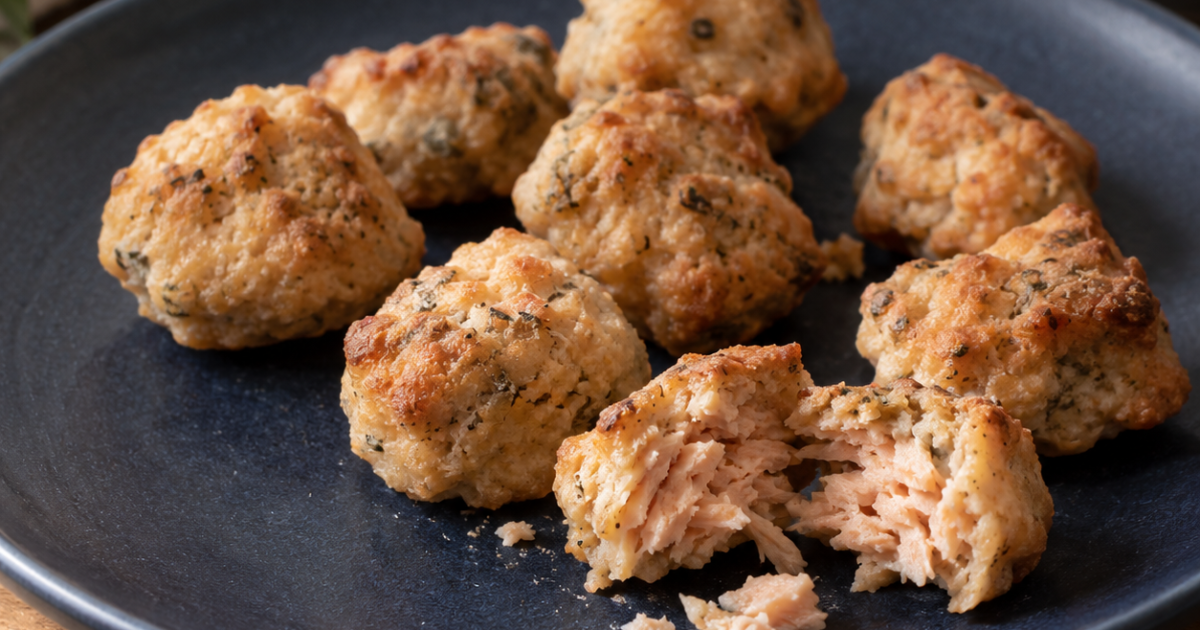
Quick answer: Homemade salmon cat treats can be made from plain cooked or no-salt-added canned salmon, egg, and oat flour. Remove bones and skin fragments, bake small pieces until fully set, cool completely, and keep them refrigerated.
Salmon gives a strong aroma without needing cheese, butter, or seasoning. That makes it useful when a pea-size reward needs to attract attention. The recipe still works best when the fish is drained carefully and the dough is kept thin.
Canned products can contain salt, oil, smoke flavor, or sauces. Fresh salmon must be cooked before use to at least 145°F (63°C). This recipe is for occasional rewards and is deliberately not positioned as a source of therapeutic omega-3s.
Why this version is practical
- Strong aroma supports very small reward sizes.
- The recipe avoids smoke flavor, salt, oil, and decorative dairy toppings.
- Thin pieces provide a clear doneness cue and can be broken into crumbs.
- Both fresh and carefully selected canned salmon can work.
Ingredient decisions that matter
Fresh versus canned: Fresh salmon gives more control over sodium; canned salmon saves time but requires label reading and careful draining.
Bones: “Boneless” still deserves a manual check. Never rely on blending to make a hard fragment safe.
Fat: Salmon is richer than chicken. Keep portions particularly small for a cat unaccustomed to fatty fish.
Baked Salmon Cat Treats
Small salmon treats bound with egg and oat flour, baked until set without added salt or seasoning.
- Prep
- 12 minutes
- Cook
- 12–16 minutes
- Total
- 42 minutes including cooling
- Yield
- About 24 tiny bites
- Storage
- Refrigerate 3 days
Equipment
- Mixing bowl
- Fork or food processor
- Parchment-lined baking sheet
- Measuring cups and spoons
- Food thermometer when starting with raw animal protein
Ingredients
- 5 oz (142 g) plain cooked salmon or no-salt-added canned salmon in water (drained; bones and skin removed)
- 1 large egg (beaten)
- 1/2 cup (about 50 g) plain oat flour
Instructions
- Prepare the fish: Cook fresh salmon to 145°F if needed. Cool, remove skin and every bone, or drain canned salmon thoroughly. Flake the fish very finely.
- Make the dough: Heat the oven to 325°F. Mix salmon and egg, then fold in oat flour until the dough can be pressed without running.
- Cut tiny pieces: Press between parchment to about 1/4 inch thick. Cut small squares or use the narrow end of a clean piping bag to form small dots.
- Bake: Bake 12 to 16 minutes until the tops look dry and the centers are set. Rotate once if the oven browns unevenly.
- Cool and portion: Cool completely, count the yield, and offer one piece only after it reaches room temperature.
What “done” should look and feel like
The treats should appear matte rather than wet, release from the parchment, and feel set through the center. Do not use dark browning as the target; it can make small fish treats unnecessarily hard.
If using a food processor, pulse briefly. Overprocessing salmon releases more fat and can make the dough slick. Chilling the mixture for 10 minutes is preferable to adding large amounts of flour.
How much to serve
Start with half of one small piece, especially if salmon is new to your cat. Wait for any digestive response before offering it again on another day, and include the calories within the overall treat allowance.
Because ingredient brands and treat sizes vary, calculate calories from the labels you actually use. Divide the batch total by the number of finished pieces, then fit that amount inside your cat’s daily treat allowance rather than guessing.
Storage and food-safety plan
Refrigerate in an airtight container for up to 3 days because fish treats are moist and highly perishable. Freeze excess pieces for up to one month. Do not leave fish treats at room temperature for extended training sessions.
Discard any portion that develops an unusual smell, visible moisture, mold, or texture change. When in doubt, throw it away; home-baked treats do not contain the preservatives used in many commercial products.
Useful substitutions—and what not to substitute
- Use the tuna recipe for tuna; its moisture differs.
- Use water by the teaspoon if adjustment is needed.
- Do not use smoked salmon, gravlax, seasoned fillets, fish in sauce, or salmon spread.
Common problems and fixes
Oil leaks onto the tray
Use well-drained fish, remove fatty skin, chill the dough, and avoid adding extra oil.
The center stays soft
Cut smaller, thinner pieces and bake for several more minutes; do not raise the oven sharply.
The smell becomes unpleasant in storage
Discard the batch. Store fully cooled treats in the refrigerator and make a smaller batch next time.
When this recipe is not the right choice
Skip salmon treats for cats with fish allergy, pancreatitis history, fat-sensitive digestion, a therapeutic diet, or a veterinarian-directed restriction. Consult the veterinarian if repeated vomiting, diarrhea, itching, or ear inflammation follows a new food.
Frequently asked questions
Can cats eat salmon skin?
For this recipe, remove it. Skin adds fat and makes portion consistency harder.
Can I use smoked salmon?
No. It is commonly high in sodium and may contain additional flavorings.
Do these treats provide enough omega-3 for a health condition?
Do not use a homemade treat to dose a nutrient or treat disease. Ask a veterinarian about an appropriate product and amount.
Can I freeze them?
Yes, for about one month in a sealed freezer container. Thaw a small portion in the refrigerator.
Can they replace fish-based cat food?
No. The recipe is not complete and balanced.
Safety references
These sources support the general treat, hygiene, ingredient-avoidance, and cooking-safety guidance on this page. They do not constitute veterinary approval of this individual recipe.