


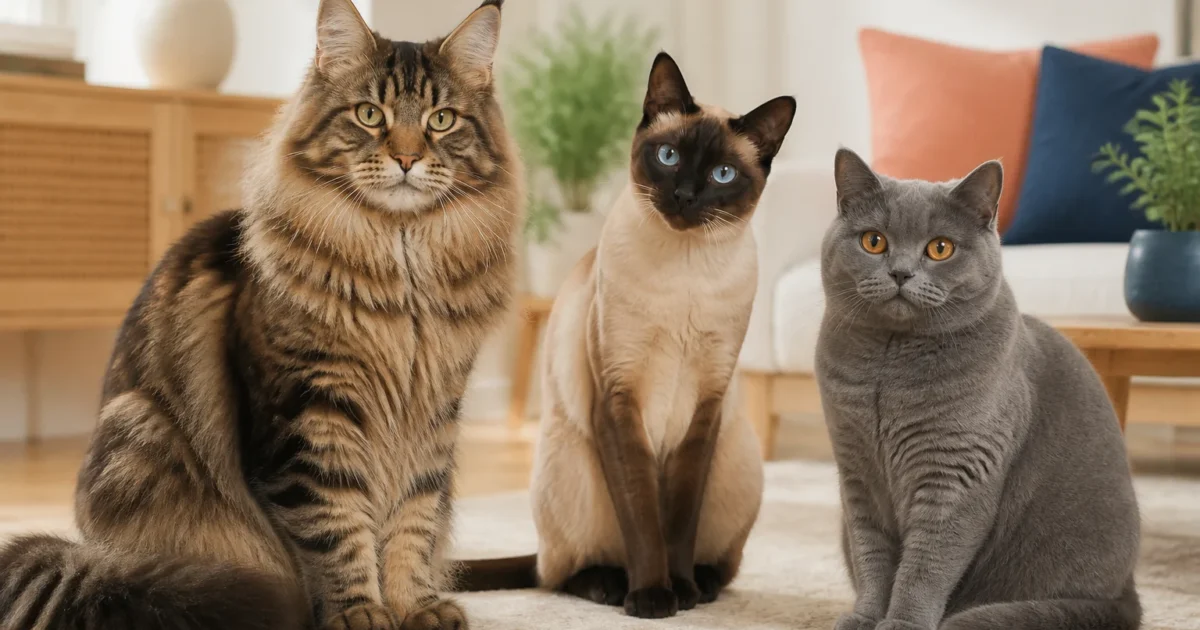
Short answer: Choose a cat by its individual temperament, health, grooming needs and fit with your household. Breed descriptions offer starting points, not promises about behaviour. This is a selection of 15 familiar cat types, including mixed-breed domestic shorthairs, rather than a verified 2026 popularity ranking.
Table of Contents
Quick Comparison Chart
| Breed | Size | Energy | Shedding | Social | Best For |
|---|---|---|---|---|---|
| Persian | M | Low | High | Moderate | Quiet homes |
| Maine Coon | XL | Medium | High | High | Families |
| Siamese | M | High | Low | Very High | Interactive owners |
| Ragdoll | L | Low | Medium | Very High | Families, apartments |
| British Shorthair | M-L | Low | Medium | Moderate | Busy professionals |
| Bengal | M-L | Very High | Low | High | Active owners |
| Abyssinian | M | Very High | Low | High | Active homes |
| Scottish Fold | M | Medium | Medium | High | Apartments |
| Sphynx | M | High | None | Very High | Owners prepared for skin care |
| Russian Blue | M | Medium | Low | Medium | Single owners |
| Burmese | M | High | Low | Very High | Families, multi-pet |
| Norwegian Forest | XL | Medium | Very High | Moderate | Cold climates |
| Birman | M-L | Medium | Medium | High | First-time owners |
| Devon Rex | S-M | Very High | Very Low | Very High | Playful homes |
| Domestic Shorthair | Varies | Varies | Low-Med | Varies | Everyone |
1. Persian — The Elegant Couch Companion
_(cropped_2023).jpg)
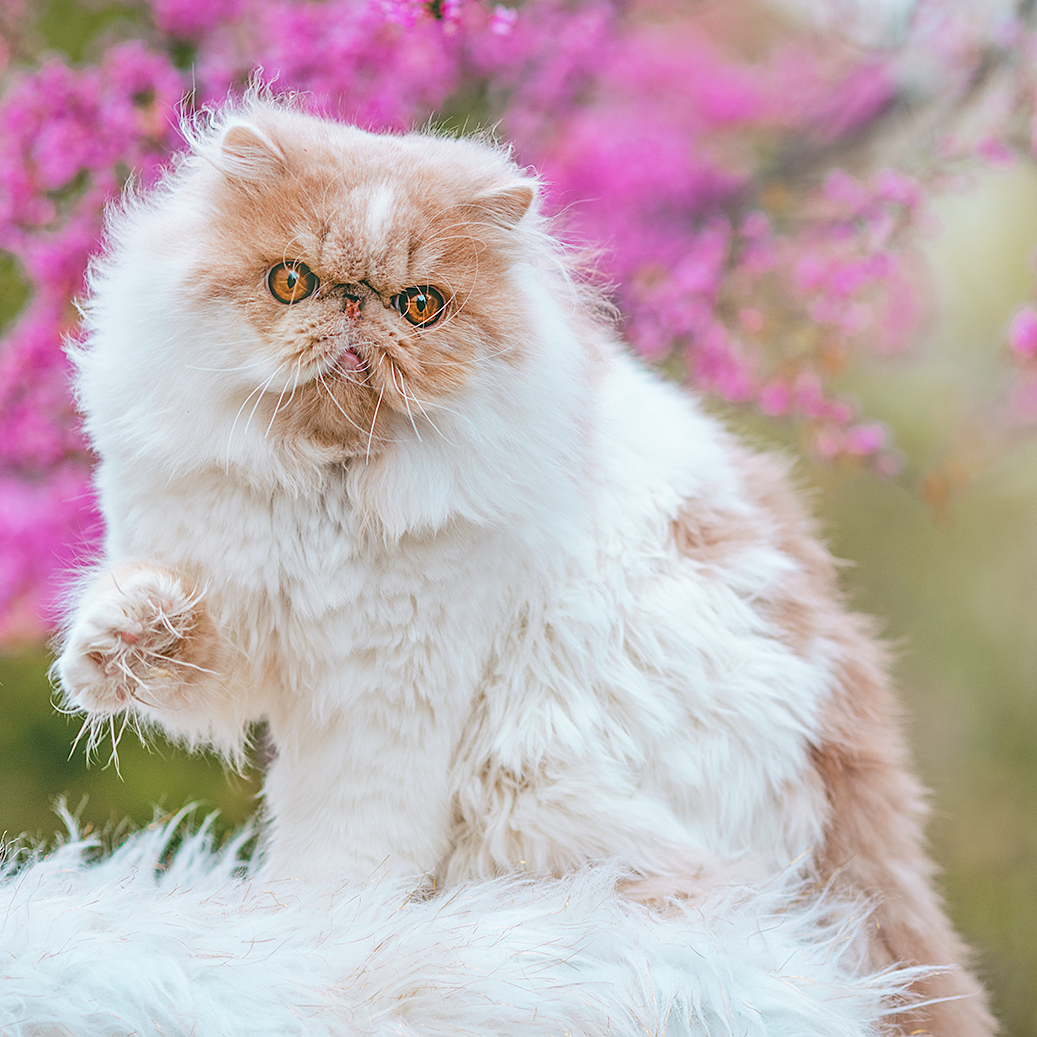
The Persian is the poster child of lap cats — calm, gentle, and perfectly content to lounge on a velvet cushion all day. Their flat face and luxurious long coat make them one of the most recognizable breeds in the world.
At a Glance
- Lifespan: 12–17 years
- Weight: 7–12 lbs
- Personality: Quiet, affectionate, low-energy, gentle
- Grooming: Daily brushing required — mats form quickly
- Health concerns: Brachycephalic syndrome (breathing issues), polycystic kidney disease (PKD), eye discharge due to flat face
Best for: Quiet households, apartment living, owners who enjoy grooming sessions. Not ideal for households with rambunctious children or very active dogs.
2. Maine Coon — The Gentle Giant
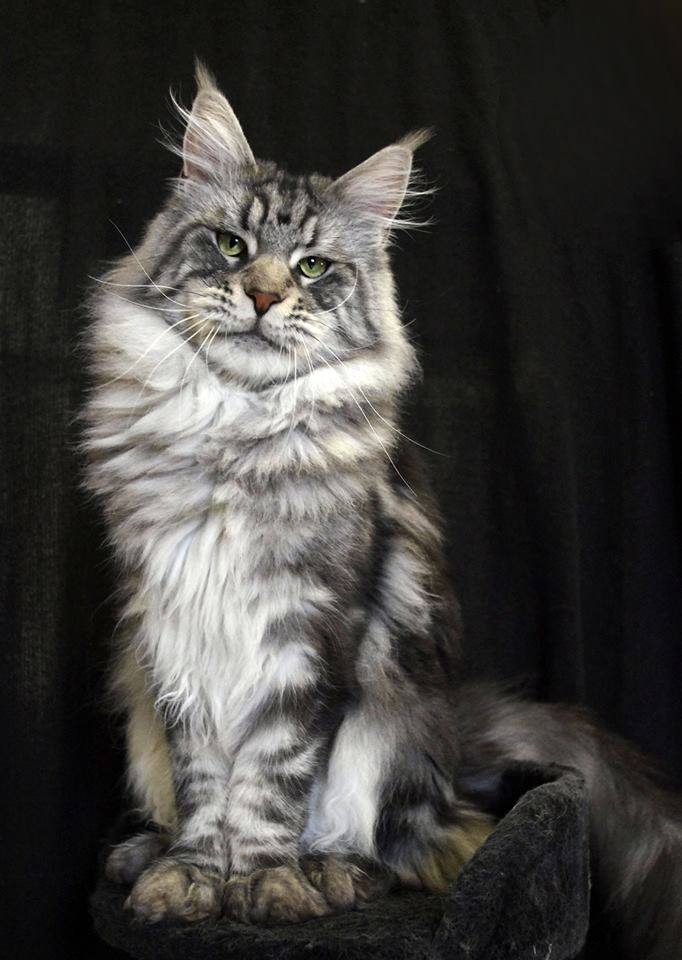

Maine Coons are the largest domestic cat breed, with males reaching 18–25 lbs (some hit 30+). Despite their intimidating size, they’re famously gentle, sociable, and dog-like in their loyalty.
At a Glance
- Lifespan: 12–15 years
- Weight: 10–25 lbs (males), 8–12 lbs (females)
- Personality: Playful, social, intelligent, loves water
- Grooming: 2–3× weekly brushing, extra in spring shedding season
- Health concerns: Hypertrophic cardiomyopathy (HCM), hip dysplasia, spinal muscular atrophy
Best for: Families with kids, multi-pet households, owners who want a dog-like cat that plays fetch and greets you at the door.
3. Siamese — The Social Butterfly
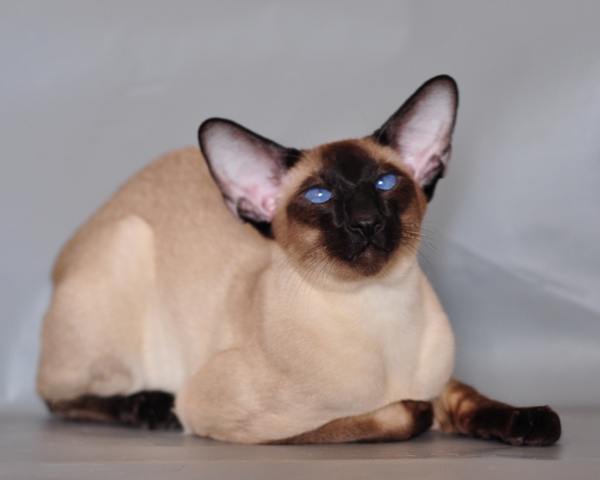

Siamese cats are the extroverts of the cat world. They will follow you room to room, hold loud conversations, and demand constant attention. They’re basically cats with the personality of a golden retriever.
At a Glance
- Lifespan: 15–20 years (one of the longest-lived breeds)
- Weight: 6–10 lbs
- Personality: Vocal, social, intelligent, needy (in a good way)
- Grooming: Minimal — short coat, weekly brushing
- Health concerns: Amyloidosis, respiratory issues, crossed eyes (cosmetic, not health threat)
Best for: Owners who are home frequently and want a conversational companion. NOT for people who want a quiet, independent cat.
4. Ragdoll — The Floppy Sweetheart
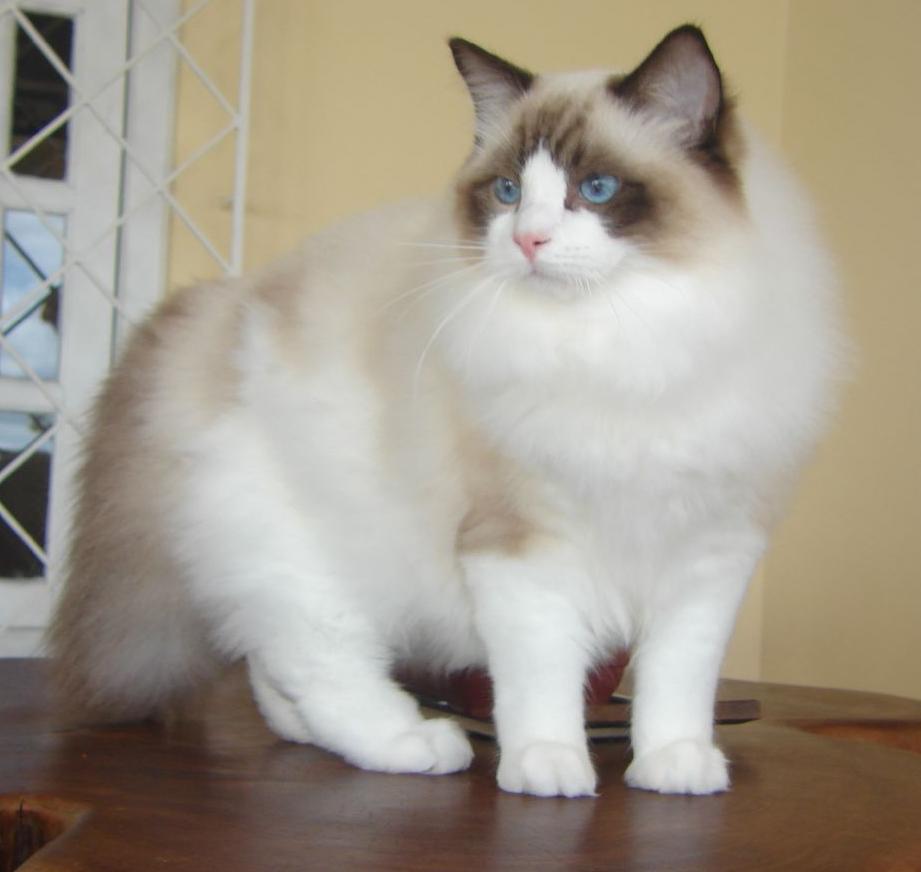

Named for their tendency to go limp when picked up, Ragdolls are among the most laid-back, affectionate breeds. They’re large (up to 20 lbs) but incredibly gentle.
At a Glance
- Lifespan: 12–17 years
- Weight: 10–20 lbs
- Personality: Docile, affectionate, follows you everywhere, loves being held
- Grooming: 2× weekly — semi-long coat tangles less than Persian
- Health concerns: HCM, bladder stones, floppy kitten syndrome (rare)
Best for: Families with gentle children, apartment living, first-time cat owners. Great with other pets.
5. British Shorthair — The Dignified Independent
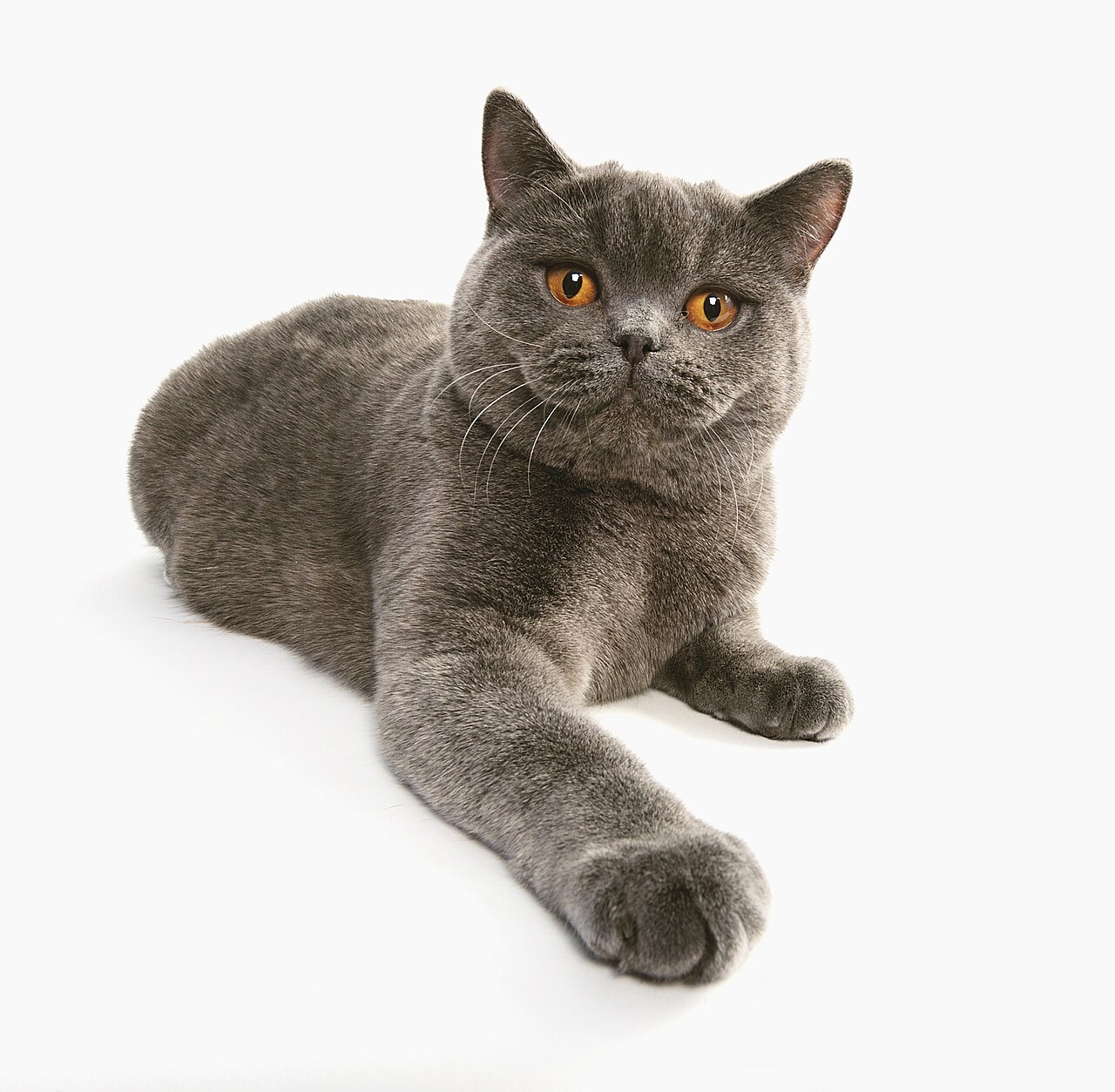

The British Shorthair is the “teddy bear” of cats — round face, dense plush coat, and a calm, dignified temperament. They’re affectionate but not clingy — perfect for people who want a cat that respects boundaries.
At a Glance
- Lifespan: 14–20 years
- Weight: 9–18 lbs
- Personality: Calm, loyal, tolerant, independent but present
- Grooming: Weekly brushing
- Health concerns: HCM, obesity (they love food), hemophilia B
Best for: Working professionals, quieter homes, owners who want an affectionate cat that doesn’t demand constant attention.
6. Bengal — The Wild-Looking Athlete
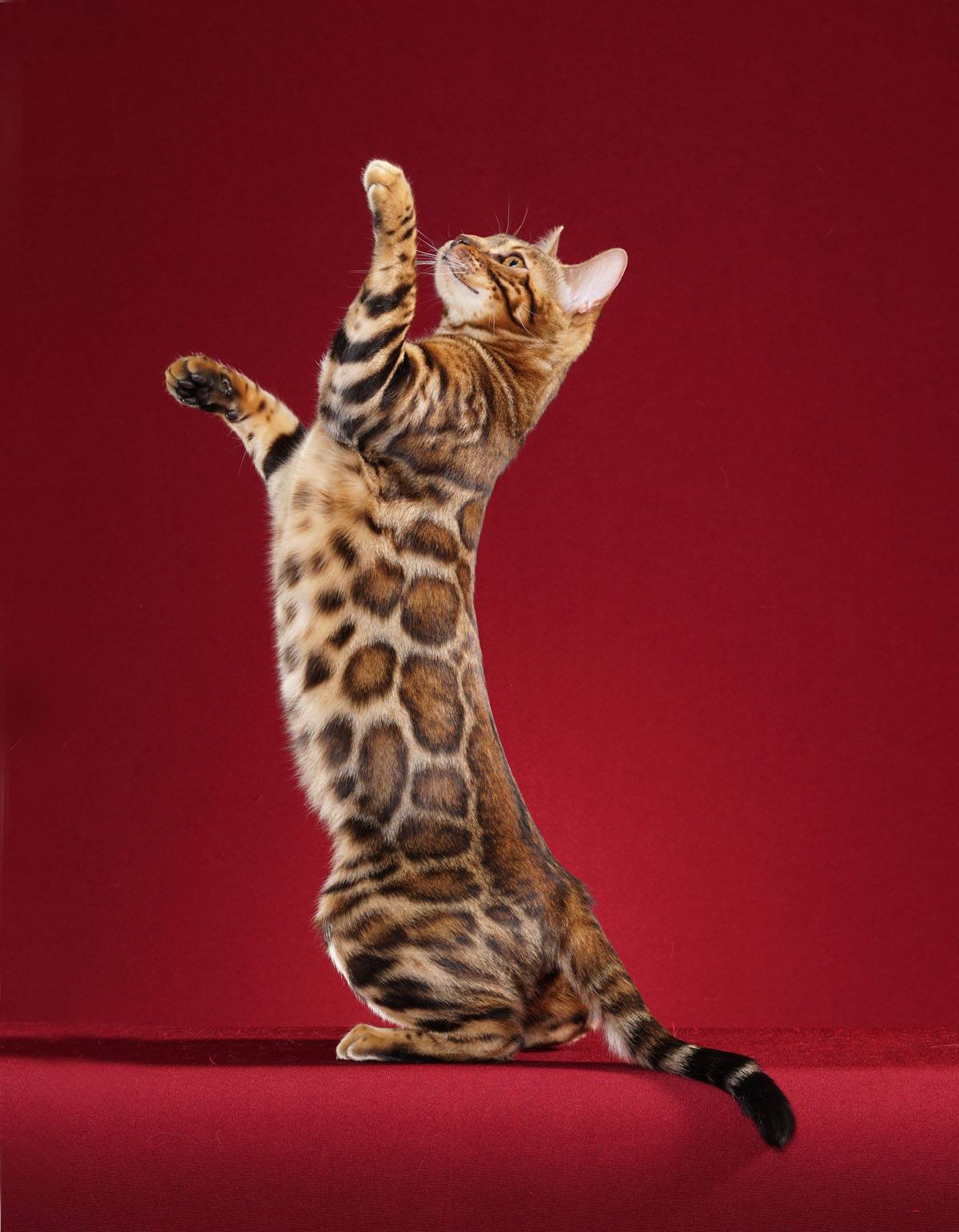

Bengals look like tiny leopards and act like perpetual kittens. They’re muscular, athletic, incredibly intelligent, and need significant physical and mental stimulation.
At a Glance
- Lifespan: 12–16 years
- Weight: 8–15 lbs
- Personality: Energetic, intelligent, vocal, loves water and climbing
- Grooming: Minimal — short, pelted coat
- Health concerns: HCM, progressive retinal atrophy, patellar luxation
Best for: Active owners, experienced cat people, households that can provide cat wheels, climbing structures, and interactive play. NOT for someone who wants a calm lap cat.
7. Abyssinian — The Curious Explorer
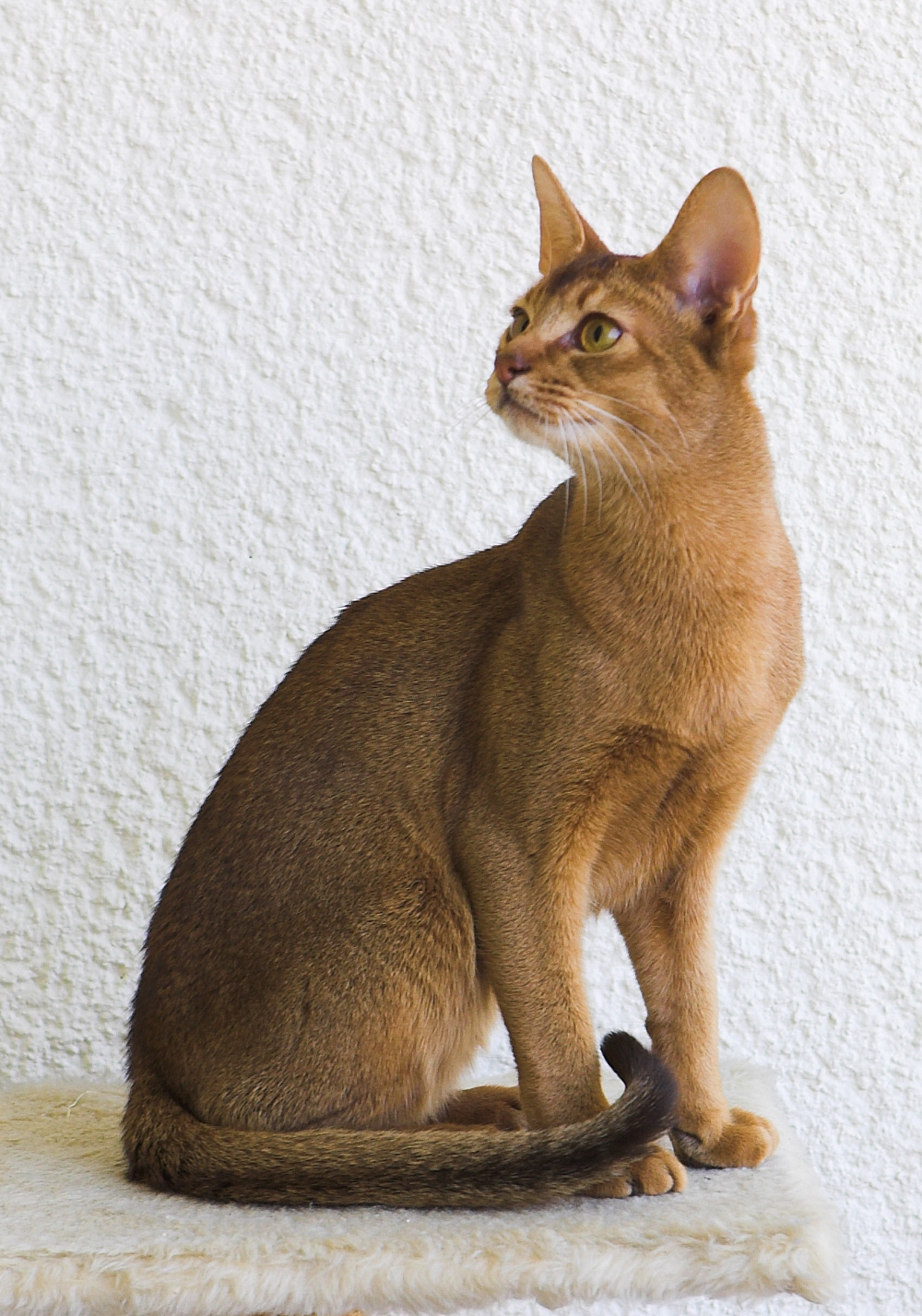

Often called “the clowns of the cat world,” Abyssinians are athletic, curious, and always in motion. They’ll investigate every inch of your home and supervise everything you do.
At a Glance
- Lifespan: 14–17 years
- Weight: 6–10 lbs
- Personality: Playful, curious, social, not a typical lap cat
- Grooming: Minimal — short ticked coat
- Health concerns: Renal amyloidosis, pyruvate kinase deficiency, gingivitis
Best for: Multi-cat households, active families, owners who appreciate cat comedy.
8. Scottish Fold — The Owl-Faced Companion
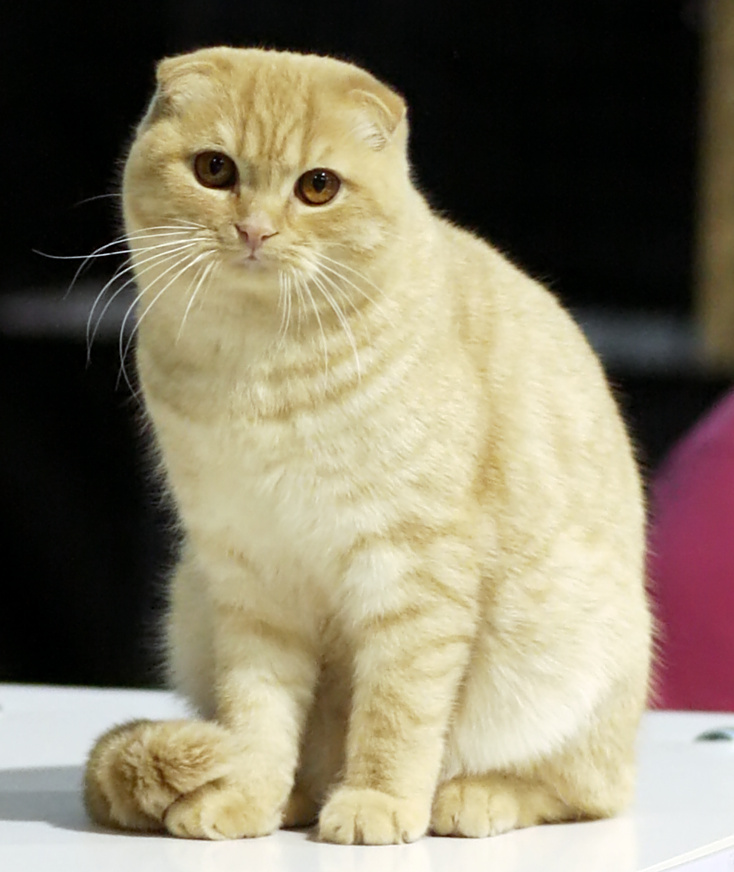

Known for their unique folded ears that give them an owl-like appearance, Scottish Folds are sweet, adaptable, and great apartment cats.
At a Glance
- Lifespan: 11–14 years
- Weight: 6–13 lbs
- Personality: Sweet, adaptable, moderately active, likes company
- Grooming: Weekly brushing
- Health concerns: Osteochondrodysplasia (cartilage/bone disease related to the fold gene — all folds carry this risk), arthritis
Welfare concern: Fold-to-straight breeding does not remove the cartilage and bone disorder associated with folded ears. UFAW explains the inherited osteochondrodysplasia risk. Do not choose folded ears as a desirable health-neutral trait; seek veterinary advice on long-term welfare and care.
9. Sphynx — The Naked Extrovert
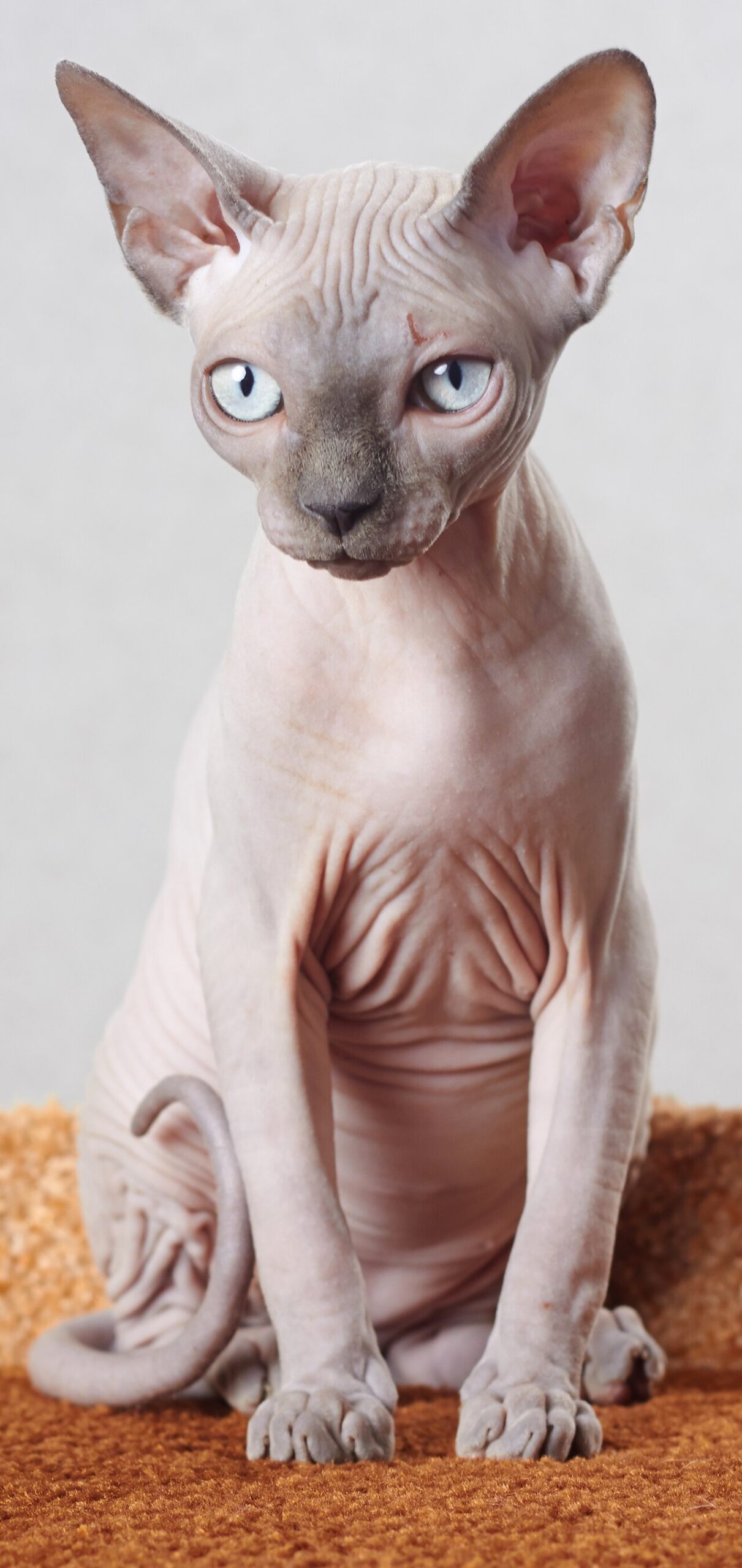

Despite their alien appearance, Sphynx cats are some of the friendliest, most affectionate cats you’ll ever meet. They’re perpetually warm, incredibly social, and surprisingly high-maintenance.
At a Glance
- Lifespan: 13–15 years
- Weight: 6–12 lbs
- Personality: Extremely social, attention-seeking, clownish, snuggly
- Grooming: Weekly baths (skin oils accumulate), ear cleaning, no sunbathing
- Health concerns: HCM, skin conditions, respiratory infections (no fur = no insulation)
Best for: People who want a dog-like cat, homes where someone is usually present. Note: hairlessness does not eliminate allergens, which can occur in saliva and skin material.
10. Russian Blue — The Shy Aristocrat
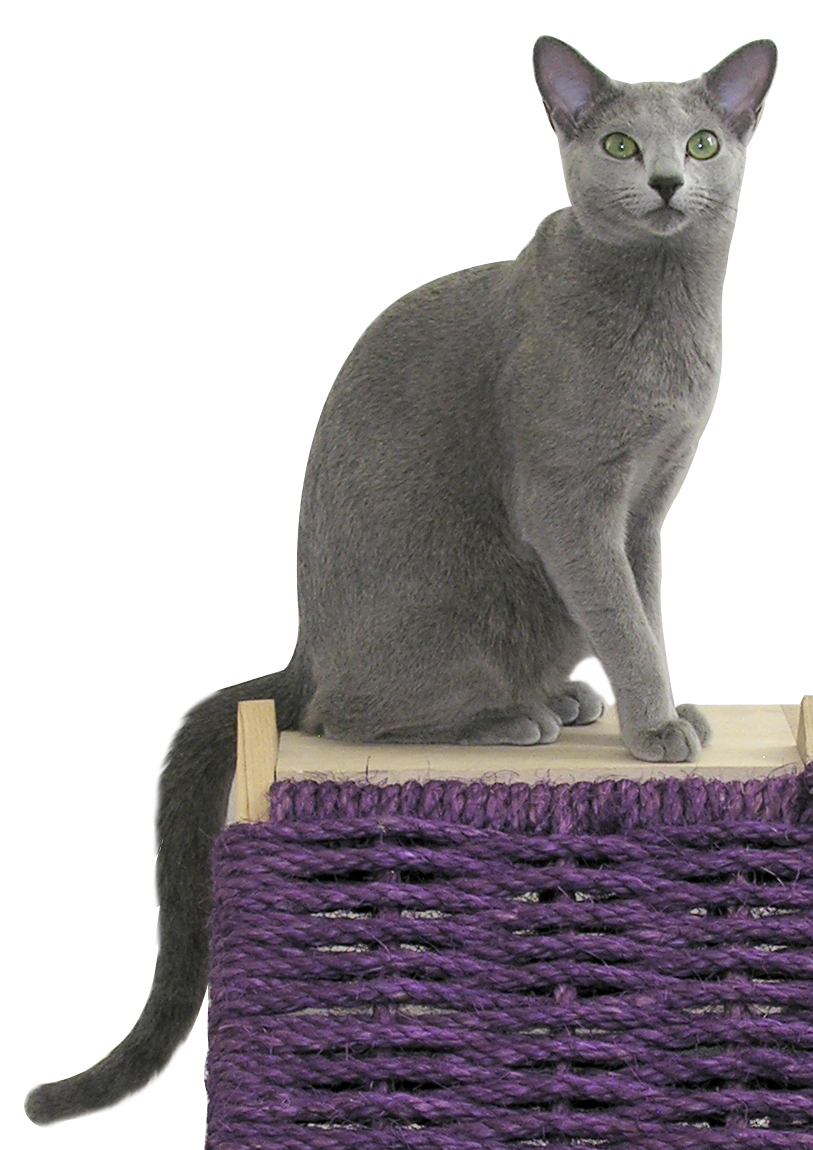

Russian Blues are elegant, gentle, and famously shy with strangers — but deeply bonded to their chosen humans. Their dense silvery-blue coat sheds less than most breeds.
At a Glance
- Lifespan: 15–20 years
- Weight: 7–12 lbs
- Personality: Gentle, shy, loyal, routined, quiet
- Grooming: Minimal — dense double coat, weekly brushing
- Health concerns: Generally very healthy breed. Watch for obesity and bladder stones.
Best for: Single adults, couples, quiet homes, owners prepared to meet the individual cat; no breed is guaranteed suitable for allergies.
11. Burmese — The Velcro Cat
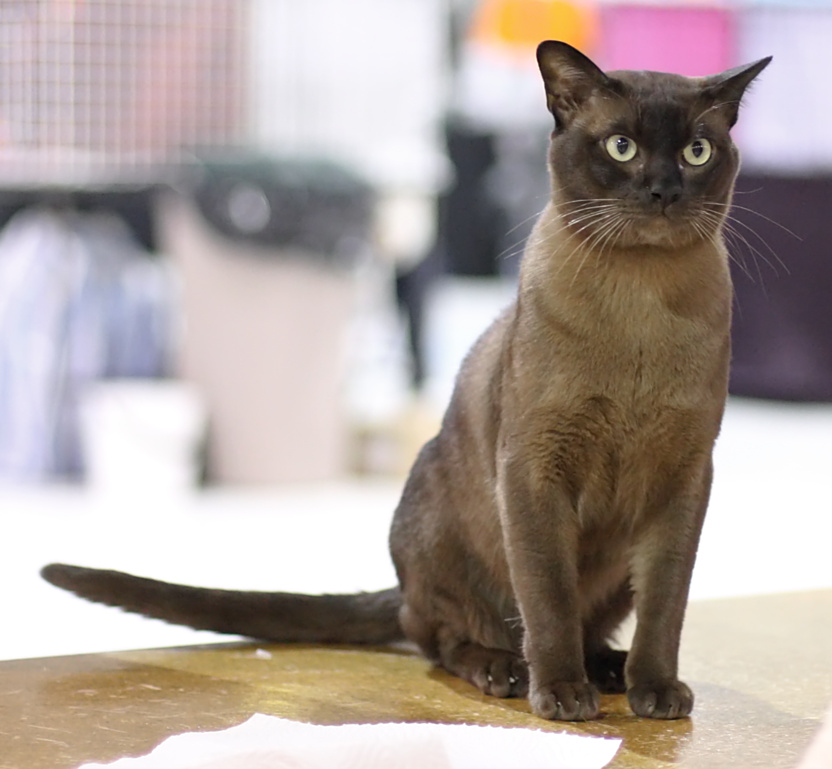

Burmese cats want to be with you every second of every day. They’re vocal, playful well into old age, and will literally follow you from room to room — including the bathroom.
At a Glance
- Lifespan: 16–18 years
- Weight: 8–12 lbs
- Personality: Extremely social, vocal, playful, dog-like
- Grooming: Minimal — short, close-lying coat
- Health concerns: Diabetes, hypokalemia, cranial deformities (in some lines)
Best for: Families, multi-pet homes, people who work from home. Best with a companion cat — a bored Burmese gets into trouble.
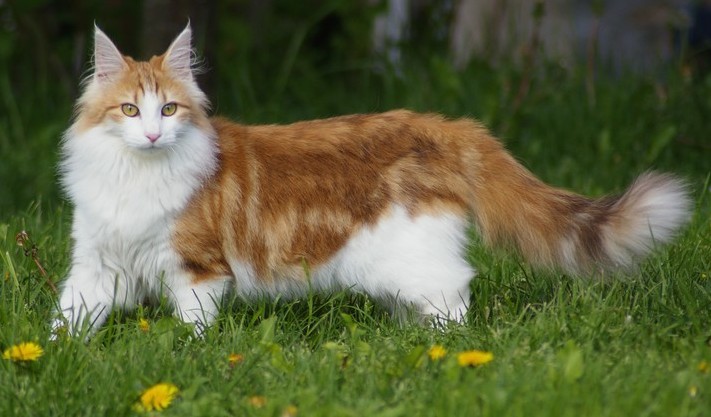
12. Norwegian Forest Cat — The Viking Fluffball
.jpg)
Built for Scandinavian winters, Norwegian Forest Cats (or “Wegies”) are large, athletic, and wrapped in a magnificent water-resistant double coat.
At a Glance
- Lifespan: 14–16 years
- Weight: 12–16 lbs (males up to 22 lbs)
- Personality: Gentle, independent, loves climbing, moderately social
- Grooming: 2–3× weekly, daily during spring shedding
- Health concerns: HCM, glycogen storage disease type IV, hip dysplasia
Best for: Homes with outdoor access or catios, cold climates, owners who love majestic-looking cats.
13. Birman — The Gentle First Cat
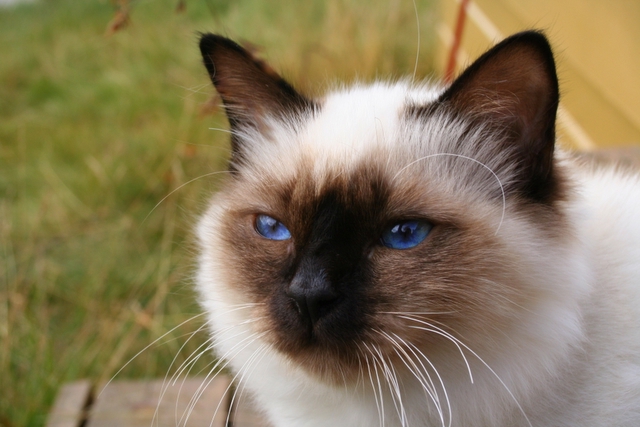


Birmans are calm, sweet-tempered, and just social enough without being needy. Their striking blue eyes and white-gloved paws make them one of the most beautiful breeds.
At a Glance
- Lifespan: 12–16 years
- Weight: 6–12 lbs
- Personality: Gentle, quiet, affectionate, good with kids
- Grooming: 2× weekly — silky coat doesn’t mat as easily as Persian
- Health concerns: HCM, kidney disease, congenital hypotrichosis (rare)
Best for: First-time cat owners, families with children, multi-pet homes.
14. Devon Rex — The Pixie Clown
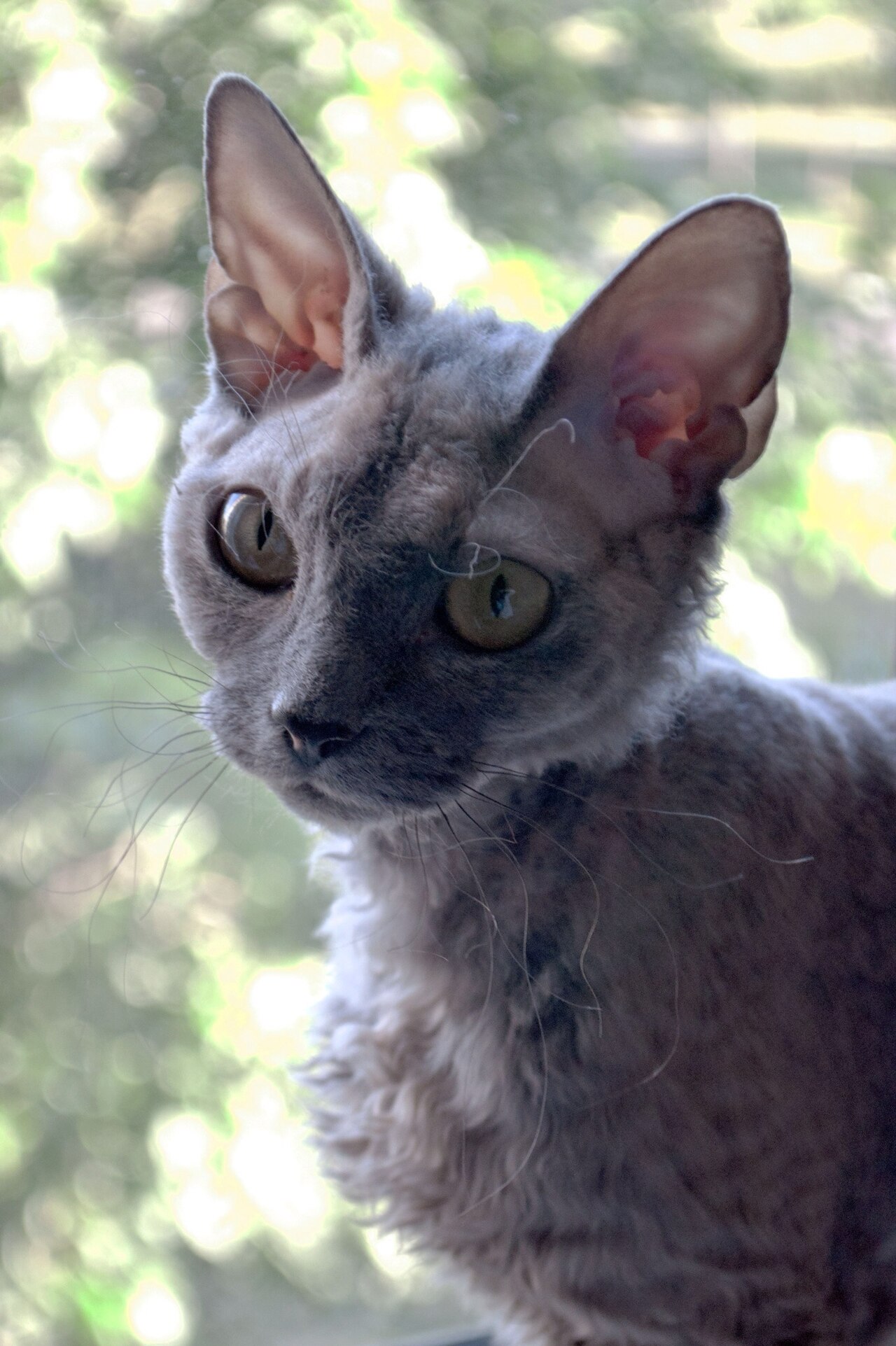

Devon Rex cats look like they belong in a fantasy movie — huge ears, big eyes, elfin face, and a wavy coat that sheds almost nothing. They’re incredibly playful and mischievous.
At a Glance
- Lifespan: 12–15 years
- Weight: 5–10 lbs
- Personality: Clownish, social, mischievous, loves perching on shoulders
- Grooming: Very low — gentle wipe downs, delicate wavy coat
- Health concerns: Patellar luxation, hereditary myopathy, ear wax buildup
Best for: Active families, homes that appreciate cat antics, people who want a dog-like lap cat without the shedding.
15. Domestic Shorthair (Mixed Breed) — The People’s Cat
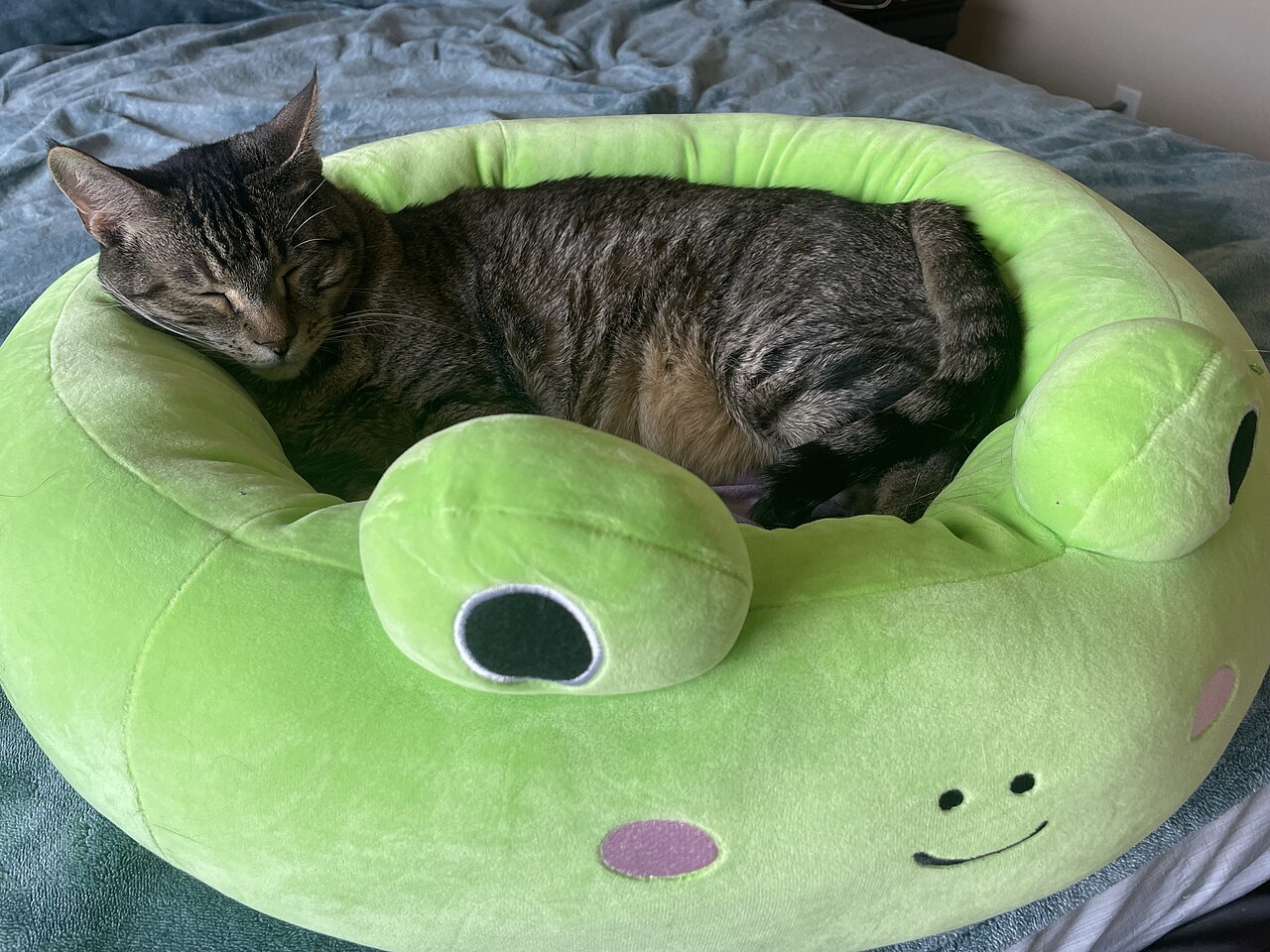

Not a recognized “breed” per se, but 95% of pet cats worldwide are mixed breeds. Domestic Shorthairs (DSH) are the ultimate wildcard — each one is genetically unique, with health and care needs that must be assessed individually.
At a Glance
- Lifespan: Lifespan varies with health, genetics and care
- Weight: 6–16 lbs
- Personality: Varies wildly — meet the individual cat
- Grooming: Generally low — short coat, weekly brushing
- Health concerns: Mixed ancestry does not rule out inherited or acquired disease
Best for: Everyone. Adoption fee is typically $50–$150 vs. $1,000–$3,000+ for purebreds. Shelters are full of incredible cats waiting for homes.
How to Choose the Right Breed for You
Ask yourself these 5 questions:
- How much time do you spend at home? High-social breeds (Siamese, Sphynx, Burmese) suffer when left alone all day.
- How active are you? Bengals and Abyssinians need owners who will play hard daily.
- Do you have allergies? No breed is reliably hypoallergenic. Discuss your symptoms and exposure with an allergist before adopting.
- Do you have children or other pets? Ragdoll, Maine Coon, and Birman are famously patient and tolerant.
- How much grooming can you commit to? Persians need daily brushing; Siamese need basically none.
Pro tip: Personality matters more than breed. Visit shelters, meet individual cats, and let the right one choose you.
Frequently Asked Questions
What is the most low-maintenance cat breed?
Look for an individual cat whose coat, activity and medical needs fit the care you can provide. A short coat may reduce grooming work, but breed alone cannot predict ongoing veterinary care or how much attention a cat needs.
What breed of cat is best for apartments?
Apartment fit depends on usable space, enrichment, resting places and the individual cat’s energy and mobility. Meet the cat and plan the environment; a breed label is not a guarantee of a quiet or easy apartment companion.
Are purebred cats healthier than mixed breeds?
Neither pedigree nor mixed ancestry guarantees health. Ask about the individual cat’s history, veterinary assessment and relevant inherited-disease screening. Screening does not eliminate every risk.
Allergies and individual fit
ACAAI states that all cats produce allergens and studies have not established hypoallergenic cats. A short coat or hairless appearance should not be used as an allergy guarantee. Meet the individual cat and assess the care commitment before deciding. Allergy and Scottish Fold welfare wording checked September 15, 2026.