


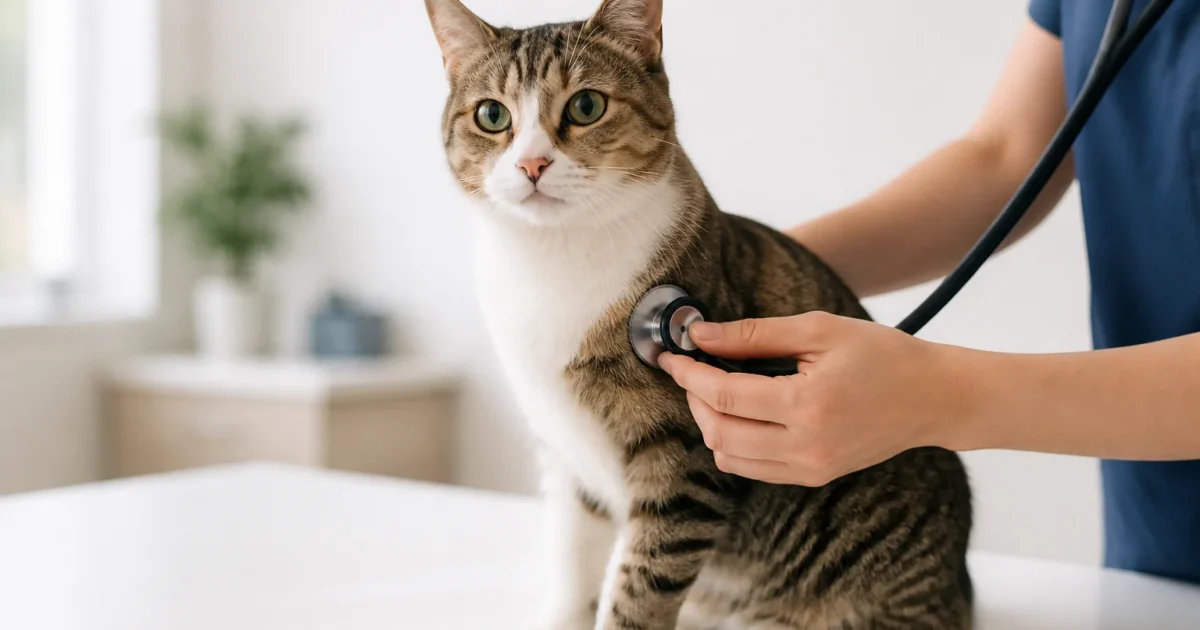
Short answer: Changes in appetite, drinking, urination, breathing, weight or behaviour deserve attention. This guide covers ten health concerns and what to discuss with a veterinarian; symptoms alone cannot establish a diagnosis. Straining with little or no urine is an emergency—do not wait for a time threshold.
Table of Contents
1. Dental Disease
Dental problems can be painful even when a cat continues eating. Ask your veterinarian to examine the mouth if you notice bad breath, drooling or difficulty chewing.
Types of Feline Dental Disease
- Gingivitis: Red, swollen gums — the earliest and most reversible stage
- Periodontitis: Infection spreads below the gumline, destroying bone and tooth support
- Tooth resorption: Loss of tooth structure that can be painful and needs a veterinary dental assessment.
- Stomatitis: Severe inflammation of the entire mouth — some cats need full-mouth extractions
Symptoms
Bad breath, drooling, difficulty eating, pawing at the mouth, red or bleeding gums, dropping food, or weight loss.
Treatment & Prevention
Your veterinarian can advise whether a dental procedure is needed and provide an individual estimate. Ask for a home dental-care plan using cat toothpaste and suitable products; treats do not replace an examination.
2. Excess Weight
Assess body condition with your veterinarian rather than relying on scale weight alone. A weight-management plan should account for food calories, treats, activity and medical conditions.
How to Tell If Your Cat Is Overweight
- You can’t feel the ribs without pressing firmly
- No visible waist when viewed from above
- A hanging belly alone is not diagnostic; cats can have a normal primordial pouch
- Difficulty grooming their back half
Weight Loss Plan
- Vet check first — Rule out thyroid issues or other medical causes
- Measure meals — Use a kitchen scale, not a scoop
- Cut treats to <10% of daily calories
- Increase play — 15–30 min daily with wand toys or laser pointer
- Slow feeders — Puzzle feeders make eating take longer, preventing gorging
Have your veterinarian set the calorie target and rate of weight loss. Do not crash-diet a cat or withhold food.
3. Chronic Kidney Disease (CKD)
Chronic kidney disease involves lasting loss of kidney function. Blood and urine tests help investigate signs that can overlap with other illnesses.
Early Symptoms
- Increased thirst and urination
- Weight loss despite normal appetite
- Poor coat quality
- Bad breath (ammonia-like)
- Decreased appetite (later stages)
Treatment
Management depends on the disease stage and individual cat. A veterinarian may consider:
- Prescription renal diet (reduced phosphorus, moderate protein)
- Subcutaneous fluids (many owners learn to give these at home)
- Phosphorus binders and potassium supplements
- Blood pressure medication if needed
- Regular blood work monitoring (every 3–6 months)
Ask your veterinarian which screening tests and follow-up interval suit your cat’s age, findings and risk factors.
4. Feline Lower Urinary Tract Disease (FLUTD)
FLUTD is a group of conditions affecting the bladder and urethra. It’s especially dangerous in male cats, who can develop life-threatening urinary blockages.
Warning Signs
- Straining to urinate or crying in the litter box
- Blood in urine (pink or red-tinged)
- Urinating outside the litter box
- Excessive licking of genital area
- Producing only small amounts of urine
Emergency: If your cat strains and produces little or no urine, contact an emergency veterinarian immediately. Do not wait 12 hours. Cornell identifies suspected urethral obstruction as a medical emergency.
Prevention
- Feed wet food (increased moisture = more diluted urine)
- Provide multiple water sources (fountains encourage drinking)
- Keep litter boxes clean (dirty boxes cause cats to “hold it”)
- Reduce stress (a major trigger for feline idiopathic cystitis)
5. Diabetes Mellitus
Diabetes affects blood-glucose regulation. Increased thirst, urination or appetite together with weight loss needs veterinary investigation.
Symptoms
- Excessive thirst and urination
- Increased appetite but weight loss
- Lethargy
- Walking flat on the hocks (diabetic neuropathy — a late sign)
Treatment
Treatment, diet and monitoring must be prescribed for the individual cat. Never start or change diabetes medication based on an online guide.
Remission is possible in some cats, but it is not guaranteed. Continue monitoring and follow your veterinarian’s instructions even if the cat appears better.
6. Hyperthyroidism
The most common hormonal disorder in cats over 10. An overactive thyroid gland produces excess thyroid hormone, speeding up metabolism dangerously.
Symptoms
- Weight loss despite ravenous appetite
- Hyperactivity or restlessness
- Vomiting, diarrhea
- Increased thirst and urination
- Poor coat, rapid heart rate
Treatment options to discuss
Medication, radioactive iodine, a prescribed diet or surgery may be considered. Suitability, monitoring and costs depend on the cat and local services; obtain an individual treatment plan and estimate.
7. Upper Respiratory Infections (URI)
The “common cold” of cats — caused primarily by feline herpesvirus (FHV-1) and calicivirus. Highly contagious in shelters and multi-cat households.
Symptoms
Sneezing, runny nose, watery or goopy eyes, congestion, reduced appetite, fever. Contact your veterinarian if appetite or breathing is affected.
Treatment
- Ask your veterinarian which supportive care is appropriate
- Wipe eyes and nose with warm, damp cloth
- Ask how to maintain food intake; reduced eating needs prompt advice
- Do not add lysine routinely: Cornell describes lysine supplementation as controversial
- Antibiotics only if secondary bacterial infection develops
8. Parasites (Fleas, Worms, Ticks)
Even indoor cats can get parasites — fleas hitch rides on humans, and cats can ingest infected prey (or just a single flea during grooming).
Common Parasites
| Parasite | Signs | Treatment |
|---|---|---|
| Fleas | Scratching, flea dirt (black specks), hair loss | Topical/oral preventive monthly |
| Roundworms | Pot belly, vomiting, visible worms in stool | Dewormer (pyrantel) |
| Tapeworms | Rice-like segments near tail/in stool | Praziquantel |
| Ear mites | Dark crusty ear discharge, head shaking | Ear drops or Revolution |
| Heartworm | Coughing, difficulty breathing (often silent) | Monthly prevention; no safe treatment for cats |
Ask your veterinarian for parasite prevention suited to your cat, location and exposure. Use only products labelled for cats and the correct age and weight.
9. Chronic Vomiting — When It’s NOT Normal
Recurring vomiting deserves veterinary advice. Record frequency, food intake and any weight change rather than assuming repeated vomiting is normal.
Common Causes
- Inflammatory bowel disease (IBD) — one possible cause
- Food sensitivities — often to chicken, fish, or grains
- Hairballs — excessive grooming or not enough fiber
- Eating too fast — a slower-feeding setup may help, but does not rule out illness
- Foreign bodies — string, hair ties, rubber bands (common surgical emergencies)
- Pancreatitis — inflammation of the pancreas, often concurrent with IBD
When to See the Vet
Seek veterinary care if your cat: vomits multiple times in one day, has blood in vomit, stops eating, is lethargic, has concurrent diarrhea or weight loss, or has recurring vomiting.
10. Cancer
Persistent lumps, unexplained weight loss and non-healing sores need investigation. These signs have several possible causes and do not diagnose cancer.
Warning Signs
- Unexplained weight loss
- Lumps or bumps that grow or change
- Persistent sores that don’t heal
- Difficulty eating or swallowing
- Bleeding or discharge from any opening
- Chronic vomiting or diarrhea
Treatment choices and outlook depend on the cancer type, stage and overall health. Discuss expected benefits, side effects and quality of life with the veterinary team.
Emergency Warning Signs — Go to the Vet NOW
Drop everything and get emergency care if your cat shows any of these:
- 🚨 Difficulty breathing — open-mouth breathing, panting at rest
- 🚨 Unable to urinate — especially male cats (life-threatening blockage)
- 🚨 Seizures — sustained trembling, loss of consciousness
- 🚨 Sudden hind-leg paralysis — often a blood clot (saddle thrombus)
- 🚨 Ingested toxin — lilies, antifreeze, human medications
- 🚨 Not eating for 24+ hours — can trigger hepatic lipidosis
- 🚨 Trauma — hit by car, fall from height, attacked by animal
Health Prevention Checklist
| Action | Frequency | Why |
|---|---|---|
| Wellness exam | Annually (biannual for seniors) | Catch problems before symptoms appear |
| Vaccinations | Per vet schedule | FVRCP + Rabies are core vaccines |
| Dental cleaning | As advised after examination | Assess pain and disease individually |
| Blood work | Annually (cats 7+) | Early detection of CKD, diabetes, thyroid |
| Parasite prevention | Year-round monthly | Fleas, ticks, heartworm, intestinal worms |
| Weight check | Monthly at home | Follow body-condition trends |
| Brush teeth | 2–3× per week | Supports oral hygiene |
Frequently Asked Questions
How do I know if my cat is in pain?
Cats hide pain well. Watch for: hiding more than usual, decreased appetite, less grooming (or over-grooming one area), aggression when touched, hunched posture, squinting eyes, or purring while withdrawn (cats sometimes purr when in pain as a self-soothing mechanism).
Is pet insurance worth it for cats?
Compare premiums, exclusions, deductibles, reimbursement limits and your emergency savings. Cover and costs vary; request current terms rather than relying on a general price estimate.
Do indoor cats need vaccinations?
Yes. Indoor cats still need core vaccines (FVRCP and Rabies). Viruses can enter your home on your shoes and clothing, and indoor cats sometimes escape. Ask your veterinarian about applicable local rabies requirements.