


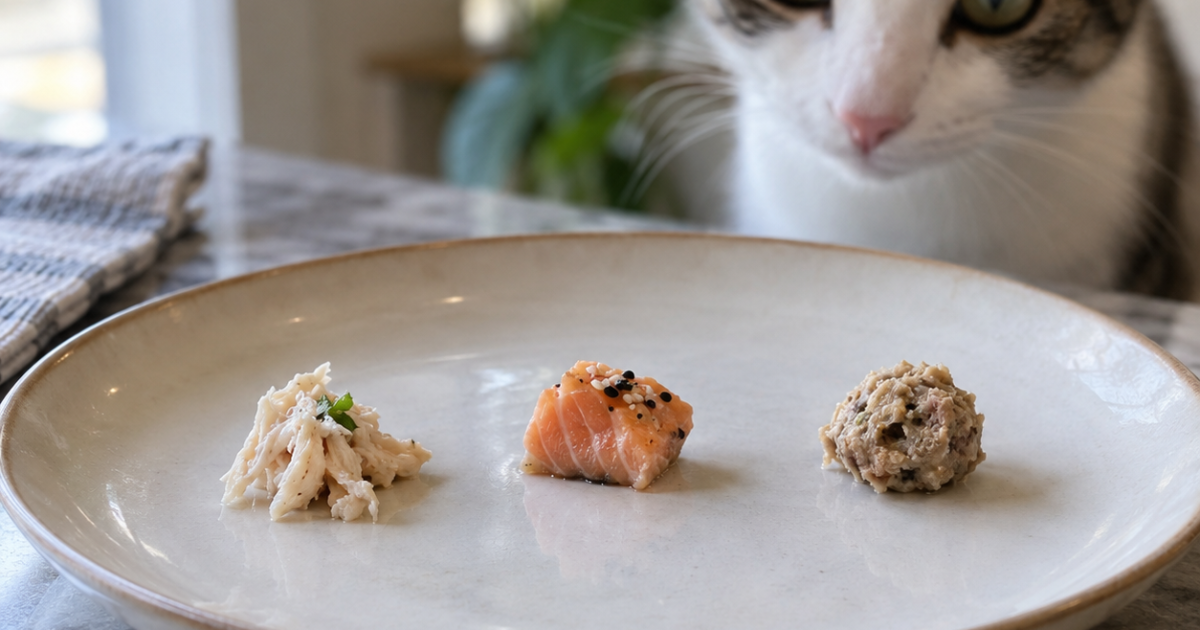
Quick answer: For a picky cat, test one variable at a time: protein aroma, temperature, and texture. Offer one tiny recipe sample beside the normal diet, record the response, and never withhold complete food to force treat acceptance.
“Picky” can describe a harmless preference, but a sudden appetite change is different. A cat that stops eating, loses weight, vomits repeatedly, drools, hides, or appears painful needs veterinary attention—not a stronger-smelling recipe.
These five recipes create a simple preference test: mild chicken, aromatic tuna, soft turkey, lickable salmon, and strong sardine. Each is a treat, and each changes only one main sensory factor.
How to choose among these recipes
- Start with a protein already present in a tolerated regular diet.
- Test one recipe on one day rather than presenting a buffet.
- Compare soft, crisp, and lickable textures.
- Serve a crumb at room temperature to release aroma.
- Record acceptance and digestive response before repeating.
1. Mild Soft Chicken Dots
For cats that prefer mild smells and tender textures.
Ingredients
- 3/4 cup plain cooked chicken
- 1 large egg
- 1 tablespoon plain pumpkin
Method
- Blend: Pulse into a spoonable mixture.
- Mold: Fill tiny shallow silicone cavities.
- Bake: Bake at 325°F until fully set, about 13–16 minutes.
Yield and storage: About 20 dots; refrigerate up to 3 days.
2. Aromatic Tuna Crumbs
For cats motivated by fish aroma but overwhelmed by a full biscuit.
Ingredients
- 2.5 oz drained no-salt-added tuna
- 1 large egg
- 1/4 cup oat flour
Method
- Mix: Combine into a soft dough.
- Bake thin: Spread thinly and bake at 325°F until set.
- Crumble: Cool and break into measured tiny crumbs.
Yield and storage: About 1/2 cup crumbs; refrigerate 3 days.
3. Tender Turkey Patties
For cats that like poultry but reject crunchy pieces.
Ingredients
- 3/4 cup plain cooked turkey
- 1 large egg
- 2 tablespoons oat flour
Method
- Combine: Mince and mix the ingredients.
- Flatten: Form pea-size flat patties.
- Bake: Bake at 325°F for 14–17 minutes until set.
Yield and storage: About 20 patties; refrigerate 3 days or freeze one month.
4. Softened Salmon Lick
For cats that prefer licking over chewing.
Ingredients
- 2 oz plain cooked salmon
- 2 tablespoons warm water
Method
- Flake: Check for bones and mash the cooked salmon.
- Loosen: Add warm water a teaspoon at a time.
- Offer: Serve one teaspoon at room temperature and refrigerate the rest.
Yield and storage: About 5 teaspoons; refrigerate up to 2 days.
5. Sardine Scent Topper
For a strong-aroma test when tolerated fish is already part of the diet.
Ingredients
- 1 plain sardine in water, drained
- 1–2 teaspoons water
Method
- Check: Confirm there is no sauce, seasoning, or hard fragment.
- Mash: Mash with water into a loose paste.
- Measure: Use no more than 1/4 teaspoon as a treat topper.
Yield and storage: Several tiny topper portions; refrigerate up to 2 days or freeze separately.
Portioning all five recipes
Use a one-bite test. Place it beside—not mixed invisibly through—the cat’s normal food so refusal does not ruin the meal. Wait and record whether the cat sniffed, licked, chewed, swallowed, or walked away.
Calculate the calories in the complete batch from the ingredient labels and divide by the actual number of pieces. That produces a more defensible estimate than publishing one calorie number that may be wrong for a different can, cut, or portion size.
Storage rules
Prepare one small batch at a time. Refrigerate moist fish mixtures for up to two days and baked poultry treats for up to three days; freeze surplus. Discard any portion left at room temperature or contaminated by repeated handling.
Common mistakes
Withholding regular food to create hunger
Never force treat acceptance. Maintain the complete diet and investigate significant appetite change.
Changing five ingredients at once
Test one protein and texture so the result teaches you something.
Interpreting one sniff as failure
Try one calm presentation at room temperature on another day, then move on without pressure.
Ignoring sudden pickiness
Contact a veterinarian when appetite changes abruptly or accompanies other signs.
When homemade treats are not appropriate
Do not run food experiments during an elimination diet or with a cat that has stopped eating, is losing weight, has repeated vomiting, seems painful, or has a prescribed diet. Those situations need veterinary direction.
Frequently asked questions
What flavor do picky cats prefer?
There is no universal winner. Existing dietary history, aroma, temperature, and texture all affect preference.
Should I warm a treat?
Room temperature or slightly warmed aroma may help, but never serve hot food. Warm only the tiny serving.
How many recipes should I test at once?
One. Multiple simultaneous options make preference and tolerance impossible to interpret.
When is pickiness a medical concern?
Sudden refusal, prolonged poor intake, weight loss, vomiting, drooling, hiding, or pain warrants prompt veterinary advice.
Can treats replace food if my cat is picky?
No. Treats are not complete and balanced and should not displace the main diet.
Safety references
These sources support the general treat, hygiene, ingredient-avoidance, and cooking-safety guidance on this page. They do not constitute veterinary approval of this individual recipe.
7 Comments on “Homemade Cat Treats for Picky Cats”