


Practical Decision Guide · Updated August 10, 2026
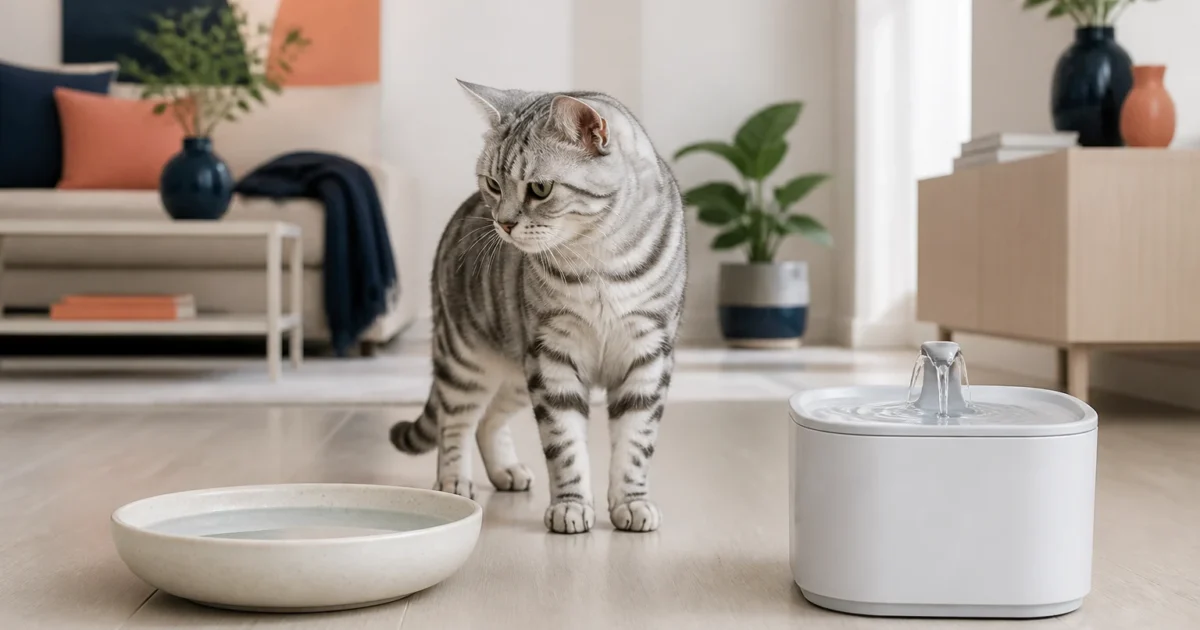
A clean water bowl is the best default for simplicity; a fountain is useful when your cat demonstrably prefers moving water or when its design improves placement and access. Most homes do not need to choose only one. A fountain plus a wide backup bowl creates redundancy.
The short answer
Choose a bowl for low cost, easy washing, silent operation, and reliable access during outages. Add a fountain when a cat uses moving water more readily, you want a larger circulating reservoir, or the fountain can sit in a better location. Neither option stays clean by itself.
Fountain vs bowl at a glance
| Factor | Water fountain | Water bowl |
|---|---|---|
| Cat preference | Movement appeals to some cats. | Still water and silence appeal to others. |
| Cleaning | Tank, tray, filter housing, tubing, and pump require work. | One smooth surface is faster to wash. |
| Power | Plug, charging, or battery management. | No power needed. |
| Noise | Pump and falling water can be audible. | Silent unless moved. |
| Failure points | Pump, filter, sensor, app, battery, or clog. | Can spill or be contaminated, but few components fail. |
| Cost | Purchase plus filters and possible replacement parts. | Low purchase and replacement cost. |
When a bowl is the better choice
- Your cat drinks comfortably from a clean bowl.
- You want to wash the entire water container daily in seconds.
- The cat is frightened by motors, streams, or vibration.
- You need dependable water during an outage or while traveling.
- Filter and pump supplies are difficult to obtain in your market.
Use a wide, shallow, stable bowl and try several quiet locations. Cat Friendly Homes recommends fresh water daily, regular washing, and multiple resources for multi-cat households.
When a fountain earns its place
- Your cat repeatedly chooses taps or moving water.
- The fountain’s location gives easier, lower-conflict access.
- A shallow flowing tray suits your cat’s posture.
- Maintenance reminders help your household keep a routine.
- You are willing to clean the pump and replace filters correctly.
A fountain should solve an observed need. Buying one only because “cats need running water” turns an individual preference into a rule that feline-care sources do not support.
The strongest setup is often both
Use a fountain in one accessible location and a clean bowl somewhere else. This provides a choice, reduces conflict, and protects access when the fountain is unplugged, charging, clogged, or being washed. For several cats, separate stations are more important than placing a fountain and bowl side by side.
Keep water away from litter and strong household odors. Some cats also prefer water separated from food. Test placement instead of relying on a single rule.
A fair seven-day comparison
- Wash both options thoroughly.
- Fill them with the same safe water.
- Place them in separate quiet locations with similar access.
- Keep the fountain at a gentle flow.
- Refresh both every day.
- Observe use, avoidance, waiting, startle, and contamination.
- Keep the option your cat uses, but maintain a second source for backup.
Frequently asked questions
Is a fountain healthier than a bowl?
Not by default. Cleanliness, access, intake from food and water, and individual preference matter more than the product category alone.
Does a fountain need a backup bowl?
Yes. It is a simple safeguard for cleaning, power loss, charging, pump failure, travel, or a cat that changes preference.
Can I remove the bowl after buying a fountain?
Wait until you know the cat uses the fountain reliably, then keep another source elsewhere anyway. Never force adoption by removing water choices.
Which fountain should I compare?
Start with cleaning access and drinking-surface design in our researched cat water fountain guide, then verify regional filters, pumps, plug, and warranty.
Sources
- Cornell Feline Health Center: Hydration
- Cat Friendly Homes: water choices, placement, and multiple resources
- VCA: tips to encourage drinking
Editorial scope: general household guidance, not veterinary diagnosis or individualized medical advice.