


Cat Behavior & Hydration · Updated August 10, 2026
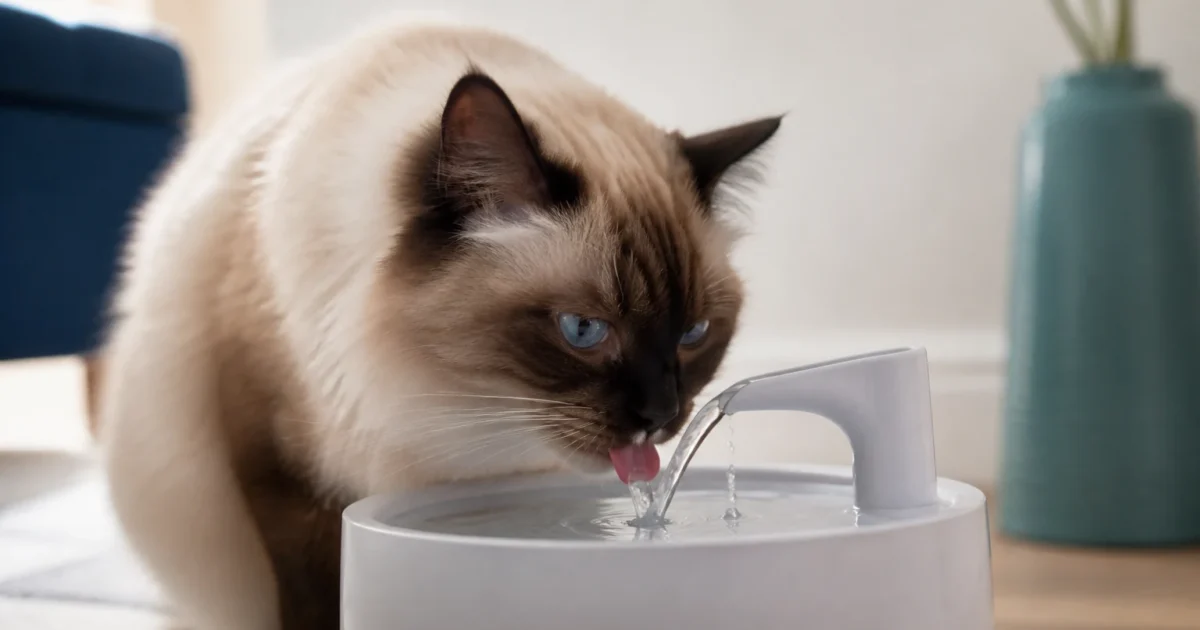
Some cats prefer running water because the movement, sound, freshness, location, or shape of the drinking surface makes it easier or more interesting to use. Other cats prefer a quiet bowl. There is no single instinct story that explains every cat.
The useful question is not “should cats prefer fountains?” but “which clean, accessible water setup does this cat use comfortably?”
The short answer
A stream can be easier to notice than still water, may taste or smell different after circulation, and may allow a drinking posture your cat prefers. But Cornell notes that fountain preference varies among individuals. Offer a fountain as an option, keep a fresh bowl available, and compare actual use without forcing the cat.
Six practical reasons a cat may choose moving water
1. Movement makes the water easier to locate
Ripples and reflections create visible contrast. A gentle stream also makes a consistent sound. For some cats, those cues are more noticeable than a perfectly still surface in a deep or dark bowl.
2. The drinking surface feels different
A fountain may offer an elevated stream, a shallow tray, a flowing edge, or an open reservoir. The cat may be selecting the posture and whisker clearance rather than movement itself.
3. Circulation changes taste and temperature
Circulation and filtration can alter taste, odor, or temperature. Whether that is an improvement depends on the water, filter condition, fountain cleanliness, and the cat’s preferences.
4. The location is better
Many fountains are placed in open living areas near an outlet, while a bowl may be squeezed beside food or against a wall. The cat may prefer the quieter approach route or wider view—not the fountain.
5. The fountain is more interesting
Some cats investigate moving water as enrichment. Pawing or watching does not necessarily mean the cat drinks more, so look at water use and overall behavior rather than assuming play equals hydration.
6. The bowl setup is uncomfortable
A narrow, deep, unstable, dirty, or strongly scented bowl can discourage use. Try a wide, shallow ceramic or glass bowl in another location before concluding that a powered fountain is required.
How to test preference without guessing
- Keep the current clean bowl available.
- Place a clean fountain several feet away or in another quiet location.
- Use the same safe water in both.
- Start at a low, steady flow and let the cat approach voluntarily.
- Observe for one to two weeks: drinking, waiting, pawing, startling, avoidance, and which location is used.
- Clean both options consistently so cleanliness does not bias the comparison.
If your cat ignores the fountain, do not remove the bowl to create pressure. Preference is the result you are trying to discover.
When a fountain may not help
- The motor or falling water frightens the cat.
- The drinking area is narrow or causes unwanted whisker contact.
- The unit vibrates, slides, or sits in a busy walkway.
- Another cat guards the location.
- The filter, pump, or reservoir is overdue for cleaning.
- The real problem is illness, pain, nausea, or reduced mobility.
Running water is not medical treatment
Cornell explains that some cats increase intake with fountains, but individual preferences vary. A fountain can support access; it cannot diagnose or correct an underlying condition. Sudden thirst, reduced drinking, urination changes, vomiting, diarrhea, weakness, poor appetite, or suspected dehydration require veterinary advice.
Remember that total water comes from both drinking and food. Cats eating wet diets may drink less directly because the food contains substantial moisture.
Frequently asked questions
Do all cats prefer running water?
No. Some choose streams, others choose a still wide bowl, and many use both.
Is running water automatically fresher?
No. Circulating old or contaminated water does not make it fresh. Replace water daily and clean the complete fountain.
Why does my cat drink from the tap but not a fountain?
The tap may have a different height, sound, stream shape, location, or social context. Try a quieter fountain with an exposed stream and keep a bowl available.
Should I worry if my cat suddenly drinks much more?
Yes, a marked change deserves veterinary attention. Do not assume a new fountain is the only explanation.
Sources
- Cornell Feline Health Center: Hydration and individual fountain preference
- Cornell Feline Health Center: fountains may encourage some cats
- Cat Friendly Homes: water preferences and placement
- VCA: practical drinking options
Editorial scope: general feline-behavior and household guidance, not medical diagnosis.