


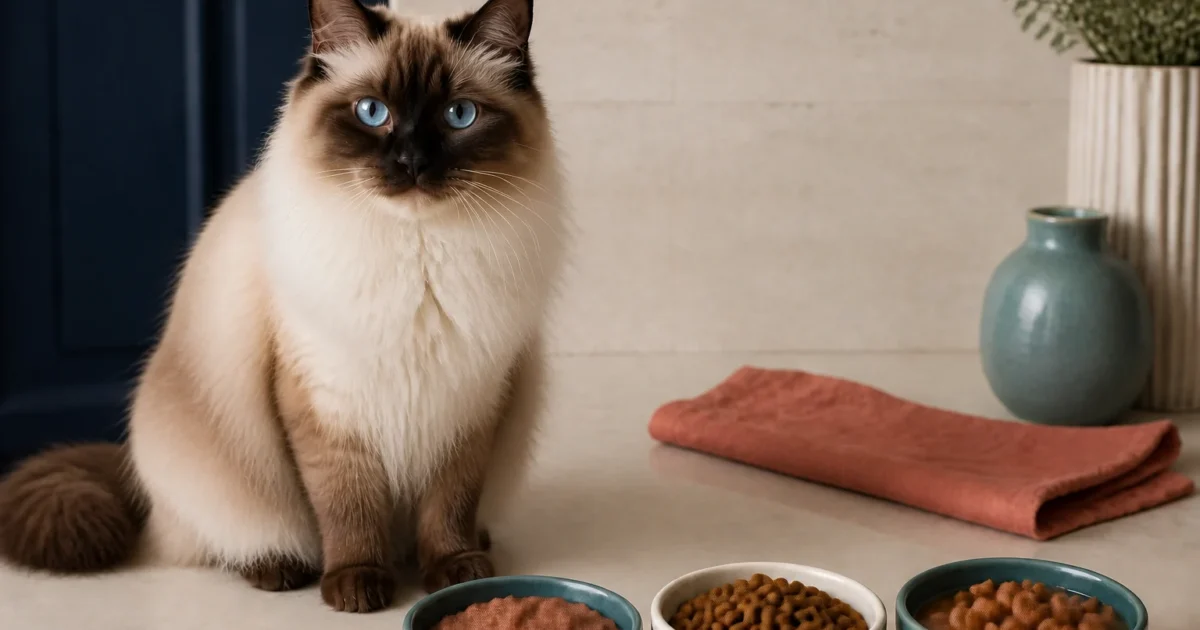
What food should indoor cats eat? Start with a complete food for your cat’s life stage, then compare calories, food format and daily cost. For adult cats, our researched starting points include Hill’s Adult Indoor Chicken, Purina ONE Indoor Advantage and Fancy Feast Classic Chicken Paté. Check the exact recipe’s adequacy statement and limitations below; there is no single best food for every cat.
Three researched starting points
Feeding-test label
Hill’s Adult Indoor Chicken
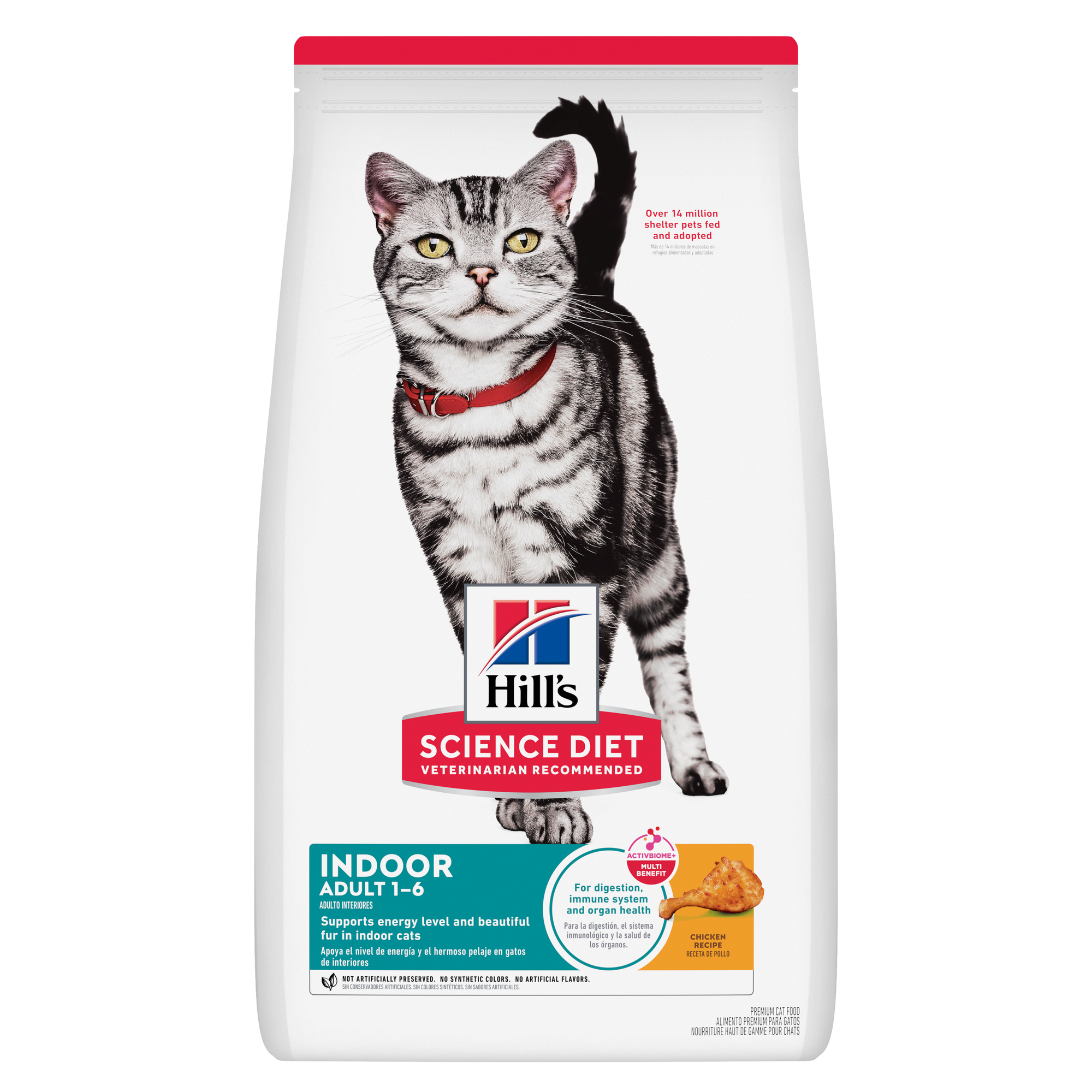
Adult · Dry · Indoor recipe
Limitation: Dry food; contains wheat and corn.
Everyday dry option
Purina ONE Indoor Advantage
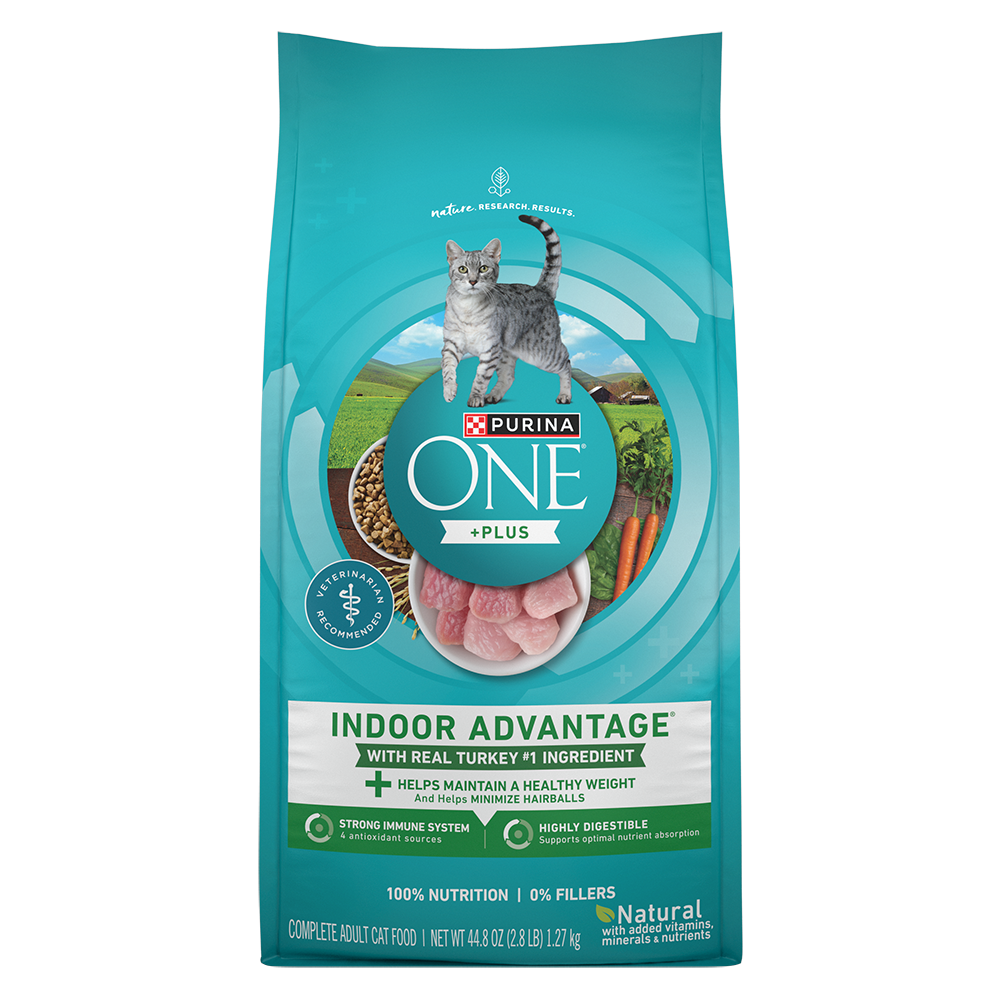
Adult · Dry · Turkey recipe
Limitation: Measure portions; not a kitten food.
Lower-cost wet option
Fancy Feast Classic Chicken Paté
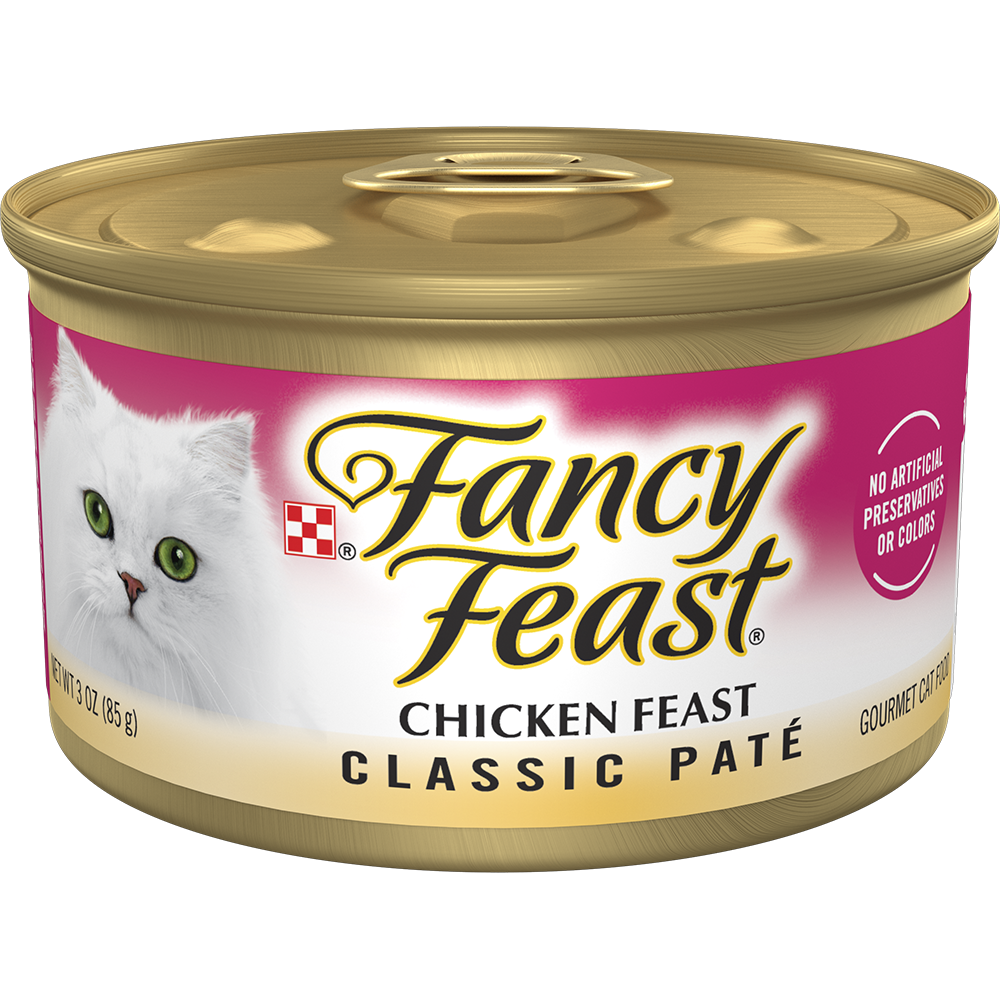
Wet · Chicken paté · 3-oz can
Limitation: Not indoor-specific; check portions.
Paid links. As an Amazon Associate I earn from qualifying purchases. These are research-based options, not independently tested foods.
Best cat food for indoor cats: quick comparison
| Situation | Option to research | Why it made the shortlist | Main limitation |
|---|---|---|---|
| Feeding-trial label priority | Hill’s Science Diet Adult Indoor Chicken Recipe | Manufacturer publishes an AAFCO feeding-test adequacy statement for adult maintenance | Dry-only hydration profile; contains wheat and corn ingredients |
| Everyday indoor dry food | Purina ONE +Plus Indoor Advantage | Adult-maintenance adequacy statement, calorie information, indoor-focused formula | 372 kcal per cup still requires careful portioning |
| Lower-activity indoor routine | Royal Canin Indoor Adult | Clear age range, 325 kcal per cup, indoor-focused fiber and calorie positioning | Higher price tier; ingredient list includes corn and wheat |
| Value and hairball-focused dry food | IAMS Proactive Health Indoor Weight & Hairball Care | Complete adult-maintenance food with a fiber-focused indoor formula | Hairball response varies; persistent vomiting needs veterinary evaluation |
| Indoor-specific wet food | Hill’s Science Diet Adult Indoor Savory Chicken Entrée | Complete adult-maintenance wet food specifically positioned for indoor cats | Texture and ingredients will not suit every cat |
| Lower-cost wet-food option | Fancy Feast Classic Paté Chicken Feast | Complete and balanced wet food with a published label and 91 kcal per 3-oz can | Not indoor-specific; portion needs depend on the individual cat |
| Mature indoor cats | Hill’s Science Diet Adult 7+ Indoor Chicken Recipe | Life-stage-specific indoor formula with a published feeding-test adequacy statement | Age alone does not replace a veterinary nutrition assessment |
Choose by your main priority
- Published feeding-test statement: Hill’s Science Diet Adult Indoor
- Everyday indoor dry food: Purina ONE +Plus Indoor Advantage
- Lower-cost wet food: Fancy Feast Classic Paté Chicken Feast
- Mature indoor cat: Hill’s Science Diet Adult 7+ Indoor
Budget is the deciding factor? Use our dedicated affordable cat food comparison. Otherwise, compare wet vs dry cat food, learn how to read a cat-food label, or estimate how much to feed an indoor cat.
Our evidence label: Researched & compared
- Hands-on tested by MeowBay: No
- Veterinarian reviewed: No
- Research basis: current manufacturer labels and product pages, nutritional-adequacy statements, calorie information, intended life stage, and independent regulatory and veterinary guidance
- Important: formulas and availability can change. Check the package you receive before feeding.
Affiliate disclosure: MeowBay may earn a commission when you buy through links in this guide, at no extra cost to you. This does not change our research criteria. As an Amazon Associate I earn from qualifying purchases.
This guide is general educational information, not individualized veterinary advice. A veterinarian should guide food choices for kittens, pregnant or nursing cats, cats with diagnosed disease, cats taking medication, or cats with persistent vomiting, diarrhea, itching, appetite changes, or unexplained weight change.
Not in the US? The product details in this edition use current US labels, where AAFCO nutritional-adequacy language is common. Recipes can differ by country. In the UK, Europe, Australia, and elsewhere, check the local package for a complete-food statement appropriate for your cat’s life stage and follow local veterinary guidance.
Best dry cat food for indoor cats: choose by feeding routine
Start with the dry recipes in our comparison: Hill’s Adult Indoor, Purina ONE Indoor Advantage, Royal Canin Indoor Adult, and IAMS Indoor. Use the individual reviews below to compare their documented strengths and limitations.
Dry food can suit measured meals and compatible food puzzles. Check calories per serving and measure the daily allowance; leaving a bowl permanently full can encourage overeating in some cats. See Cornell’s feeding-frequency guidance.
Best wet cat food for indoor cats: compare complete meals
The two wet options in this guide are Hill’s Indoor Savory Chicken Entrée and Fancy Feast Classic Paté Chicken Feast. Compare the exact recipe, texture, calorie content, and daily cost. A topper or complementary food should not be assumed to provide a complete daily diet.
Wet food provides more dietary moisture; both wet and dry foods can be nutritionally complete. For mixed feeding, count calories from both formats within one daily allowance. Cornell explains the main food formats. Our wet versus dry guide explores the trade-offs.
| Your priority | Start by comparing | Check before buying |
|---|---|---|
| Measured dry meals | The four adult dry recipes above | Calories and feeder compatibility |
| Wet meals | The two canned recipes above | Complete-food statement and texture |
| A sustainable budget | Our affordable-food comparison | Daily cost, including wasted food |
Best budget cat food: compare cost per day, not package price
A large bag is not automatically the best value, and a fixed package-price limit does not tell you how long the food will last. A more useful comparison is the estimated daily cost for the amount your cat actually needs. Use the current package price, the calories per cup or can, and your cat’s daily calorie target:
Estimated daily cost = package price ÷ number of feeding days in the package.
Among this shortlist, IAMS Proactive Health Indoor and Purina ONE +Plus Indoor are value-oriented dry options worth comparing, while Fancy Feast Classic Paté is the lower-cost complete wet-food starting point. Prices, package sizes, and formulas change, so MeowBay does not publish a permanent “cheapest” winner. Compare the exact recipe and current cost per day, not only the number printed on the shelf tag. Our best affordable cat food guide shows the calculation and compares five specific dry and wet options.
How we research our cat food reviews
We did not score foods by package design, ingredient-list trends, popularity, or anonymous customer ratings. Our shortlist uses six practical checks:
- Nutritional adequacy: We looked for a current statement showing the food is complete and balanced for an identified life stage. The FDA explains that this claim is supported either by meeting an AAFCO nutrient profile or by passing a feeding trial using AAFCO procedures.
- Life-stage fit: Adult-maintenance food is not automatically appropriate for kittens, pregnancy, or nursing. Senior age can also change the questions you should discuss with your veterinarian.
- Calorie transparency: Indoor cats can have very different activity levels. A visible calorie figure and usable feeding guide make portion decisions easier.
- Manufacturer transparency: We favored products with accessible contact details, current feeding directions, ingredients, guaranteed analysis, and a clear adequacy statement.
- Household fit: Wet versus dry format, storage, feeding routine, texture, budget, and whether several cats eat together all matter.
- Honest limitations: A “complete and balanced” statement is important, but it does not prove that one food is ideal for every cat or that every marketing claim will apply to your pet.
The FDA and AAFCO both emphasize the nutritional-adequacy statement. The WSAVA nutrition toolkit also recommends asking who formulates and manufactures the food, how quality control works, what research supports it, and whether the company can provide detailed nutrient information.
Hill’s Science Diet Adult Indoor Chicken Recipe
Research fit: for owners who place extra weight on a published feeding-test adequacy statement.
Hill’s states that animal feeding tests using AAFCO procedures substantiate this dry food as complete and balanced for maintenance of adult cats. The formula is positioned for adult indoor cats and includes a feeding table rather than a one-size-fits-all daily amount.
Why it made the shortlist
- Published feeding-test nutritional-adequacy statement for adult maintenance
- Indoor-specific positioning and feeding guidance
- Manufacturer provides ingredients and product information publicly
Trade-offs
- It is dry food, so owners still need to monitor water access and total dietary moisture.
- It contains wheat and corn ingredients. Those ingredients are not automatically a problem, but this formula is not suitable for every diagnosed food sensitivity.
- A feeding trial supports nutritional adequacy; it does not mean MeowBay tested this product or that every cat will prefer it.
Who it may suit: healthy adult indoor cats whose owners want a dry formula with a feeding-test adequacy statement.
Who should get veterinary guidance first: kittens, pregnant or nursing cats, underweight cats, and cats with diagnosed medical or dietary conditions.
Read the current manufacturer label →
Purina ONE +Plus Indoor Advantage
Research fit: a widely available, indoor-focused adult dry food with clearly published calories.
Purina lists this turkey dry formula as complete and balanced for maintenance of adult cats and publishes a calorie value of 372 kcal per cup. The brand positions the formula around indoor-cat weight and hairball needs. Those are manufacturer claims, not results independently verified by MeowBay.
Why it made the shortlist
- Complete-and-balanced statement for adult maintenance
- Published calorie content and transition directions
- Indoor-specific formula with multiple bag sizes
Trade-offs
- “Indoor” on the bag does not remove the need to measure portions.
- The manufacturer’s weight and hairball language should not be treated as a medical guarantee.
- This adult food is not intended for kittens, pregnancy, or nursing.
Who it may suit: healthy adult indoor cats in households that prefer dry food and want clear calorie information.
Read the current manufacturer label →
Royal Canin Indoor Adult Dry Cat Food
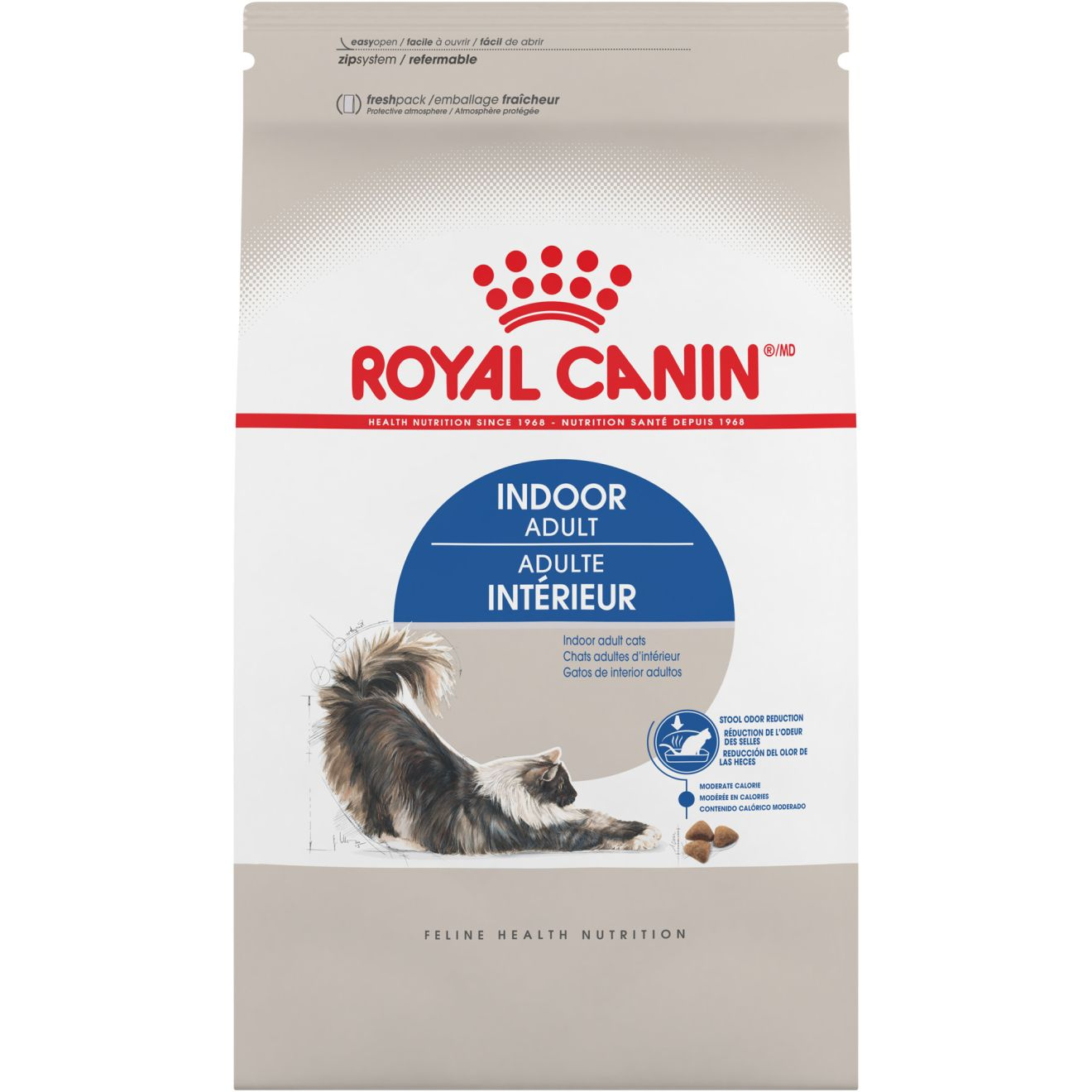
Research fit: an indoor-specific option for healthy cats aged 1–7 when calorie clarity and a detailed feeding table are priorities.
Royal Canin lists this food as formulated to meet AAFCO Cat Food Nutrient Profiles for adult maintenance. The current US product page publishes 325 kcal per cup and separate feeding amounts for different activity levels.
Why it made the shortlist
- Defined age range and adult-maintenance adequacy statement
- Published calorie content and activity-based feeding table
- Indoor-focused fiber and moderate-calorie positioning
Trade-offs
- Higher price tier than many supermarket dry foods
- Contains corn, wheat, and rice ingredients
- The stool-odor and hairball benefits are manufacturer claims and can vary by cat
Who it may suit: healthy indoor adults aged 1–7 whose owners want a detailed feeding guide and indoor-specific formula.
Read the current manufacturer label →
IAMS Proactive Health Indoor Weight & Hairball Care
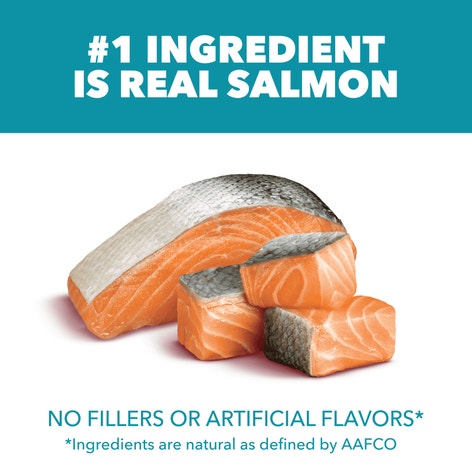
Research fit: a value-oriented adult dry-food option with an indoor and hairball focus.
IAMS states that this food is complete and balanced for adult maintenance. The current product page highlights a fiber blend and publishes feeding guidance that owners should adjust according to age, activity, temperament, and body condition.
Why it made the shortlist
- Complete-and-balanced adult-maintenance statement
- Indoor-focused feeding directions
- Often available in several bag sizes, which can help multi-cat households compare cost per day
Trade-offs
- The hairball benefit is a manufacturer claim, not a MeowBay test result.
- Frequent vomiting should not automatically be dismissed as hairballs.
- Different chicken-and-turkey and salmon versions may have different labels; verify the exact bag.
Who it may suit: healthy adult indoor cats when budget, dry-food convenience, and hairball-focused formulation are priorities.
Read the current manufacturer label →
Hill’s Science Diet Adult Indoor Savory Chicken Entrée
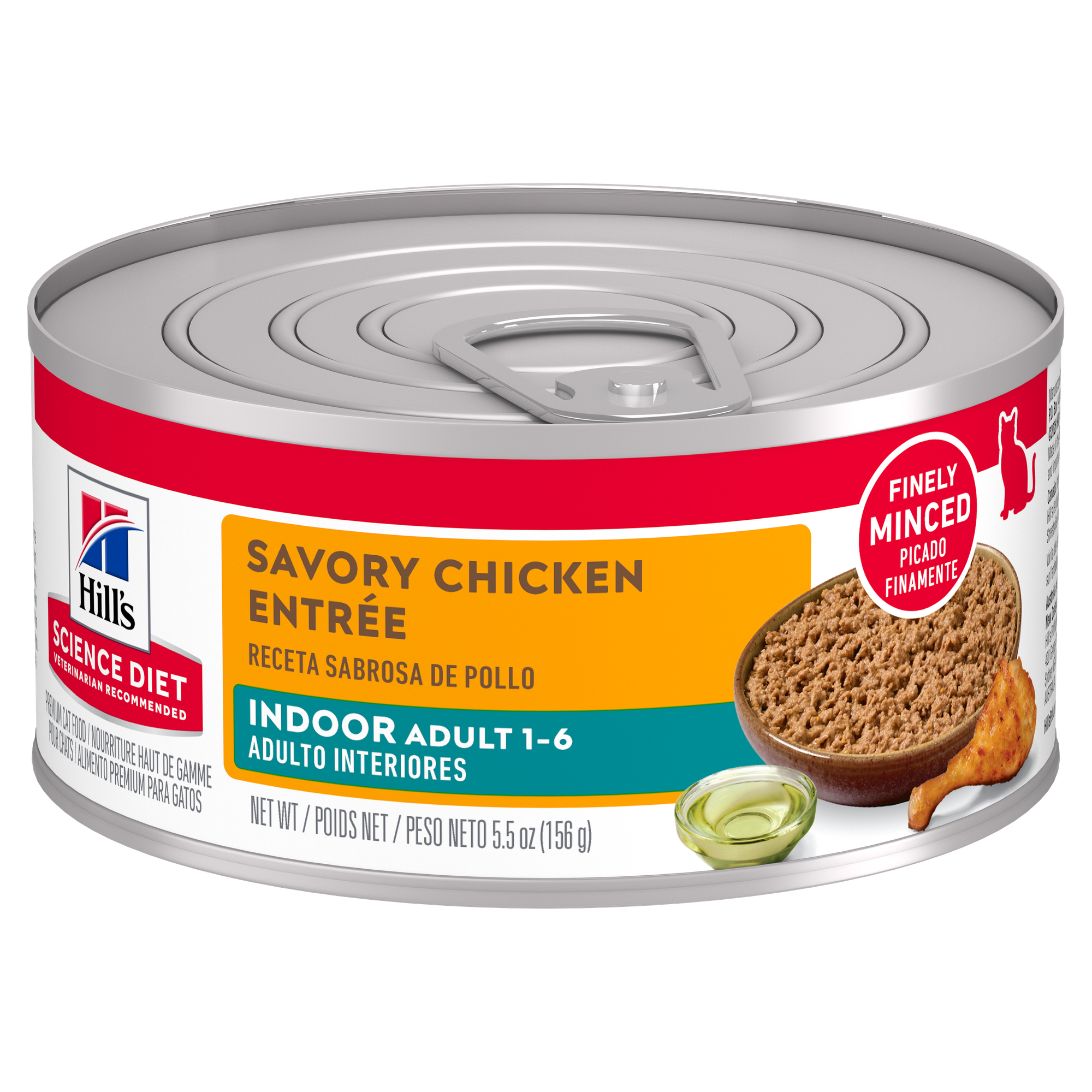
Research fit: an indoor-specific wet option for healthy adult cats aged 1–6.
Hill’s lists this canned food as formulated to meet AAFCO Cat Food Nutrient Profiles for maintenance of adult cats. Its wet format makes it materially different from the dry options above, but “wet” does not make portion control automatic.
Why it made the shortlist
- Complete-and-balanced adult-maintenance statement
- Wet format with indoor-specific positioning
- Published can-based feeding table
Trade-offs
- Texture preference is individual; buy a small quantity first.
- Opened food requires refrigeration and safe handling.
- Not recommended by the manufacturer for kittens or pregnancy and nursing.
Who it may suit: healthy adult indoor cats that prefer minced canned food or households that want to include a complete wet format.
Read the current manufacturer label →
Fancy Feast Classic Paté Chicken Feast
Research fit: a lower-cost complete wet-food option with a publicly available label.
The current US label states that Classic Chicken Feast is formulated to meet AAFCO Cat Food Nutrient Profiles for all life stages and lists 91 kcal per 3-oz can. That makes it easier to evaluate than a complementary food or topper that is not designed to be a complete diet.
Why it made the shortlist
- Complete-and-balanced statement and published calorie content
- Wet paté format
- Typically sold in small cans and multipacks
Trade-offs
- Not specifically formulated for indoor cats
- Contains meat by-products and added flavors, which some owners prefer to avoid
- “All life stages” does not mean the same portion works for kittens and adults
Who it may suit: households looking for a complete wet food at a generally accessible price point. Compare the current local price per calorie rather than assuming the cheapest pack is the lowest daily cost.
Read the current manufacturer label →
Hill’s Science Diet Adult 7+ Indoor Chicken Recipe
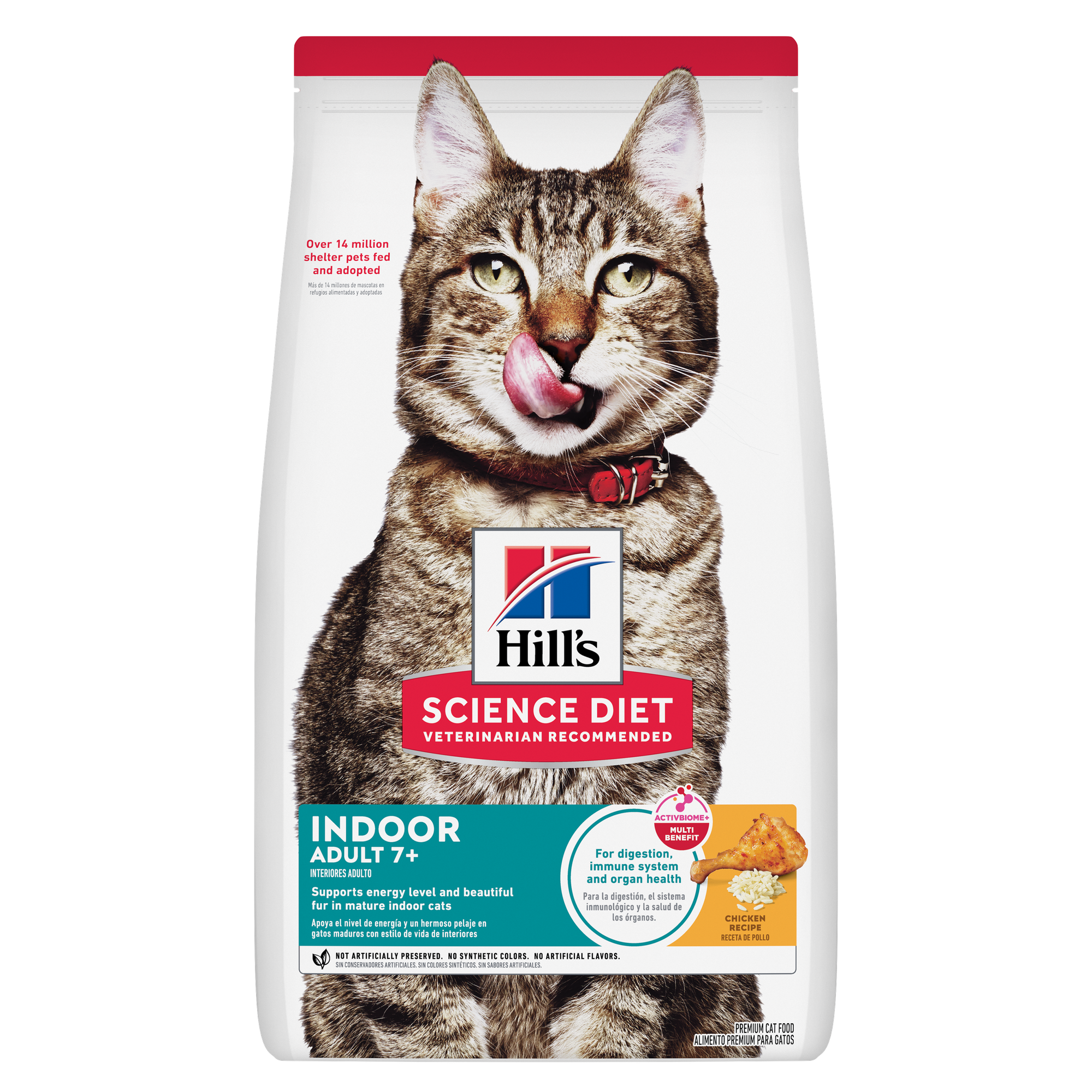
Research fit: a life-stage-specific dry option for healthy mature indoor cats.
Hill’s states that AAFCO feeding tests substantiate this food as complete and balanced for maintenance of adult cats. The formula is positioned for indoor cats aged seven and older.
Why it made the shortlist
- Published feeding-test adequacy statement
- Mature indoor-cat positioning
- Manufacturer provides an age-specific feeding table
Trade-offs
- A “7+” label is not a diagnosis or an individualized senior nutrition plan.
- Older cats can develop dental, kidney, thyroid, weight, or appetite changes that require veterinary assessment.
- Dry texture may not work for cats with chewing difficulty.
Who it may suit: healthy mature indoor cats whose veterinarian has not identified a need for a therapeutic or otherwise specialized diet.
Read the current manufacturer label →
What matters more than a “best” badge
1. The nutritional-adequacy statement
Look for language showing that the exact product is complete and balanced for your cat’s life stage. “Formulated to meet” an AAFCO nutrient profile and “animal feeding tests using AAFCO procedures substantiate” are different routes to an adequacy claim; neither turns a food into the universal best choice.
2. Calories and body condition
Start with the label’s feeding guide, then monitor weight and body condition. Cup estimates are easy to overshoot, especially when treats, toppers, and food from several family members are added. A veterinarian can help establish a target weight and daily calorie plan.
3. Wet, dry, or a mixed routine
Both wet and dry foods can be complete and balanced. Wet food contains much more moisture, while dry food can be simpler to store and use in puzzle feeders. The better format is the one that fits the cat’s medical needs, total calorie plan, preferences, and the household’s ability to feed it consistently.
4. The exact recipe—not only the brand
A company can sell adult foods, kitten foods, treats, toppers, and therapeutic diets under the same brand. Check the exact product name, life stage, feeding purpose, and adequacy statement every time.
5. A food your cat will actually eat
A nutritionally appropriate food is not useful if a cat persistently refuses it. Transition gradually according to the label and monitor appetite. Cats should not be forced through prolonged food refusal; contact a veterinarian promptly if appetite drops or your cat stops eating.
Best cat food brands: compare recipes, not brand rankings
There is no evidence-based ranking that makes every recipe from one brand better than every recipe from another. Hill’s, Purina, Royal Canin, IAMS, and Fancy Feast each sell products with different life stages, calorie levels, formats, and nutritional-adequacy statements. Judge the exact food in front of you: who it is formulated for, whether it is complete and balanced, its calories, feeding directions, manufacturer transparency, and whether it suits your cat and budget.
That is why this guide compares named recipes instead of awarding a vague “best brand” badge. If a formula changes, the recommendation must be checked again even when the brand name stays the same.
Questions to ask before buying
- Is this exact recipe complete and balanced, or is it only a treat, topper, or complementary food?
- Which life stage is named on the label?
- How many calories are in a cup, can, pouch, or tray?
- Who formulates and manufactures the food?
- Can the company provide typical nutrient analysis and quality-control information?
- Is the food readily available where you live?
- Can you afford the estimated daily amount—not only the package price?
- Does the texture work for your cat and feeding setup?
Cat food questions answered
What is the best cat food recommended by vets?
A veterinary recommendation should fit the individual cat’s life stage, body condition and health history. There is no single recipe recommended for every cat. Ask your veterinarian which nutritional-adequacy statement, calorie allowance and food format suit your cat. The WSAVA nutrition toolkit supports individual nutritional assessment; the products in this article are MeowBay’s researched shortlist, not a veterinary endorsement.
What are some cat food brands to avoid?
Use evidence about the exact product rather than a blanket brand blacklist. Check the FDA’s current animal-product recalls and match any notice to the recipe, lot code and package details. Follow the recall instructions if your food is affected. Separately, a treat or complementary food should not replace a complete daily diet, and an otherwise suitable food may still be wrong for a cat with specific medical needs.
What are the top 3 healthiest cat foods?
There is no universal three-food list that suits every cat. This guide compares seven recipes by practical fit rather than claiming a medical ranking. Match the nutritional-adequacy statement and life stage first; then discuss any health-specific needs with your veterinarian. The WSAVA nutrition guidelines provide questions about formulation expertise, quality control, and manufacturer transparency.
What is the best wet cat food for indoor cats?
Compare the two complete wet recipes reviewed in our wet-food section. The right choice depends on your cat’s life stage, preferences, calorie needs, and your daily budget; an “indoor” label alone does not decide it.
What is the best cat food for an indoor cat?
For a healthy indoor cat, start with a complete-and-balanced food for the correct life stage, then compare calories, feeding directions, wet or dry format, availability, and cost per day. No single recipe is best for every cat. Cats with a diagnosed condition or persistent symptoms need individualized veterinary guidance.
What is the best dry cat food for indoor cats?
Our researched dry-food starting points include Hill’s Science Diet Adult Indoor for its published feeding-test adequacy statement, Purina ONE +Plus Indoor Advantage for clear calorie information and everyday availability, Royal Canin Indoor Adult for a detailed activity-based feeding table, and IAMS Indoor Weight & Hairball Care as a value-oriented option. MeowBay has not hands-on tested these foods.
What is the best affordable cat food?
The affordable choice is the complete-and-balanced recipe that meets your cat’s needs at the lowest sustainable daily cost—not necessarily the package with the lowest shelf price. Compare the current cost per feeding day. In this guide, IAMS and Purina ONE are value-oriented dry options, while Fancy Feast Classic Paté is the lower-cost wet option to research.
Which cat food brand is best?
No brand is automatically best across every recipe and life stage. Compare the exact product’s nutritional-adequacy statement, calories, quality-control transparency, feeding guide, availability, and fit for your cat. A recognizable brand name does not replace checking the current label.
What is the best kitten food?
Choose a complete-and-balanced food labeled for growth or all life stages, rather than assuming an adult indoor formula suits a kitten. Check the exact recipe, not just the brand. The FDA explains the life-stage adequacy statements. This adult-focused shortlist is not a kitten-food ranking; ask your veterinarian about portions and growth monitoring. Our cat-food label guide explains what to check on the package.
Is expensive cat food better than affordable cat food?
Price alone does not establish nutritional suitability. Compare the exact recipe’s life-stage statement, calorie information, manufacturer transparency, and whether your cat can eat it consistently. A higher price may be worth paying for a format or practical benefit you need, but “premium” is not enough evidence. Use our affordable cat food comparison to compare daily cost before deciding.
What is a good mid-range cat food?
“Mid-range” describes a budget, not a nutritional standard. Define it by your sustainable cost per feeding day. Compare a small pack of an appropriate recipe before committing to a large bag or subscription, and include likely waste in the cost. For the dry-food options already reviewed above, use the current labels and prices for Purina ONE, IAMS, and Hill’s rather than assuming the same brand is always cheapest.
Do indoor cats need food labeled “indoor”?
Not necessarily. “Indoor” formulas can offer different calorie or fiber profiles, but the essential starting points are nutritional adequacy, correct life stage, appropriate portions, and how the individual cat responds.
Is wet food always better than dry food?
No single format is always best. Wet food provides substantially more dietary moisture. Dry food can be convenient and useful in measured feeders or enrichment toys. Both can be nutritionally complete; health conditions and total calorie intake may change the decision.
Is grain-free food better for cats?
A grain-free label does not by itself prove superior nutrition. Evaluate the complete formulation, nutritional-adequacy statement, manufacturer expertise, quality control, and fit for the individual cat rather than treating one ingredient category as a quality score.
Should I choose the food with the highest protein percentage?
Not from the front label alone. Wet and dry guaranteed analyses are reported with very different moisture levels, so the percentages are not directly comparable without converting them to a dry-matter basis. The FDA provides an example of this calculation.
What if my cat has a sensitive stomach?
“Sensitive stomach” is not a diagnosis. Repeated vomiting, diarrhea, weight loss, itching, or appetite change can have many causes. Ask a veterinarian before using a food switch as the only response, and avoid assuming an over-the-counter formula will treat disease.
How should I switch foods?
Follow the transition instructions on the new food’s label; many manufacturers recommend a gradual change over about a week. Cats with a medical condition or a history of food-related problems may need an individualized plan.
How to make your final choice
The strongest first choice is not the food with the loudest “premium” claim. It is a food with a clear nutritional-adequacy statement for the correct life stage, transparent calorie and feeding information, a manufacturer that answers technical questions, and a format your cat can eat consistently within an appropriate portion plan.
For healthy adult indoor cats, begin with the shortlist category that matches your real constraint—wet versus dry, life stage, calorie clarity, household budget, or feeding routine. Then verify the exact current label and discuss any health-related needs with your veterinarian.
Using an automatic wet-food feeder? Read how long wet cat food can stay in a feeder and compare our researched wet-food feeder options.
Amazon product links checked: September 14, 2026. Links were matched to the exact recipes listed here. Prices and stock can change; this link check is separate from nutrition/specification verification.
Sources and further reading
- US FDA: “Complete and Balanced” Pet Food
- AAFCO: Reading Pet Food Labels
- AAFCO: Selecting the Right Pet Food
- WSAVA Global Nutrition Toolkit: Selecting a Pet Food
- AAHA/AAFP Feline Life Stage Guidelines
Editorial note: Product facts were checked against manufacturer pages available on August 9, 2026. MeowBay has not hands-on tested these foods, and no veterinarian reviewed or endorsed this article. We update the guide when labels, formulas, or availability materially change.
2 Comments on “Best Cat Food for Indoor Cats (2026): Wet & Dry Picks”