


Practical Decision Guide · Updated August 10, 2026
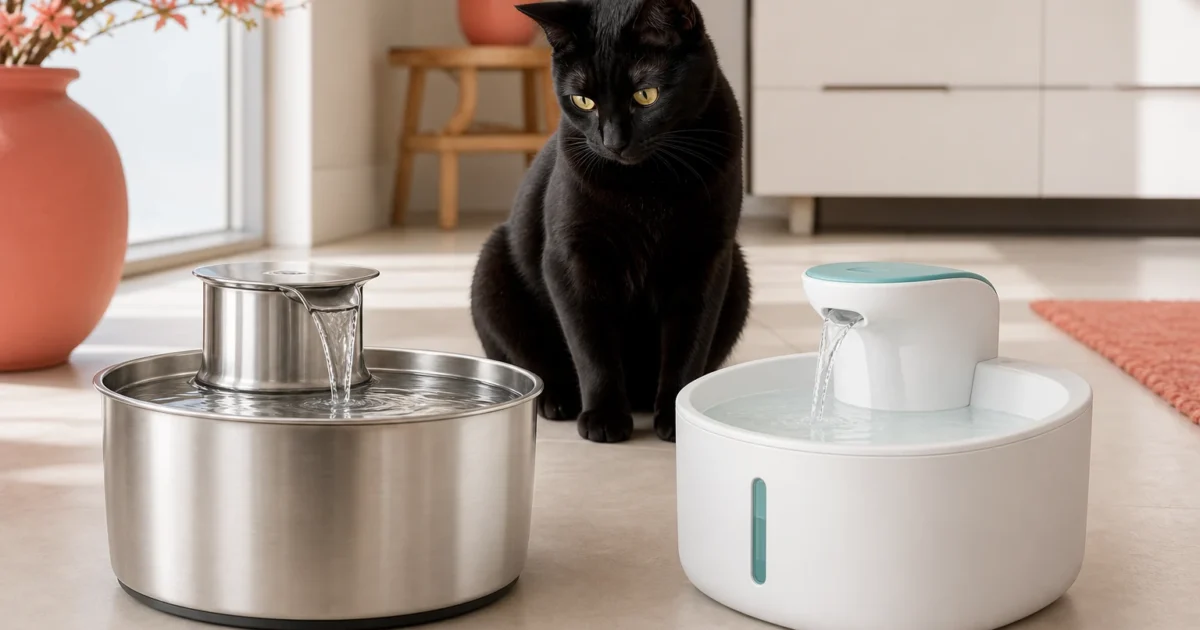
Stainless steel is usually the easier material to inspect and keep in good condition, but it is not automatically the best fountain for every cat. A well-designed plastic fountain that comes apart completely may be a better household fit than a stainless model with hidden channels, unstable parts, or an awkward pump.
This guide compares materials and design—not medical outcomes. We did not laboratory-test bacterial growth, noise, scratches, or durability.
The practical verdict
Choose stainless steel when you value a rigid, visible drinking surface, dishwasher compatibility, and resistance to everyday scratching. Choose plastic when the specific fountain is lighter, quieter, easier to disassemble, or better accepted by your cat. In either case, replace visibly damaged parts and clean the tank, tray, channels, filter housing, and pump on schedule.
Side-by-side comparison
| Factor | Stainless steel | Plastic |
|---|---|---|
| Surface inspection | Scratches and residue are often easier to see on a simple metal tray. | Gloss, color, and seams can make light residue harder to notice. |
| Scratch resistance | Generally resists ordinary scratching, although finishes can still mark. | Can scratch over time; damaged pieces should be replaced. |
| Weight | Usually heavier and more stable. | Usually lighter to lift and move. |
| Sound | Water or pump vibration can sound sharper against metal. | May dampen vibration, but design matters more than material alone. |
| Dishwasher use | Many trays are dishwasher-safe; verify the exact manual. | Some parts are dishwasher-safe and heat-resistant; others are not. |
| Design range | Fewer shapes; often a metal tray over a plastic tank. | More shapes, reservoirs, and cordless designs. |
What “stainless fountain” really means
Many products described as stainless fountains have a stainless drinking tray over a plastic reservoir, filter housing, or pump assembly. That can still be a practical design, but do not assume every wet component is metal. Read the materials list and look at the exploded cleaning diagram.
Also check whether the metal piece lifts away without tools, whether the underside has folded seams, and whether it fits your dishwasher. A polished label is less important than full access to every surface that stays wet.
When plastic can be the better choice
Plastic may suit a household that needs a light cordless unit, a translucent tank with an obvious fill line, or a quieter contact surface. The relevant question is condition: smooth intact plastic is different from an old, cloudy, scratched reservoir with inaccessible corners.
If a plastic part develops deep scratches, persistent odor, discoloration, warping, or residue that does not wash away, replace it. Follow the manufacturer’s temperature guidance before using a dishwasher or hot water.
What about bacteria and feline acne?
Avoid absolute claims. Material alone does not make a fountain hygienic. Water freshness, washing frequency, scratches, seams, pump care, drying, and contamination from food or litter all matter. Cat Friendly Homes recommends fresh water daily and ideally daily bowl washing; VCA notes that many cats may prefer glass, metal, or ceramic over plastic. Neither point proves that every stainless fountain prevents skin problems.
If your cat has chin irritation, hair loss, swelling, sores, or recurring skin changes, ask a veterinarian. Changing a bowl may be part of management, but a product-material article cannot diagnose the cause.
Use this five-minute buying test
- Count the wet parts: tank, tray, spout, filter cage, tube, impeller, and pump cover.
- Check access: can you reach every corner without a special brush?
- Read the dishwasher limits: which pieces, what rack, and what temperature?
- Price replacements: filters, pump, battery, and reservoir—not just the fountain.
- Plan a backup: keep a wide bowl available while the fountain is drying or charging.
Frequently asked questions
Is stainless steel safer than plastic?
Not automatically. Food-contact suitability, surface condition, cleaning access, correct use, and your cat’s acceptance all matter. Choose a documented product and maintain it properly.
Are stainless fountains noisy?
Some can sound louder when water falls onto metal or a pump vibrates against the tray. Water level, flow setting, floor surface, and assembly can change the sound.
Can I put the whole fountain in a dishwasher?
Usually not. Pumps, electrical parts, batteries, and some filters must stay out. Follow the exact manual rather than a general material rule.
Which should I buy?
Start with the model that is easiest for you to clean completely. Then compare drinking-surface width, noise, stability, filter cost, replacement parts, and your cat’s observed preference in our water-fountain guide.
Sources
- Cat Friendly Homes: water preferences and cleaning
- VCA: tips to encourage cats to drink
- Pioneer Pet: stainless fountain materials and maintenance
- PETLIBRO: Dockstream 2 materials and cleaning design
Editorial scope: general household guidance, not veterinary diagnosis.