


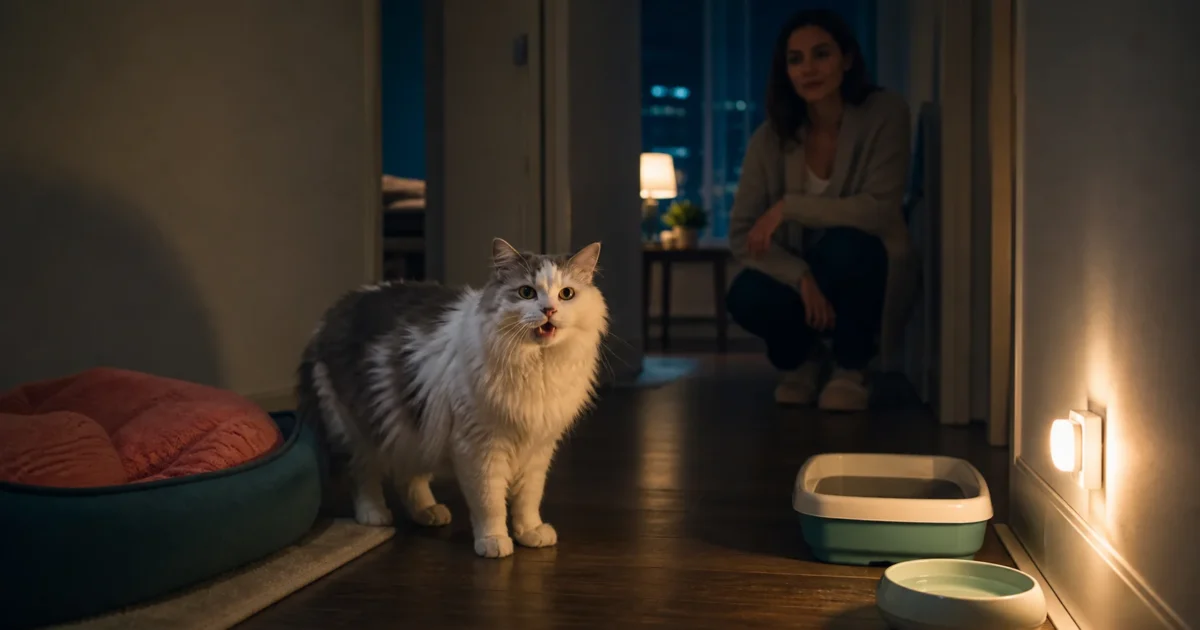
A cat may meow at night because of a learned routine, hunger, under-stimulation, environmental triggers, reproductive behavior, or a medical problem. New or increased nighttime vocalization—especially in a senior cat—should be treated as a health signal until a veterinarian says otherwise.
Seek prompt veterinary advice when vocalization is sudden or accompanied by weight loss, appetite or thirst change, vomiting, confusion, pain, breathing difficulty, litter-box change, weakness, or altered vision.
Rule out medical causes first
Cornell reports that nighttime vocalization in older cats can occur with cognitive dysfunction, hyperthyroidism, hypertension, sensory change, pain, and other disease. A cat wandering, staring, appearing lost, changing sleep patterns, or vocalizing without an obvious trigger needs an examination rather than a behavior-only fix.
Common non-medical patterns
The cat has learned that meowing works
If nighttime meowing reliably produces food, play, conversation, or an opened door, the outcome can maintain the behavior. This does not mean you should ignore a possible health problem. After medical needs are addressed, change the daytime and evening routine so the cat’s needs are met before bed.
The active period does not match the household
Cats do not follow a human sleep-wake schedule automatically and may be active around dawn or dusk. A day with little movement can leave play and exploration for nighttime. Use several short daytime activities and a calm evening hunting-style play session followed by a measured meal.
Hunger or an unhelpful feeding schedule
Confirm the daily calorie amount before adding food. Divide the same ration into smaller meals or use a measured timed feeder for an early-morning portion. Our guides explain how much to feed and meal frequency.
Outdoor or indoor triggers
An outdoor cat at the window, household-cat tension, noise, closed access to a preferred room, or a dirty litter box can prompt vocalization. Observe where the cat goes and what it watches. Use visual barriers when outdoor animals trigger arousal, and make sure each household cat can reach separated resources.
A seven-step nighttime plan
- Arrange a veterinary check for new, persistent, or senior-cat vocalization.
- Keep a one-week log of time, location, trigger, and response.
- Increase safe daytime exploration and short play sessions.
- Use an evening play-catch-meal routine if the cat enjoys it.
- Check water, litter, temperature, refuge, and easy mobility before bed.
- Block recurring outdoor-cat views and reduce unpredictable noise.
- Once needs are met, avoid accidentally rewarding demand vocalization inconsistently.
Adjust the home for a senior cat
Provide nightlights, non-slip routes, low-entry litter boxes, nearby water, warm rest, and steps or ramps to favorite places. Keep the layout predictable. These changes support access but do not diagnose cognitive dysfunction or other disease.
What not to do
- Do not yell, spray water, or use loud deterrents.
- Do not assume the cat is being spiteful.
- Do not start supplements or sedating products without veterinary guidance.
- Do not ignore weight loss, thirst, disorientation, pain, or a major routine change.
For the daytime foundation, use our indoor cat routine, enrichment ideas, and guide to possible boredom signs and medical look-alikes.
Sources
- Cornell Feline Health Center: Cognitive Dysfunction
- Cornell Feline Health Center: The Special Needs of the Senior Cat
- FelineVMA: Training Techniques for Addressing Undesirable Behaviors
What to record before you change the routine
For seven nights, note the time, location, what happened immediately before the vocalization, whether the cat ate or used the litter box, and what ended the episode. This can separate a predictable attention or activity pattern from a new change that deserves medical attention.
Do not assume new nighttime vocalization is behavioral, especially in an older cat. Cornell notes that cognitive dysfunction can include altered sleep–wake cycles and vocalization, but pain, sensory changes and other medical causes also need veterinary assessment. See the Cornell Feline Health Center guidance.
Then use the indoor cat routine guide and the broader Indoor Cat Living hub to make one measured change at a time.