


Short answer: Start with a complete cat diet, fresh water, accessible clean litter boxes, safe resting and scratching spaces, daily observation and a veterinary care plan. Adapt the setup to your cat’s life stage, mobility and temperament rather than buying every accessory at once.
Table of Contents
Preparing Your Home for a New Cat
Before your cat arrives, set up these essentials in a quiet room (the “base camp”) where your cat can decompress while they settle at their own pace:
Must-Have Supplies
| Item | Why It Matters | Budget |
|---|---|---|
| Food & water bowls (ceramic or stainless) | Choose smooth, easy-to-clean surfaces; persistent chin lesions need veterinary advice | $10–$25 |
| Litter box (1.5× cat’s length) | Too small = accidents outside the box | $15–$40 |
| Scratching post (32″+ tall) | Protects furniture, stretches muscles | $20–$50 |
| Carrier (hard-sided for safety) | Vet visits, emergencies, travel | $25–$60 |
| Cat bed or blanket | Security and scent comfort | $15–$35 |
| Interactive toys (wand + balls) | Prevents boredom and obesity | $10–$25 |
Cat-Proofing Checklist
- Secure windows and balconies with mesh screens
- Hide or cover electrical cords
- Remove toxic plants (lilies, poinsettias, pothos, aloe vera)
- Store cleaning products, medications, and small objects out of reach
- Check washer/dryer before each use — cats love warm, enclosed spaces
- Ensure toilet lids stay closed
Nutrition Essentials
Cats are obligate carnivores, meaning they require animal protein to survive. Unlike dogs, they cannot synthesize taurine or arachidonic acid on their own.
What to Feed by Life Stage
Kittens: Choose a complete diet labelled for growth, with meal frequency and portions appropriate to age and veterinary advice.
Adults: Choose a complete adult-maintenance diet and measure the daily allowance. Wet, dry or mixed feeding can work; ordinary kibble does not replace dental care.
Older cats: Review weight, muscle condition, appetite and any diagnosed disease with your veterinarian before changing food or adding supplements.
Foods to NEVER Feed Your Cat
- Onions & garlic — destroy red blood cells (even in powder form)
- Chocolate — theobromine is toxic
- Grapes & raisins — can cause kidney failure
- Raw eggs — risk of salmonella + avidin blocks biotin absorption
- Alcohol — even small amounts are potentially fatal
- Xylitol — avoid intentional feeding; serious toxicity is established in dogs, while cat-specific evidence is limited. Ask a veterinarian after exposure.
Litter Box Setup & Maintenance
The golden rule: one litter box per cat, plus one extra. Place them in quiet, accessible spots — never next to food bowls or in high-traffic areas.
Litter Types Compared
| Type | Pros | Cons |
|---|---|---|
| Clumping clay | Easy to scoop, excellent odor control | Dusty, heavy, not eco-friendly |
| Crystal/silica gel | Low dust, lasts longer | Uncomfortable texture for some cats |
| Pine/wood | Natural, biodegradable, pleasant scent | Doesn’t clump well |
| Paper pellets | Dust-free, good post-surgery | Poor odor control |
| Corn/wheat | Some varieties clump well; follow local waste-disposal guidance | Can attract bugs, mold risk |
Cleaning schedule: Scoop daily. Complete litter change + box wash every 2–4 weeks. Replace boxes when damaged, deeply scratched or no longer easy to clean.
Veterinary Care Schedule
Vaccination plan
Ask your veterinarian for a schedule based on age, previous vaccines, exposure and local requirements. AAHA/AAFP guidance includes repeated kitten core doses through 16–20 weeks and later revaccination; an abbreviated three-visit table is not a complete plan for every kitten.
Spay/Neuter: Recommended at 4–6 months. Prevents unwanted litters, reduces cancer risk, and curbs spraying behavior.
Annual check-ups should include: dental exam, blood panel (for senior cats), weight assessment, and parasite screening.
Grooming & Hygiene
Most cats are excellent self-groomers, but they still need your help:
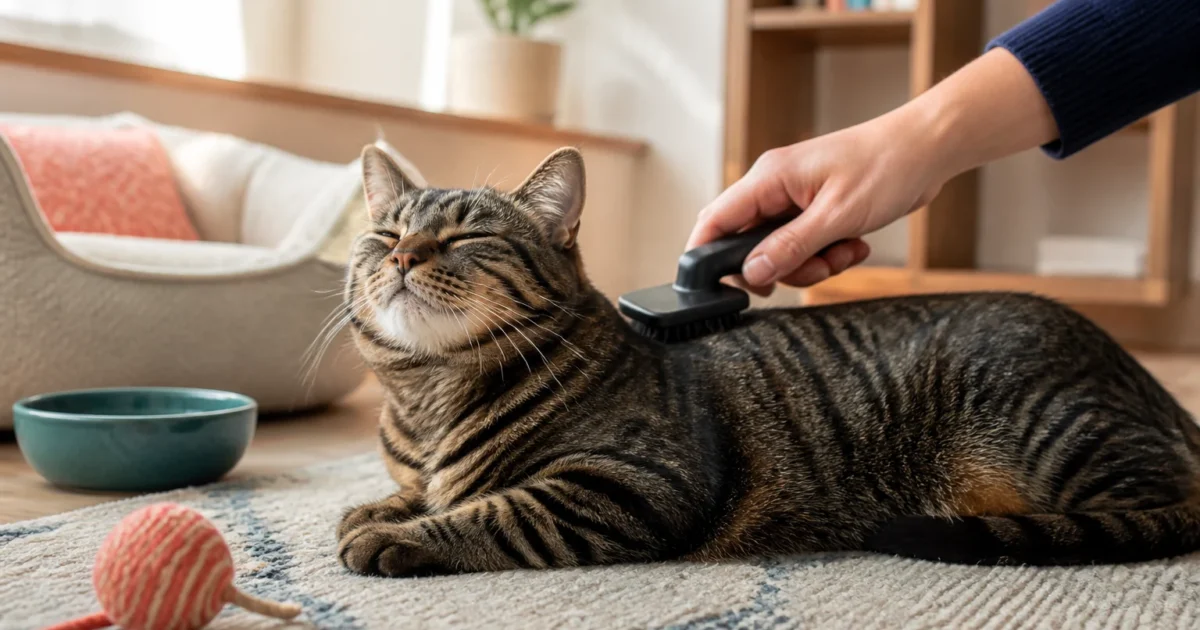
- Brushing: Short-haired cats → once weekly. Long-haired cats (Persian, Maine Coon) → daily to prevent mats.
- Nail trimming: Every 2–3 weeks. Use cat-specific clippers. Avoid the pink “quick.”
- Dental care: Brush teeth 2–3× per week with cat toothpaste (never human). Dental treats help between brushings.
- Ear cleaning: Check weekly. Clean only if you see dark waxy buildup — use vet-approved ear cleaner.
- Bathing: Rarely needed unless medically necessary. Most cats keep themselves spotless.
Mental Stimulation & Play
Offer short, regular play opportunities suited to your cat’s energy, mobility and interest. Play supports an enriched routine but is not a guarantee against illness or behaviour problems.
Best Enrichment Ideas
- Wand toys: Mimic prey movement — the #1 most engaging toy type
- Puzzle feeders: Make meals a mental challenge (reduces eating speed too)
- Vertical space: Cat trees, wall shelves, window perches — cats feel safe up high
- Cardboard boxes: Free, irresistible, and perfect for hiding
- Bird-watching station: Place a perch by a window facing trees or a bird feeder
- Rotating toys: Keep 5–6 toys out, swap them weekly so they stay “new”
Pro tip: Always end play sessions with a treat or meal — this simulates the hunt-catch-eat cycle and prevents frustration.
Indoor vs. Outdoor: The Debate
The Numbers
| Factor | Indoor Only | Outdoor Access |
|---|---|---|
| Risk of injury | Very low | High (cars, fights, predators) |
| Disease exposure | Minimal | FIV, FeLV, parasites |
| Mental stimulation | Requires owner effort | Natural enrichment |
| Wildlife impact | Zero | Cats kill billions of birds annually |
Best compromise: A “catio” (enclosed patio) or harness-trained walks give outdoor time with reduced exposure to some risks. More cats than ever are successfully leash-trained with patience and positive reinforcement.
8 Common Mistakes New Cat Owners Make
- Feeding only dry food — Cats need moisture; food format alone does not prevent kidney disease; discuss hydration and diet with your vet
- Skipping the vet until something’s wrong — Cats hide pain; annual check-ups catch problems early
- Not enough litter boxes — One per cat + one extra is the formula
- Declawing — It’s actually amputation and banned in many countries; use scratching posts instead
- Punishing bad behavior — Cats don’t understand punishment; redirect to appropriate behavior
- Ignoring dental health — ask your vet for an individual dental-care plan
- No vertical space — Cats need height for security; invest in a cat tree
- Free-feeding — Can make intake hard to track; measure the daily allowance and choose a suitable meal schedule
Frequently Asked Questions
How much does it cost to own a cat per year?
The average annual cost is $800–$1,500, including food ($300–$600), litter ($150–$300), vet care ($200–$400), and supplies. Emergency vet visits can add $1,000+ — pet insurance ($20–$50/month) is worth considering.
How long can a cat be left alone?
Adult cats can be left alone for 24–48 hours with enough food, water, and clean litter. Beyond that, arrange a pet sitter. Kittens under 6 months should not be left alone for more than 4–8 hours.
Should I get one cat or two?
Two cats are often better than one — they keep each other company, play together, and reduce separation anxiety. This is especially true for kittens. However, adult cats with territorial personalities may prefer being solo.
When should I take my cat to the emergency vet?
Seek immediate care for: difficulty breathing, not eating for 24+ hours, straining to urinate (especially males — this is life-threatening), seizures, ingesting something toxic, or sudden paralysis in the hind legs.
Final Thoughts
Cats are low-maintenance compared to dogs, but they’re not no-maintenance. The difference between a cat that merely survives and one that truly thrives comes down to understanding their needs — proper nutrition, regular vet care, mental stimulation, and a safe environment.
Invest time upfront to set things up right, and you’ll be rewarded with 15–20 years of purrs, head bumps, and unconditional companionship.
Build a better indoor routine
Continue with MeowBay’s research-backed five-pillar indoor-cat happiness plan. Then choose a focused guide on enrichment ideas, possible boredom signs, exercise, or building a practical routine.
Further reading
For individual decisions, use Cornell’s cat-feeding guidance, ASPCA food cautions and our cat-sitter checklist. Selected nutrition, food-hazard and vaccination wording reviewed September 15, 2026; this guide does not replace an individual veterinary care plan.