


Compare designs before choosing
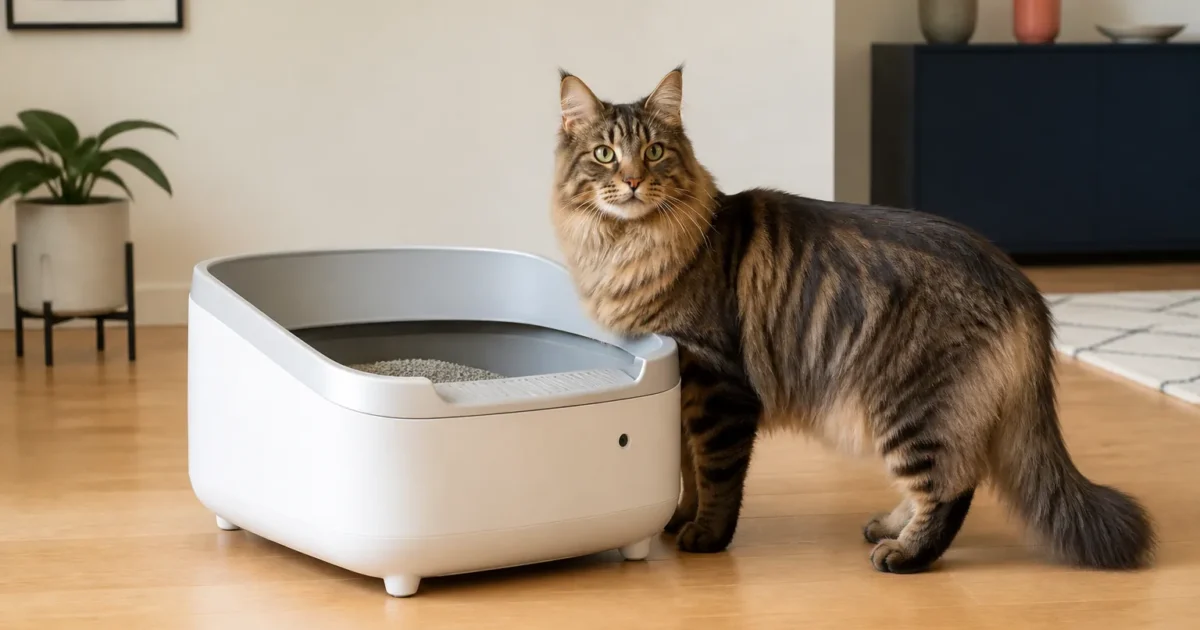
Luma is an additional option only for cats within its 2.2–22 lb range; it is not our large-cat winner.
Paid links: MeowBay may earn a commission from qualifying purchases. As an Amazon Associate, we earn from qualifying purchases.
Additional premium option
PETLIBRO Luma

Automatic cleaning · Enclosed design · App
Limitation: Adult cats 2.2–22 lb; needs a hard, level floor and generous clearance.
Open-top alternative
Neakasa M1 Plus

Open top · Large-cat option · App
Limitation: Allow room around the unit and follow current firmware guidance.
Wide-entry premium design
Litter-Robot 5
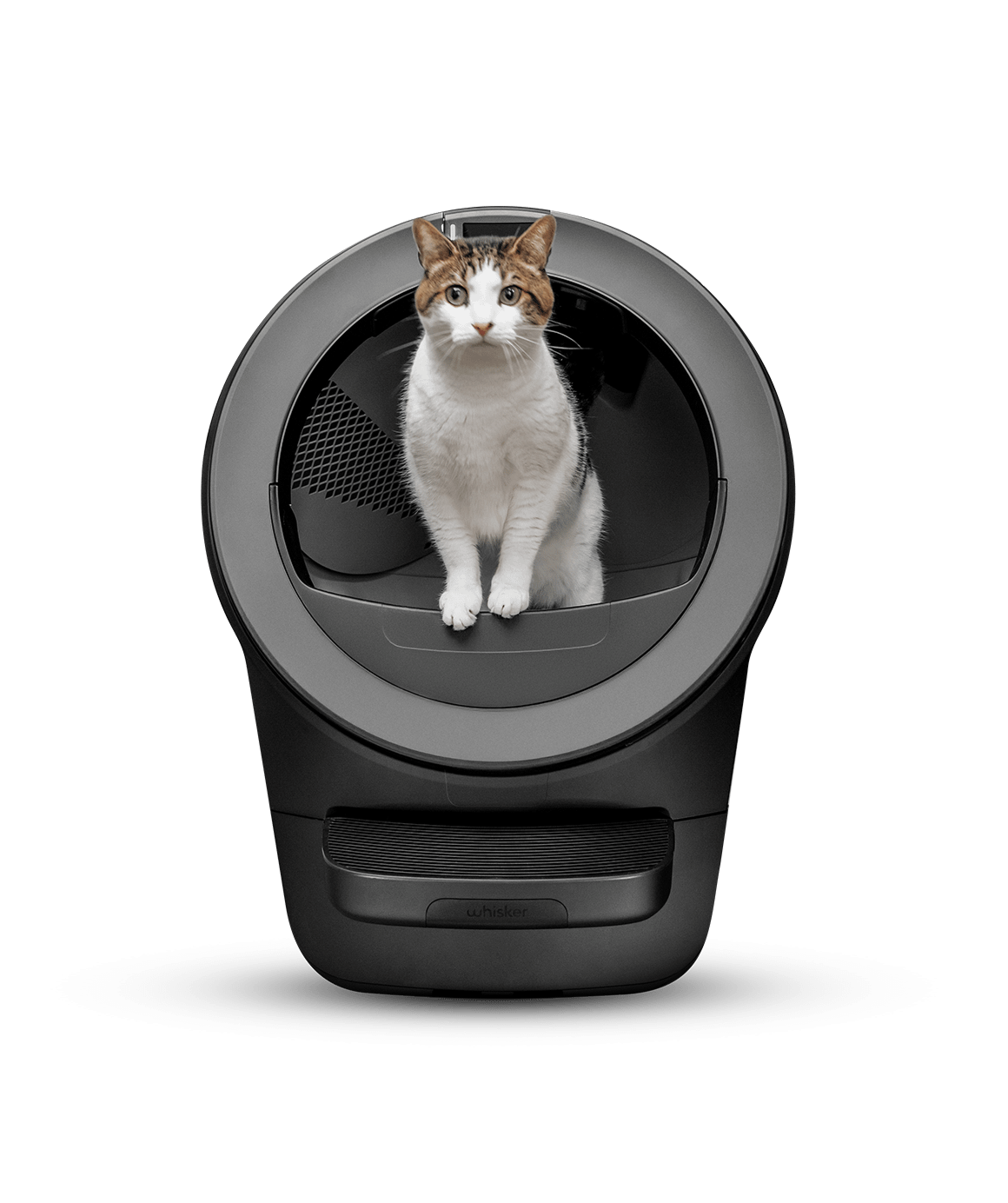
Wide entry · App monitoring · Enclosed globe
Limitation: Premium cost and a substantial footprint; check regional availability.
Large-cat buying guide · Updated August 2026
For a large cat, opening width, interior turning room, headroom, and step height matter more than a headline weight limit. An automatic box can support the cat’s weight and still feel cramped. We compared current documented dimensions and design trade-offs; MeowBay has not hands-on fit-tested every breed in every model.
The short answer
Neakasa M1 Plus is the strongest open-top option to compare for large or long-bodied cats because the manufacturer documents a 2.2–33 lb range and there is no enclosed ceiling over the litter bed. Litter-Robot 5 is the stronger premium connected option, with a 15.75-inch-square opening, 17.5 inches of interior headroom, and a 3–30 lb range. Litter-Robot 4 remains relevant if discounted, but its documented maximum is 25 lb and it has slightly less headroom.
For a Maine Coon, Ragdoll, Norwegian Forest Cat, or any long-bodied individual, measure the cat and preserve a large traditional backup box during the trial.
Affiliate disclosure: MeowBay may earn a commission from marked retailer links. Official specification links are not paid. Verify the exact model and authorized seller.
What “large-cat friendly” should mean
- Opening: wide and tall enough to enter without crouching or twisting.
- Interior: enough length, width, and headroom to turn and dig normally.
- Weight system: the cat falls within the automatic-mode range.
- Step: manageable for the cat’s joints and mobility.
- Exit: open, stable, and not easily blocked by another cat.
- Litter bed: sufficient usable surface after the mechanism and screen take their share.
Cornell notes that larger cats need larger litter boxes and that many cats prefer uncovered boxes with a broad view. That does not make every covered robot unsuitable, but it makes cat acceptance a requirement—not an assumption.
Quick size comparison
| Model | Documented cat range | Entry / interior | Best reason to choose | Main caution |
|---|---|---|---|---|
| Neakasa M1 Plus | 2.2–33 lb | Open top; 13.86-inch entry height | No enclosed roof; broad size range | High step for low-mobility cats |
| Litter-Robot 5 | 3–30 lb | 15.75 × 15.75-inch opening; 17.5-inch headroom | Roomy premium connected design | Enclosed globe; $799 starting price |
| Litter-Robot 4 | 3–25 lb | 15.75 × 15.75-inch opening; 16.5-inch headroom | Same wide opening, older generation | Lower maximum and headroom than LR5 |
Best open-top option to compare
1. Neakasa M1 Plus
Neakasa’s open-top design removes the enclosed ceiling that can make a rotating globe feel tight. The company lists exterior dimensions of 20.67 × 23.26 × 20.2 inches and a 2.2–33 lb cat range. The open litter bed also gives the cat a clear upward view.
The 13.86-inch entry is the central trade-off. A big, athletic cat may handle it easily; a large senior, overweight cat, or cat with joint pain may not. An added step must be stable and must not interfere with the unit’s sensors or movement.
- Long-bodied or tall cats that dislike a roof
- Cats up to the documented 33 lb limit
- Owners prioritizing open visibility
- The cat cannot comfortably climb 13.86 inches
- You need maximum physical litter containment
- You will not keep firmware updated
Best premium connected option
2. Litter-Robot 5
Litter-Robot 5 has a 15.75-inch-square entry, 17.5 inches of interior headroom, and a documented 3–30 lb range. Whisker says it is designed for up to five cats and uses multiple detection layers. The 90-day trial is valuable because a specification cannot predict whether a particular cat will accept the globe.
The 29.9-inch exterior height and 22-by-27-inch footprint make it visually large. A ramp expands the required depth and must be included in apartment measurements. It was limited to the US and Canada when reviewed.
- Large cats within the 30 lb limit
- Owners who want weight and visit tracking
- Households that value a long trial period
- Your cat refuses covered boxes
- You live outside supported markets
- The purchase and accessory cost is too high
Older-generation alternative
3. Litter-Robot 4
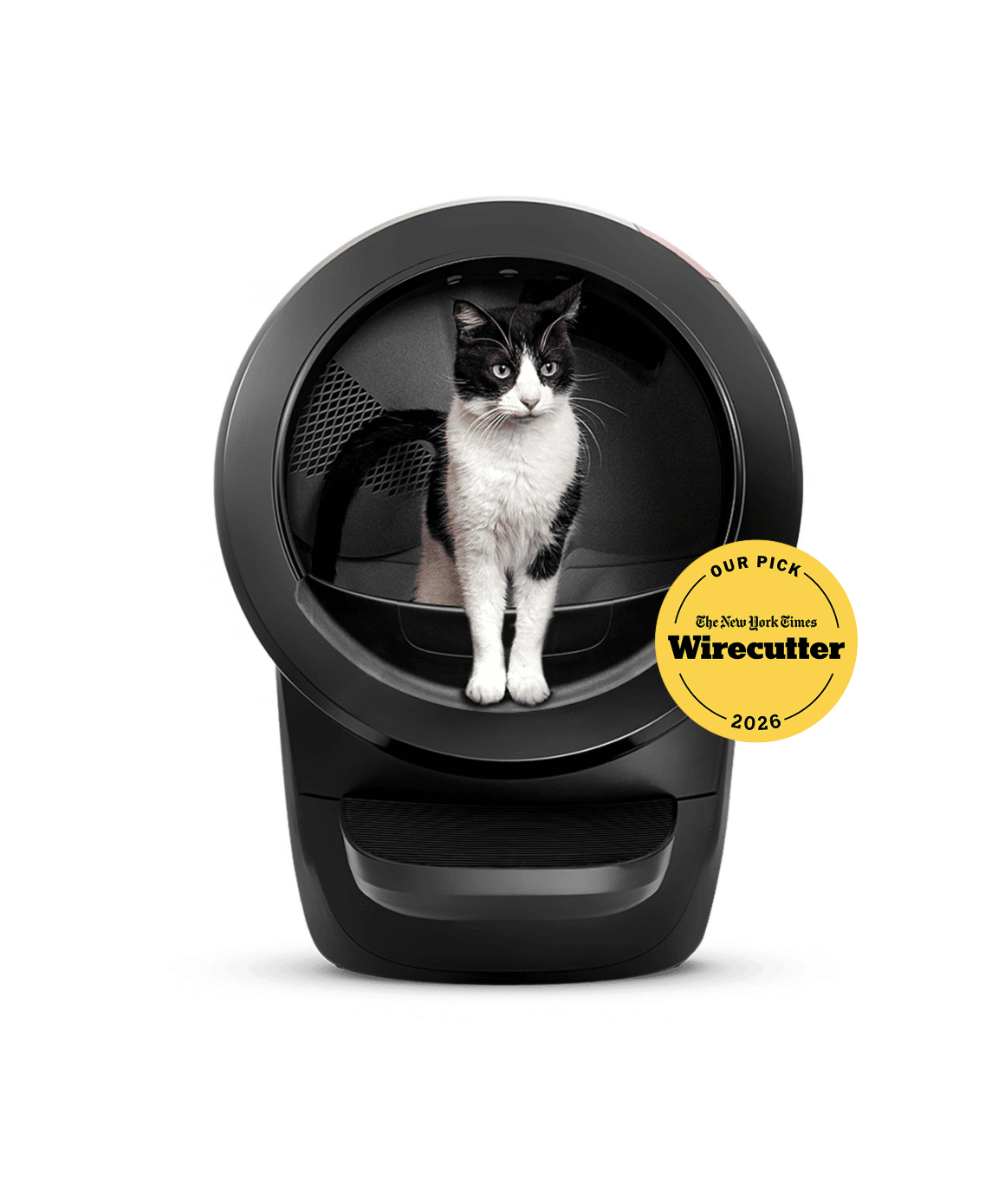
Litter-Robot 4 keeps the same 15.75-inch-square entry and 22-by-27-inch footprint as LR5, but Whisker lists 16.5 inches of interior headroom and a 3–25 lb cat range. It remains a rational alternative when the price difference is meaningful and the cat falls comfortably inside the lower limit.
Do not choose it simply because it is discounted. Compare the actual current bundle, warranty, return terms, accessories, and the extra headroom and range of LR5.
- Large cats clearly below 25 lb
- Buyers finding a meaningful official discount
- Owners who do not need LR5 WasteID features
- The cat approaches or exceeds 25 lb
- Extra headroom is important
- The discount is small after accessories
Why we did not make PuraMax 2 the large-cat pick
PETKIT documents a 3.3–22 lb limit and an opening of about 7.87 × 10.03 inches. The low 7.87-inch entry can help mobility, but the enclosed opening may be the limiting dimension for a very broad or long-bodied cat. It may fit many average and some larger cats; it is simply not the first large-cat recommendation from specifications alone.
A five-minute fit check before ordering
- Measure the cat’s standing height and body length without forcing a pose.
- Compare the opening width and height—not only the maximum weight.
- Mark the exterior footprint and required front clearance on the floor with tape.
- Check step height and add any ramp depth to the room measurement.
- Confirm the return trial starts when delivered and understand return-shipping conditions.
Do not remove the large traditional box immediately
Leave the familiar box available until the cat enters, turns, digs, eliminates, and exits the automatic unit comfortably over repeated days. A cat that perches at the edge, backs out, eliminates beside the box, or stops covering waste may be communicating discomfort. Sudden litter-box avoidance can also have medical causes; contact a veterinarian when the change is abrupt or accompanied by straining, pain, blood, constipation, or repeated trips.
Compare all five household options
See the main MeowBay guide for safety, odor, apartment fit, cleaning, multi-cat use, and real ownership trade-offs.
Continue your automatic litter-box research
Sources
- Whisker: Litter-Robot 5 dimensions and cat-size guidance
- Whisker: Litter-Robot 4 dimensions and cat-size guidance
- Whisker: current model comparison
- Neakasa: M1 Plus dimensions, cat range, and entry height
- PETKIT: PuraMax 2 dimensions and cat range
- Cornell Feline Health Center: litter-box size and access guidance
1 Comment on “Best Automatic Litter Boxes for Large Cats: 3 Researched Options”