


Cleaning schedule · Updated August 2026
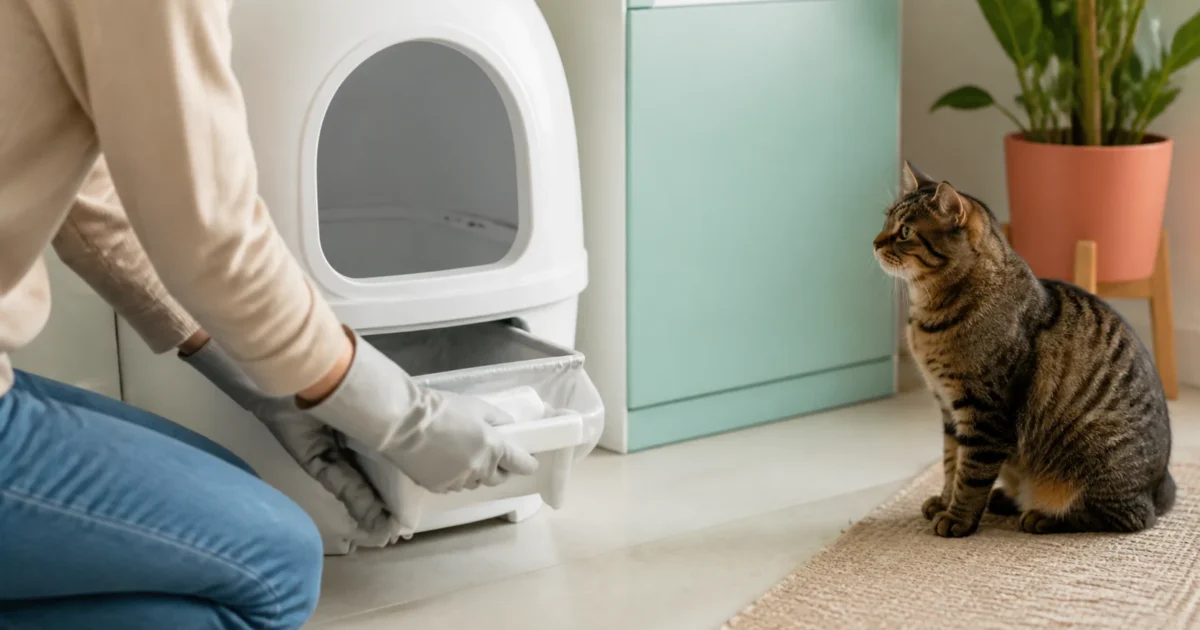
Check every litter box daily. Scoop a traditional clumping box at least once a day, and more often with multiple cats. Inspect an automatic box daily, empty its drawer before it is full, wipe residue when seen, and deep-clean removable parts on the manufacturer’s schedule—or sooner when odor, smearing, leaks, or sensor dust appear.
The practical schedule
Use the table below as a starting routine, not a universal rule. Cat count, litter, urine volume, stool consistency, humidity, box size, drawer seal, and the exact machine change the interval. “Up to 15 days” is a capacity claim, not permission to ignore the box for 15 days.
Traditional and automatic cleaning schedule
| Task | Traditional box | Automatic box |
|---|---|---|
| Observe use and waste | Daily | Daily—check bed and drawer, not only app |
| Remove clumps / feces | At least daily | Machine cycles; manually remove anything missed |
| Top up litter | As needed while preserving depth | As needed within the manual’s fill line |
| Empty waste | After scooping | Before drawer-full warning or odor; often every few days in multi-cat homes |
| Wipe fresh residue | When seen | When seen on globe, liner, screen, edge, drawer, or step |
| Wash litter-contact parts | Often every 1–4 weeks as a practical starting range | Follow exact manual; commonly every few weeks or sooner with residue |
| Clean sensors / mechanism | Not applicable | At the manual’s interval and after error or dust buildup |
| Replace worn parts | When cracked or odor persists | When seals, liner, screen, filter, pad, or bags no longer function correctly |
Why daily checking still matters
Urine clumps and stool provide information about routine. A robot can hide them in a drawer soon after use, and an app may summarize visits without showing output. Open the drawer and inspect. Weight and visit data can flag change, but cannot diagnose the cause or always identify cats with similar weights.
Contact a veterinarian for straining, repeated unproductive trips, crying, blood, sudden house soiling, constipation, diarrhea, or a major change in urine or stool. Do not solve a possible medical problem only by changing the cycle delay.
How often should you empty an automatic litter-box drawer?
Empty it before it overfills, compresses waste against moving parts, weakens the seal, or creates odor. For one cat, a large drawer may last a week or longer under favorable conditions; for two or more cats, it may need attention every few days. Soft stool, high urine volume, warm rooms, and weak clumps shorten the interval.
Start by checking daily for two weeks and write down the safe interval for your household. Set a reminder earlier than the observed limit. Manufacturer maximums are not a personal schedule.
How to deep-clean a traditional box
- Move the cat to another clean available box.
- Empty the litter and dispose of it according to local rules.
- Wash the tray with warm water and a mild detergent.
- Rinse away residue and dry the box completely.
- Inspect for cracks, rough scratches, and persistent embedded odor.
- Refill with the cat’s familiar litter at its preferred depth.
Avoid strong fragrance and products that leave irritating residue. Cornell notes that many cats prefer unscented litter and a clean box.
How to deep-clean an automatic litter box
- Provide another clean litter box before taking the unit offline.
- Turn it off and unplug it as the manual instructs.
- Empty litter and waste using the machine’s approved procedure.
- Remove only parts the manual identifies as removable and washable.
- Keep motors, bases, connectors, cameras, sensors, and electronics dry.
- Clean the globe or tray, liner, screen, waste drawer, seals, step, and surrounding floor.
- Remove hair and dust from approved sensor areas without scratching them.
- Rinse and dry washable parts completely before reassembly.
- Confirm magnets, liners, screens, lids, globes, and drawers are seated correctly.
- Run an empty supervised cycle and check that interruption works before restoring automatic mode.
Never improvise around sensors or moving parts
Do not hose or submerge a powered base, bypass a safety sensor, force a stuck mechanism, operate with a loose liner or magnet, or use a replacement part the manufacturer says is incompatible. If an error persists after approved cleaning and reassembly, keep the machine off and contact official support.
Clean sooner when you notice…
- odor returning before the normal drawer interval;
- smears on the globe, rake, liner, or screen;
- urine along an edge, seam, or under a pad;
- clumps sticking, breaking, or returning to the clean litter;
- flies, moisture, condensation, or leaking bags;
- dust on sensors or repeated false drawer/weight errors;
- the cat hesitating, perching, or eliminating beside the box;
- more cats using the resource than the routine was designed for.
Two or more cats
Increase observation and shorten drawer intervals. One automatic unit does not replace separate resources in different locations. If a machine must be offline for washing, every cat still needs access. See whether two cats can share one automatic box and how many boxes two cats need.
Pregnancy and litter hygiene
The FDA recommends having someone else change the litter box during pregnancy if possible. If that is not possible, wear disposable gloves and wash hands thoroughly afterward. Daily changing matters because the parasite associated with toxoplasmosis does not become infectious immediately after being shed. Ask a healthcare professional for personal guidance.
Compare machines by cleaning—not app novelty
Our main guide shows which parts, litter limits, drawers, seals, placement rules, and recurring supplies shape real ownership.
Sources
- Cornell Feline Health Center: daily clump removal, washing, litter, and box guidance
- AAFP/ISFM: litter-box number, size, placement, and cleanliness
- US FDA: toxoplasma prevention and daily litter changing
- Whisker: Litter-Robot 5 cleaning and maintenance information
- PETKIT: PuraMax 2 cleaning, litter, and placement information
- Neakasa: M1 Plus cleaning and litter compatibility
- PetSnowy: SNOW+ cleaning and drawer guidance
1 Comment on “How Often Should You Clean a Litter Box? Traditional & Automatic Schedule”