


Researched & Compared · Source check: August 14, 2026 · Guide structure updated: September 19, 2026
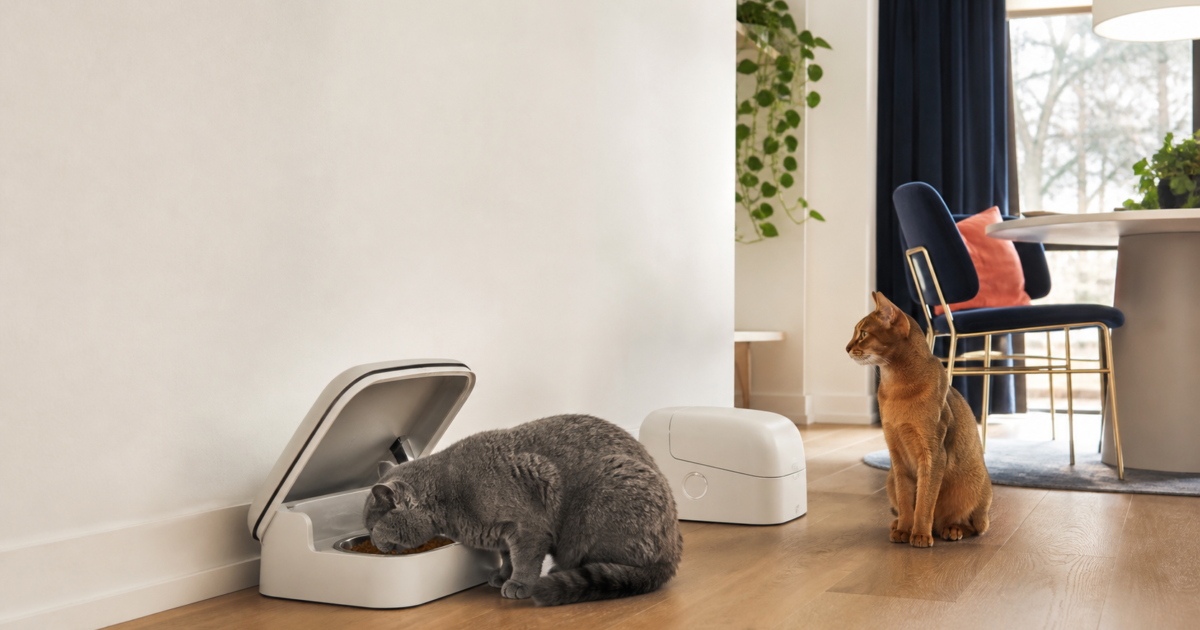
Microchip cat feeders solve one specific multi-cat problem: they are designed to restrict bowl access to an authorized cat. That can protect different diets, help a slow eater graze without losing its meal, and reduce the need to supervise every bowl.
Transparency: MeowBay compared current manufacturer specifications, manuals, access method, food compatibility, bowl design, cleaning, power, training features, and multi-cat limitations. We have not hands-on tested these feeders or independently measured access reliability, lid speed, noise, or long-term durability.
As an Amazon Associate I earn from qualifying purchases. Clearly labeled shopping buttons are affiliate links; manufacturer and source links are not paid. Prices and availability can change.
Which microchip or RFID feeder fits your cats?
Best straightforward microchip feeder: the SureFeed Microchip Pet Feeder. It reads common implanted microchips or the included collar tag, handles wet or dry food, stores up to 32 identities, and includes a training mode.
Best enclosed design: Closer Pets MiBowl CP500. Best for app-based eating records: SureFeed Microchip Pet Feeder Connect. Best scheduled dry-food alternative: PETLIBRO One RFID—but it reads its dedicated collar tag, not an implanted microchip.
For truly separate diets, plan on one protected feeder per cat that needs individual access. Registering several cats to one feeder lets all of those cats open the same bowl; it does not create separate portions.
Microchip reader vs RFID collar tag: the difference that matters
An implanted-microchip feeder reads the identification chip already under the cat’s skin, provided that chip format is compatible. The cat does not need to wear a collar. A collar-tag feeder reads a removable proprietary tag supplied by the feeder company. Both use radio-frequency identification, but they are not interchangeable.
Choose an implanted-microchip model if your cat is already chipped and you want collar-free access. Choose a collar-tag model when you need timed dry-food dispensing or when a cat’s implanted chip is not compatible—but first make sure the cat safely tolerates the collar and tag.
Compare microchip and RFID cat feeders
| Model | Access method | Food | Best for | Main limitation | Buying link |
|---|---|---|---|---|---|
| SureFeed Microchip Pet Feeder | Implanted microchip or included RFID tag | Wet or dry; 400 ml bowl | Simple selective access | No scheduling or app | See Amazon options → Paid link |
| Closer Pets MiBowl CP500 | Compatible implanted microchip or included ID disc | Wet or dry; 340 g / 12 oz stated capacity | More enclosed bowl protection | No scheduling or app | See Amazon options → Paid link |
| SureFeed Connect | Implanted microchip or RFID tag | Wet or dry; 400 ml bowl | Eating records and guided portions | Requires Sure Petcare Hub for app features | See Amazon options → Paid link |
| PETLIBRO One RFID | Dedicated collar tag only | Dry food; 3 L hopper | Scheduled protected dry meals | Does not read implanted microchips | Check PETLIBRO price → Paid link |
Who should buy a selective-access feeder?
These feeders are most useful when one cat steals food, cats eat at different speeds, or a household must keep life-stage or veterinarian-directed diets separate. They are less useful when every cat eats the same food at the same time and nobody guards the bowl.
A feeder can control access, but it cannot diagnose appetite changes or decide how much a cat should eat. Ask your veterinarian to set the diet and portion plan when weight change, medication, allergies, prescription food, or illness is involved.
How we compared microchip and RFID feeders
We first separated implanted-microchip readers from proprietary collar-tag readers. Then we compared access control, protection from side and rear intrusion, wet- and dry-food compatibility, bowl capacity, cleaning, battery needs, training support, app requirements, and the number of identities each feeder can store.
We did not assign numerical scores. Manufacturer specifications can show what a feeder is designed to do, but they cannot prove day-to-day reliability with a determined food thief, a nervous cat, or two similar tags without independent use.
Best overall for straightforward microchip access
1. SureFeed Microchip Pet Feeder

Sure Petcare says this feeder works with common implanted identification microchips worldwide and with its RFID collar tag. A registered cat approaches, the lid opens, and the bowl stays closed for unauthorized pets. It stores up to 32 identities and remembers them when the batteries are removed.
The 400 ml bowl accepts wet or dry food, while the closing lid helps reduce exposure to flies and drying. A training mode introduces lid movement gradually, which matters because the best access system is useless if a cautious cat refuses to approach it.
- Reads common implanted microchips
- Wet- and dry-food compatible
- Training mode and included collar tag
- Up to 32 stored identities; stated six-month battery life
- It protects an available bowl; it does not dispense scheduled meals
- Open rear area may need the optional rear cover for persistent thieves
- Four C batteries are not included
- One feeder is usually needed per separately fed cat
Best enclosed design for determined food thieves
2. Closer Pets MiBowl CP500

MiBowl is designed around an enclosed feeding area rather than a bowl with an open back. Closer Pets says it reads compatible ISO or AVID 15-digit microchips or its included electronic ID disc, stores up to 10 pets, and blocks access from the sides and rear.
The removable bowl accepts wet or dry food and is listed as dishwasher-safe on the top rack. Portion-protecting clips reduce the opening for kittens and smaller cats. This is the more defensive physical design in our comparison, although no lid mechanism should be assumed thief-proof without testing it against your cats.
- Enclosed sides and rear
- Wet- and dry-food compatible
- Dishwasher-safe removable bowl
- Programs up to 10 pets; collar disc included
- No timed dispensing or app records
- The standard bowl is relatively deep
- Compatibility is stated for ISO or AVID 15-digit microchips
- Four C batteries are required
Best for app-based eating records
3. SureFeed Microchip Pet Feeder Connect

The Connect model adds integrated scales and eating-history records to selective microchip access. Sure Petcare says the app can show when a registered pet eats, how often it visits, and how much food it consumes. LEDs guide the person filling the bowl toward a target portion within 1 gram.
This model suits a household that wants a record of bowl visits, not just access control. The important trade-off is ecosystem cost: app features require the Sure Petcare Hub connected to the home router. The feeder still runs on four C batteries.
- Implanted-microchip access control
- Wet or dry food
- Integrated scale and portion-guidance LEDs
- App records feeding time, frequency, duration, and amount
- Hub is required for connected features
- It does not dispense food on a timed schedule
- Eating records are context, not a medical diagnosis
- Higher total system cost than the standard model
Best scheduled dry-food alternative
4. PETLIBRO One RFID Smart Feeder

The PETLIBRO One is included because it combines selective access with automatic meal scheduling. It has a 3-liter dry-food hopper, app schedules, eating-pattern logs, dual-band Wi-Fi, and battery-backed dispensing. That feature set is useful when a protected cat needs measured dry meals while nobody is home.
Important: this is an RFID collar-tag feeder, not a microchip reader. PETLIBRO states that it works with its dedicated tag. Buyers who specifically want to use an implanted microchip should choose one of the first three models.
- Schedules and dispenses dry meals
- Dedicated-tag access control
- 3-liter hopper and 2–15 mm stated kibble range
- App feeding records; saved schedules continue during network errors
- Does not read implanted microchips
- Dry food only
- The cat must tolerate wearing the proprietary tag
- Individual protection requires a separate unit for each separately fed cat
How many feeders do two cats need?
If only one cat needs protected food and the other cat can eat elsewhere, one selective feeder may be enough. If both cats need different food, different portions, or independent grazing access, use two feeders. Adding both cats to one feeder authorizes both cats to open the same bowl.
Place separate stations far enough apart that one cat cannot guard both. For MiBowl, the official manual recommends spacing multiple units 1 meter apart. Watch several complete meals before relying on any unattended setup.
Are microchip cat feeders worth it?
They can be worth the cost when protected access solves a recurring problem that separate supervised meals cannot practically cover. If you only need food served on time, compare scheduling instead of paying for identity control.
Calculate the cost of your setup, not one box
Use current checkout prices to fill in this worksheet:
First-year setup cost = required feeders + necessary accessories + batteries or power costs + replacement consumables + any required subscription + shipping and taxes.
Do not add a subscription automatically; verify whether the exact model requires one for the features you need. Equally, do not omit the cost of a second station if both diets need protection.
Then record the practical benefit you are buying: fewer supervised handovers, protected leftovers, or a more reliable routine. Avoid assigning invented savings to prevented illness or claiming the device pays for itself through hypothetical vet bills. Those are not defensible purchase calculations.
Before buying, read our step-by-step introduction guide for two cats. If an existing feeder is not keeping meals separate, use these five checks for unwanted feeder access first.
What to verify before buying
Write down three requirements first: your cat’s chip or tag compatibility, wet versus dry food, and whether you need scheduled dispensing or protected access. Eliminate any model that fails a requirement before comparing price. If scheduling matters more than identity, use our two-cat feeder setup comparison.
- Microchip compatibility: check the cat’s exact chip number against the manufacturer’s compatibility tool or support team.
- Real problem: decide whether you need protected access, timed dispensing, app records, or all three. Most models do not provide every function.
- Food type: a covered bowl is not active refrigeration. Follow the food manufacturer’s storage and serving guidance for wet food.
- Physical access: consider side and rear intrusion if another cat is persistent.
- Training: use the gradual training mode and never force a frightened cat’s head into the opening.
- Power and travel: install fresh batteries, test low-power behavior, and arrange a person to check food, water, litter, and the cats.
- Cleaning: confirm which bowl, mat, lid, and moving parts are removable and which must not be submerged.
Frequently asked questions
Do microchip feeders work with every cat microchip?
No model should be assumed universal without checking. Sure Petcare states compatibility with common identification microchips worldwide and offers a number checker. Closer Pets specifies compatible ISO or AVID 15-digit chips. Confirm the exact number before buying.
Can another cat steal food while the lid is open?
It may be possible for a persistent cat to follow closely or approach from an exposed side. Enclosed designs and optional rear covers reduce access points, but MeowBay has not independently tested theft resistance. Supervise the setup until you understand both cats’ behavior.
Can a microchip feeder dispense food automatically?
The SureFeed and MiBowl models compared here protect a filled bowl; they do not dispense scheduled meals from a hopper. The PETLIBRO One dispenses scheduled dry food but uses its dedicated collar tag rather than an implanted microchip.
Are microchip feeders suitable for wet food?
The SureFeed and MiBowl models are designed for wet or dry food. Their covers can reduce exposure, but they do not actively refrigerate food. Use safe portions and follow the food label’s time and temperature guidance.
Will a feeder replace monitoring a cat’s appetite?
No. Access records or bowl changes can provide useful context, but they do not establish why a cat ate less or more. Contact a veterinarian about a meaningful appetite, weight, vomiting, or behavior change.
Sources and verification
- SureFeed Microchip Pet Feeder — official specifications
- SureFeed Microchip Pet Feeder Connect — official specifications
- Closer Pets MiBowl CP500 — official specifications
- Closer Pets MiBowl — official support
- PETLIBRO One RFID — official specifications
Editorial note: specifications, prices, stock, accessories, warranty, and regional support change. Sources were checked August 14, 2026. Confirm the exact model and local terms before buying. MeowBay has not hands-on tested these products.
20-second guide finder
Find the Right Guide for Your Cat
Choose your household and top priority. Get three practical MeowBay guides from content that is already published.
Find My Guides →
6 Comments on “Best Microchip Cat Feeders for Multi-Cat Homes in 2026: 4 Researched Options”