


Which automatic cat feeder is best for your home? PetSafe Smart Feed is our research-based all-round pick for scheduled dry or semi-moist meals; PETLIBRO Granary Camera suits camera check-ins; Cat Mate C500 suits simple wet-food scheduling. Compare all six options below by food type, connectivity, portion control and limitations.
Quick decision
Best automatic cat feeders: quick picks
Choose by the problem you need to solve. These are specification-based starting points—not claims that MeowBay has hands-on tested every feeder.
Best With Camera
PETLIBRO Granary Camera
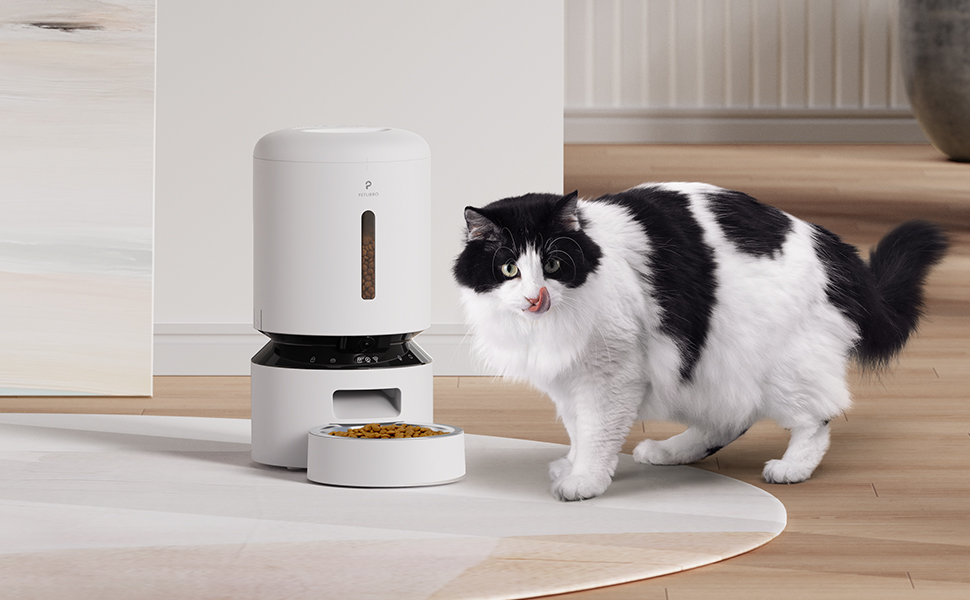
Dry food · 1080p camera · App
Limitation: dry food only.
Check Price at PETLIBRO →View on Amazon →Strongest documented all-round fit
PetSafe Smart Feed
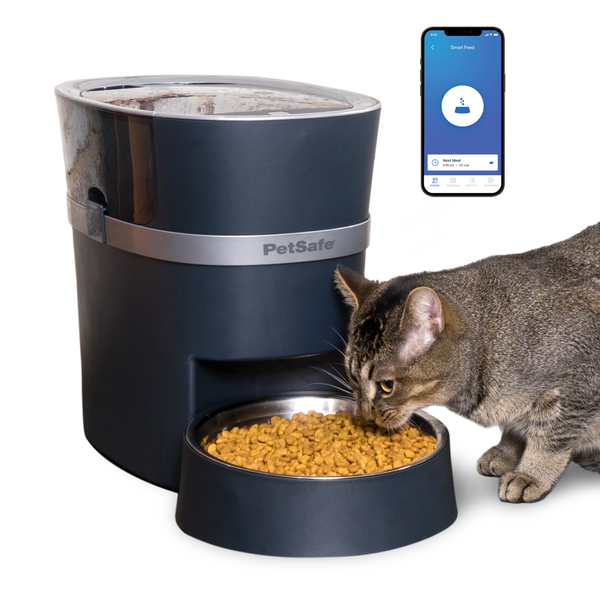
Dry/semi-moist · Wi-Fi · Slow-feed
Limitation: no canned wet food.
Check Price on Amazon →Best Wet-Food Timer
Cat Mate C500
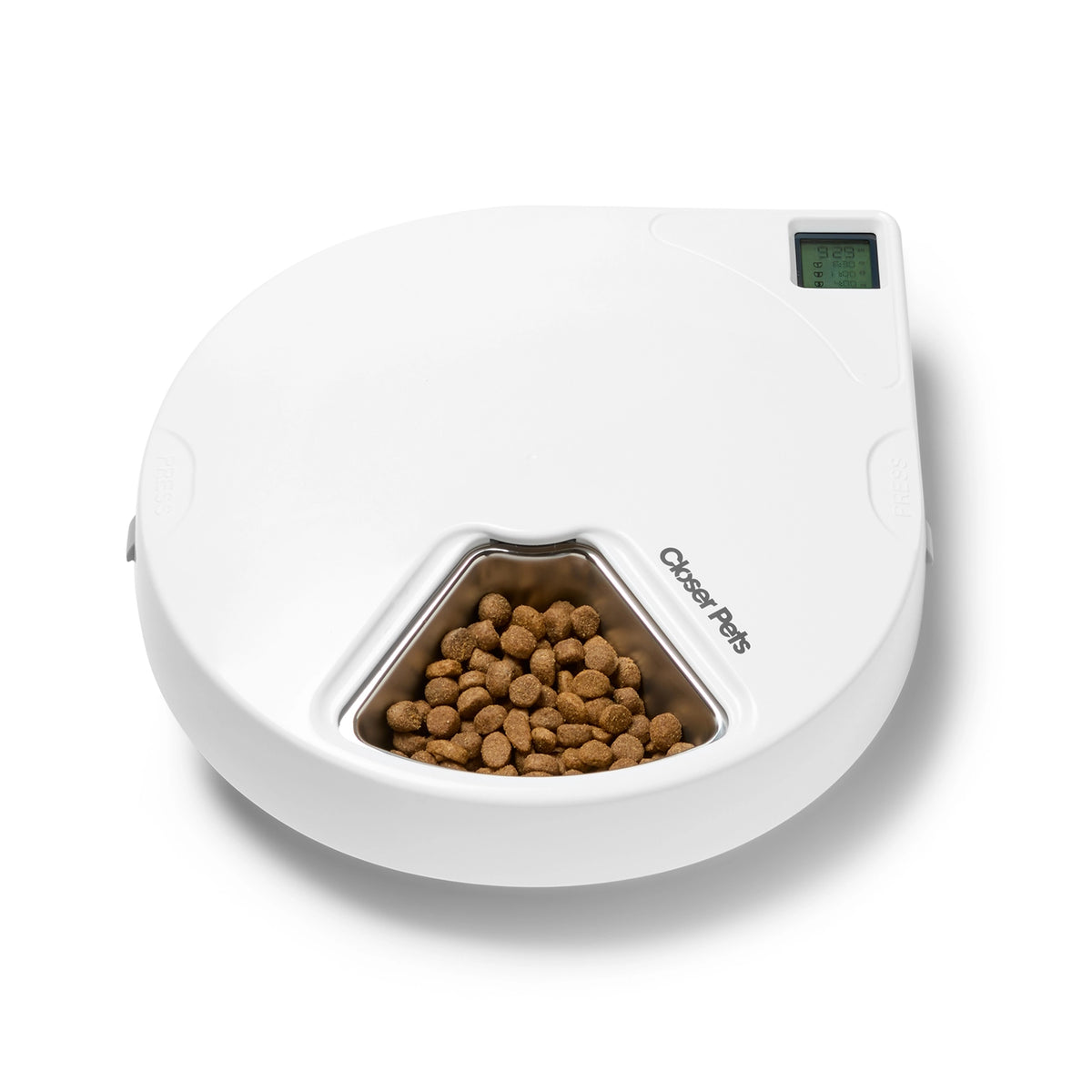
Wet/dry · No Wi-Fi · Ice packs
Limitation: passive cooling.
Check Price on Amazon →Paid Amazon US and PETLIBRO links. Confirm local availability, shipping, warranty, and current prices before buying.
Research-based comparison · See source verification dates below
Transparency: Research-based, not hands-on tested. Amazon and PETLIBRO links may earn us a commission at no extra cost to you; suitability guides our recommendations.
Amazon disclosure: As an Amazon Associate I earn from qualifying purchases.
Quick comparison
| Feeder | Best fit | Food | Key documented strength | Main limitation | Connectivity | Access / cat use case | Next step |
|---|---|---|---|---|---|---|---|
| PetSafe Smart Feed | Documented all-round starting point | Dry or semi-moist | Up to 12 meals; flexible portions; slow-feed option | Large footprint and app dependence for remote controls | Wi-Fi / app | Open bowl; scheduled portions | View option details |
| PETLIBRO Granary Smart Camera | Camera monitoring | Dry | 1080p wide-angle camera and two-way audio | Local versions differ; verify schedule limits | Wi-Fi / app | Open bowl; camera check-ins | View option details |
| Cat Mate C500 | Simple wet-food scheduling | Wet or dry | Five covered compartments and twin ice packs | Cooling is passive and time-limited | No Wi-Fi; digital timer | Rotating tray; portioned meals | View option details |
| Whisker Feeder-Robot | Premium high-capacity option | Dry or semi-moist | Large hopper and schedule continues offline | Premium, bulky, and battery is sold separately | Wi-Fi / app; saved schedule offline | Open bowl; large-capacity feeding | See model notes |
| PETLIBRO Polar | Promising chilled wet-food design | Wet | Three app-scheduled compartments with thermoelectric cooling | Manufacturer-stated holding temperature is warmer than refrigerator guidance | Wi-Fi / app | Covered wet-food trays | View option details |
| SureFeed Microchip Pet Feeder Connect | Stopping food stealing | Wet or dry | Opens only for an authorized microchip or collar tag | Controls access; it does not dispense scheduled meals | Hub required for app | Microchip / collar-tag access; different diets | View option details |
AUTOMATIC FEEDER DECISION CENTER
Compare, own, and fix your automatic feeder
Choose the path that matches the job in front of you. Compare models before buying, verify compatibility and ownership requirements, or diagnose a feeder that is not working as expected.
COMPARE
Choose the right feeder
OWN
Check fit and running requirements
FIX
Diagnose before replacing
Research standard: model-specific claims remain tied to an official source and verification date. Pending models are kept separate from documented matches.
Start with the question behind the purchase
Learn / Decide
Still deciding? Start with food, safety, and your cats’ routine.
Compare Products
Know what you need? Compare suitable models and their limitations.
Documented all-round starting point
1. PetSafe Smart Feed
The Smart Feed has the strongest documented balance for households feeding dry food on a schedule. PetSafe lists a 24-cup / 5,678 mL hopper, up to 12 meals a day, portions from 1/8 to 4 cups, a slow-feed mode that dispenses a larger meal over 15 minutes, low-food alerts, and dishwasher-safe food-contact parts. Confirm the model number and included accessories on the listing before ordering.
The optional D-cell battery backup is valuable because a power cut should not automatically become a missed meal. PetSafe also states that the feeder is intended for dry and semi-moist food, not canned food.
- Wide schedule and portion range
- Slow-feed mode for fast eaters
- Low-food alerts for checking refill needs
- Dishwasher-safe bowl, lid, and holder
- Requires 2.4 GHz Wi-Fi for connected functions
- Large hopper needs counter or floor space
- Backup batteries are optional, not included
- Not designed for wet canned food
Best for camera monitoring
2. PETLIBRO Granary Smart Camera Feeder
This camera-equipped dry-food model is PETLIBRO PLAF203. Its manufacturer lists a 5-liter hopper, 1080p camera with a 145-degree view, two-way audio, and scheduling for up to 10 meals per day, with 1–50 portions per meal. One portion is about 20 mL; the listed kibble range is 2–15 mm. Confirm the model code and bowl version on the listing before ordering.
Power and video costs: Three D-cell batteries can keep the saved feeding schedule running during a power cut, but camera, Wi-Fi, recording, and other connected functions are disabled in battery-only mode. Cloud video storage requires a paid Video Cloud plan; local recordings need a separately purchased microSD card.
- Camera offers visual confirmation at the bowl
- Two-way audio and app notifications
- 5-liter dry-food capacity
- App scheduling for dry-food meals
- Camera adds privacy and network-security considerations
- Dry food only
- Battery-only mode keeps dispensing but disables the camera and Wi-Fi
- Cloud video storage is paid; microSD local storage is a separate purchase
- A camera cannot confirm how much a specific cat ate in a multi-cat home
Best simple timer for wet food
3. Closer Pets Cat Mate C500
The C500 takes a deliberately low-tech approach: five covered food compartments rotate on a digital schedule, with one meal available immediately and four future meals. Closer Pets lists compatibility with wet or dry food, twin ice packs, AA-battery operation, dishwasher-safe components, and a tamper-resistant design.
This is a better fit than a hopper feeder for portioned wet meals, but ice packs do not make the tray equivalent to a refrigerator. Room temperature, food temperature, and the time until each compartment opens still matter.
- No Wi-Fi or account required
- Works with wet and dry food
- Five separate compartments
- Battery operation is useful during outages
- Only four future opening times per loading
- Passive cooling has limits
- Does not identify which cat is eating
- Capacity and included bowls can differ by regional variant
Premium high-capacity option
4. Whisker Feeder-Robot
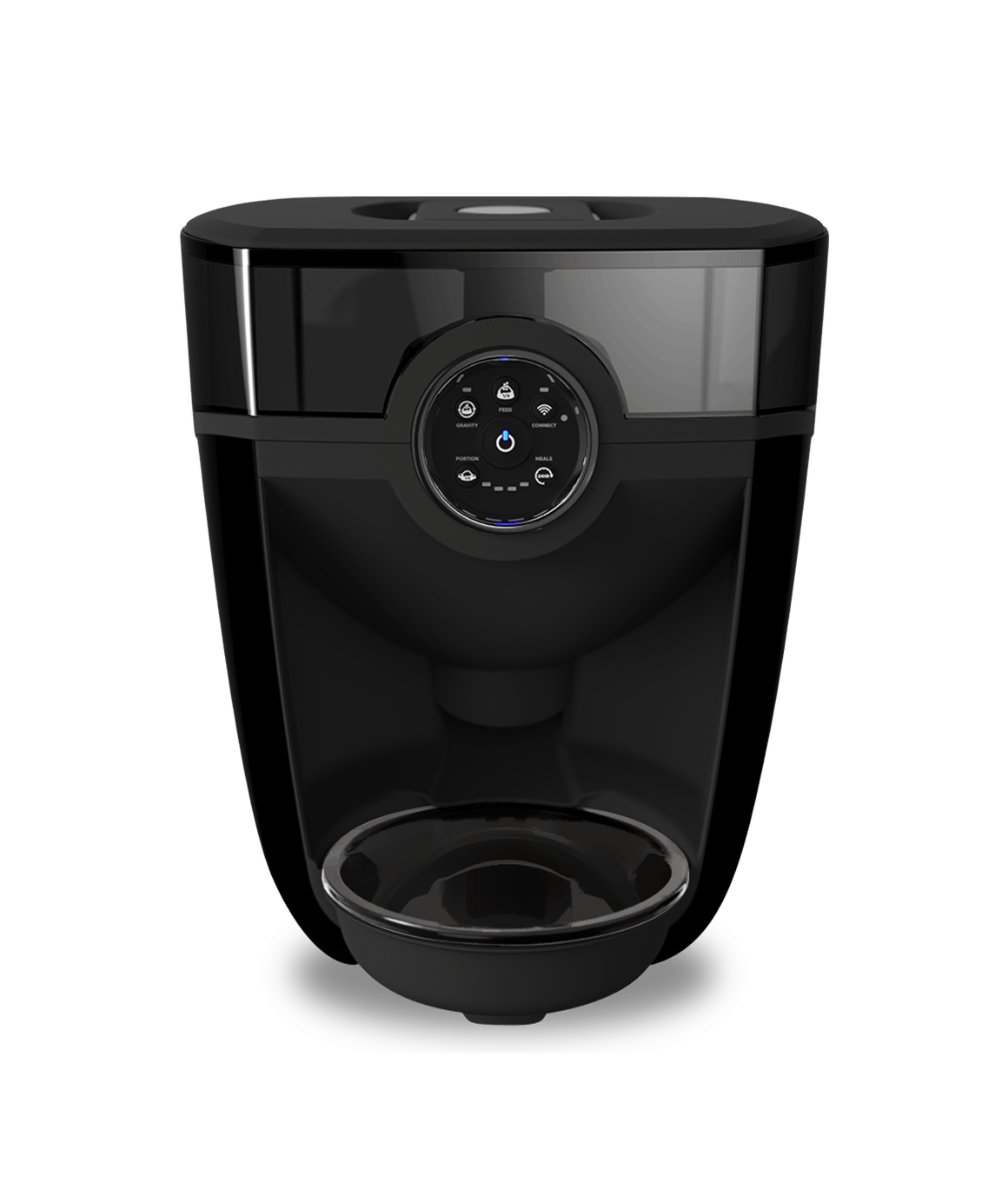
Whisker lists a 32-cup hopper, up to eight scheduled meals, an anti-jam system, and support for dry or semi-moist food. Its most useful resilience feature is local scheduling: after a schedule is saved, Whisker says meals continue to dispense even if Wi-Fi goes down.
This model makes the most sense for buyers who value capacity and connected monitoring enough to accept the footprint and premium positioning. The rechargeable backup battery is sold separately. Whisker offers free and paid Whisker+ app tiers; confirm which insights and notification features are included in the plan available in your region.
- Largest hopper in this comparison
- Saved schedule continues without Wi-Fi
- Anti-jam design
- Up to eight scheduled meals
- Bulky for a small apartment
- Battery backup costs extra
- Not intended for canned wet food
- Check shipping eligibility and warranty coverage for your location
An exact Amazon listing has not been verified for this model.
Promising chilled wet-food option—with a caveat
5. PETLIBRO Polar Wet Food Feeder
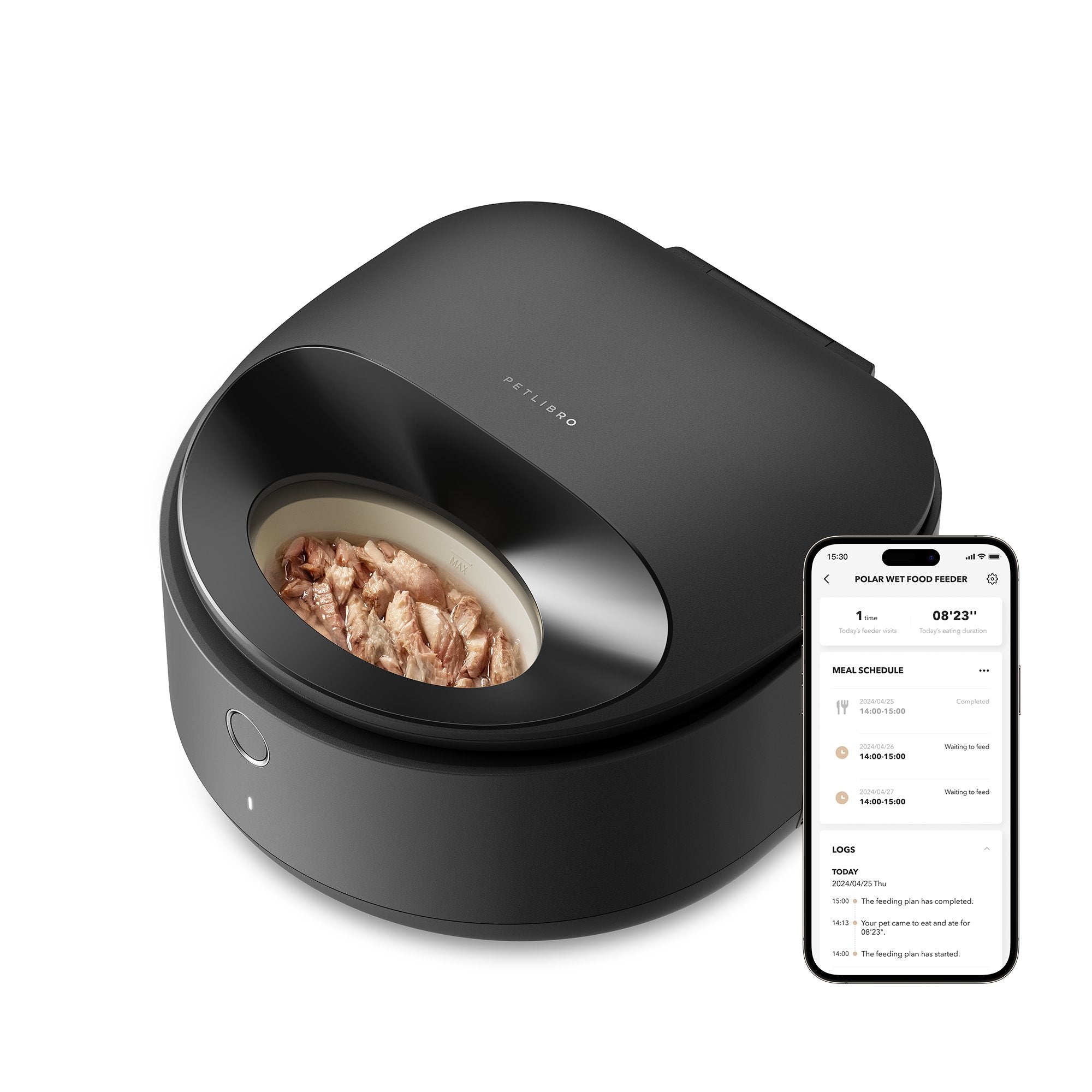
The Amazon option linked here is the PLAF109 / 2024 V1 version with a stainless steel bowl; confirm the selected version and included bowls before buying. The Polar uses thermoelectric cooling and three covered compartments for app-scheduled wet meals. PETLIBRO lists 200 mL / 6.76 oz per tray and scheduling for up to three days. The company also says cooling pauses about 30 minutes before a meal so the food can warm slightly.
Why this is not our default wet-food recommendation: PETLIBRO’s published laboratory example describes approximately 12°C / 54°F inside the tray at 25°C / 77°F ambient temperature. The FDA’s household refrigerator guidance is 4.4°C / 40°F or below. Those are not equivalent conditions, so we would want independent food-temperature testing in real homes before treating this as refrigerator-like storage for highly perishable food.
For the model details and cooling limitations, read our PETLIBRO Polar wet-food feeder review.
- Purpose-built for wet meals
- Active cooling without ice packs
- Three individually scheduled compartments
- App records and schedule controls
- Published tray temperature is above refrigerator guidance
- Only three meals per loading
- Cooling pauses before serving
- Requires careful daily cleaning and conservative food handling
Special Alternative — Food Stealing / Different Diets
6. SureFeed Microchip Pet Feeder Connect
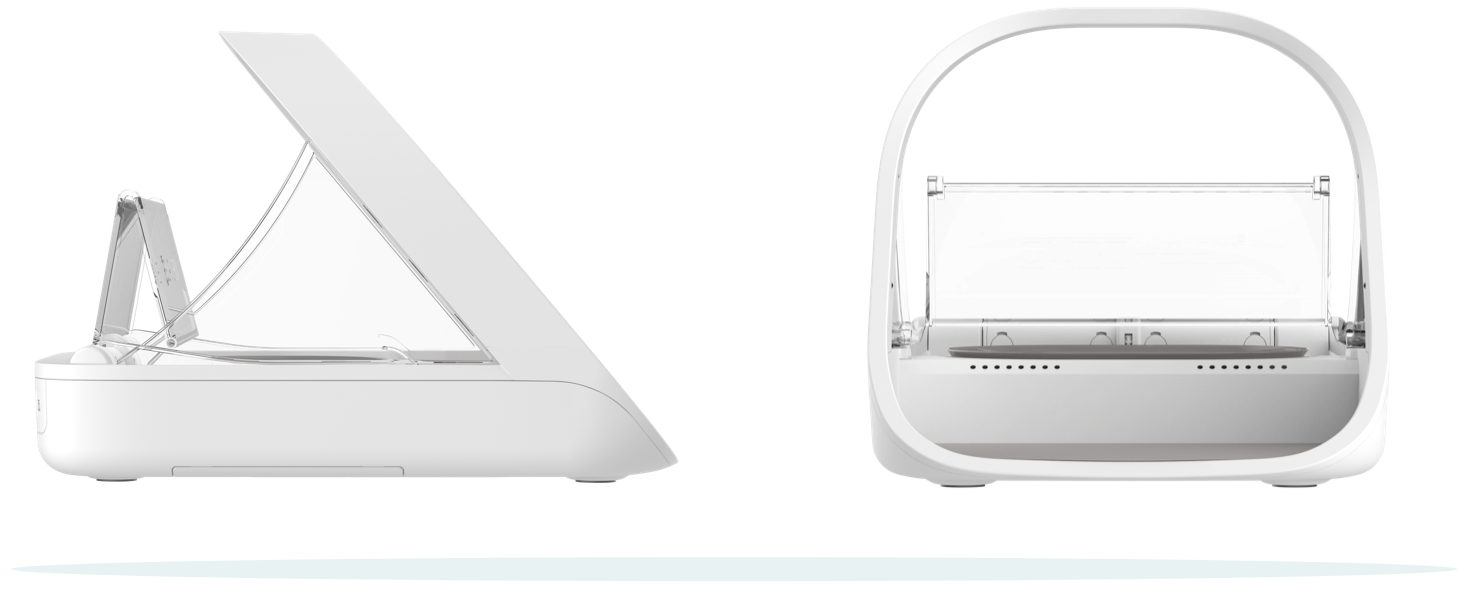
The SureFeed solves a different problem. It opens for an authorized microchip or collar tag, helping prevent one cat from stealing another cat’s meal. Sure Petcare lists a 400 mL bowl, compatibility with wet or dry food, integrated scales with one-gram guidance, and app monitoring through the required Hub.
It is not a traditional timed dispenser and does not portion multiple future meals from a hopper. Choose it when identity-based access matters more than unattended scheduling—especially when cats eat different diets.
- Microchip or collar-tag access
- Useful for prescription or different household diets
- Integrated weighing guidance
- Works with wet or dry food
- Does not dispense scheduled meals
- Hub is required for connected features
- Some cats need a gradual training period
- One feeder is normally needed for each protected eater
Food-safety and reliability checklist
Before relying on a saved schedule, read what happens when an automatic feeder loses Wi-Fi, cloud access or power. These are different failure conditions; verify the exact model and keep a manual feeding backup.
- Do not assume “cooled” means refrigerator-cold. Follow the food manufacturer’s storage directions and use a conservative window for wet food.
- Wash and fully dry the bowl and food-contact parts routinely. The FDA advises washing pet-food bowls and scooping utensils after each use.
- Keep dry food in its original bag when placing it inside a clean container, and store it in a cool, dry location.
- Test the feeder for several days while you are home before depending on it.
- Keep fresh water separate from the feeder and maintain a backup plan for outages, jams, dead batteries, or a network failure.
If your cat has diabetes, kidney disease, food allergies, obesity, a history of refusing food, or another medical condition, ask your veterinarian to approve the meal plan and feeding intervals.
Which type should you choose?
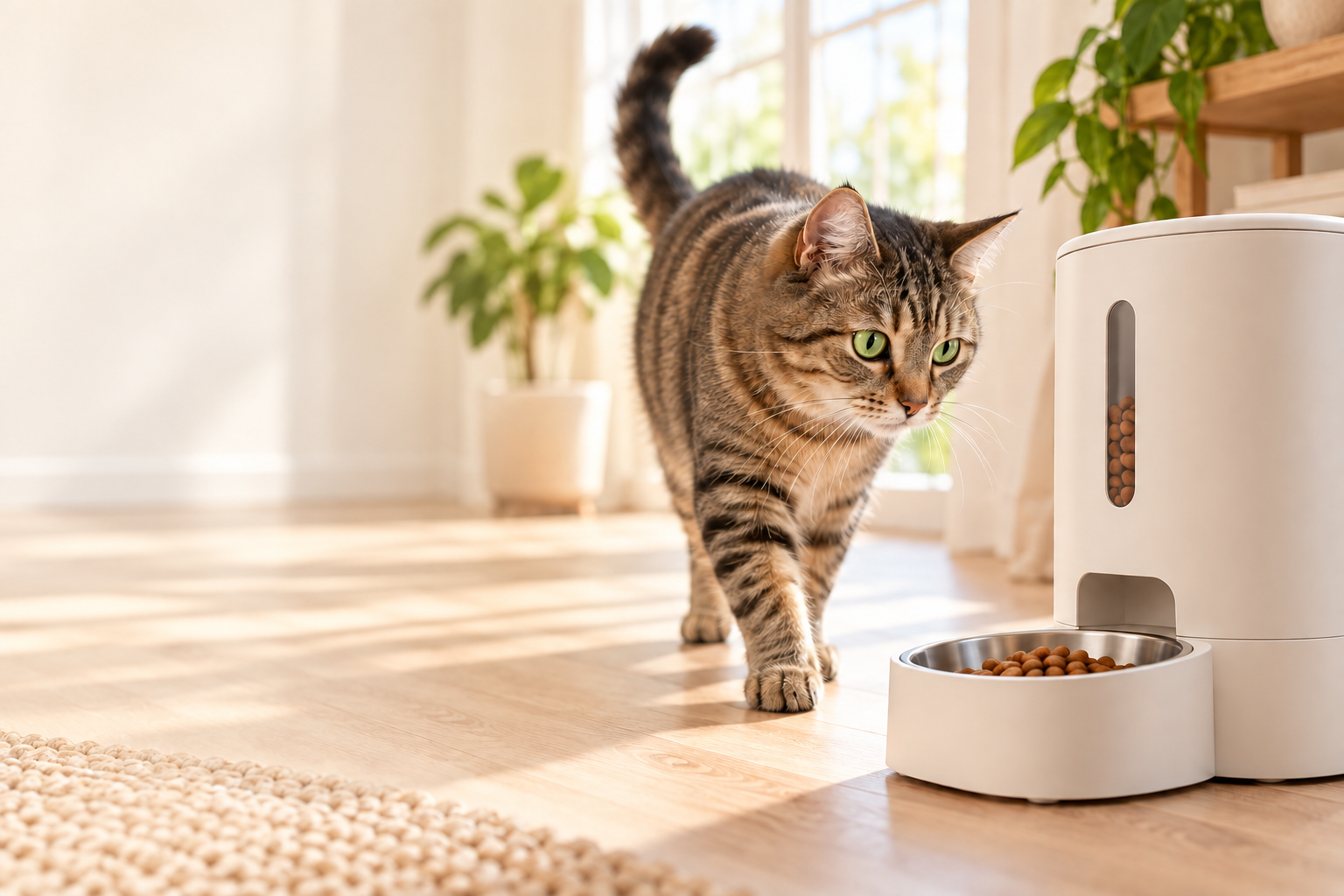
For dry food and precise routines
Start with a motorized hopper feeder that documents the smallest portion, maximum meals, food-size limits, jam handling, and backup power. Measure the actual dispensed weight several times—“one portion” is not a universal unit across brands or kibble shapes.
For wet food
A rotating tray with ice packs is simple; active cooling is more convenient but should be judged by actual food temperature, not the word “refrigerated.” Load cold food, minimize time at room temperature, and clean the tray every day. Compare the four relevant designs in our guide to the best automatic feeders for wet food.
For two or more cats
A single hopper can create competition and cannot prove which cat ate. The American Association of Feline Practitioners recommends separate feeding resources with visual separation where possible. If food stealing is the main issue, microchip access or separate rooms may solve more than a camera does. See our dedicated comparison of automatic feeder setups for two cats.
For travel
An automatic feeder is a scheduling tool, not a substitute for a responsible person checking the cat. Someone should still monitor food, water, litter, behavior, and mechanical failures.
Frequently asked questions
Are automatic feeders good for cats?
They can support consistent portions and several small meals, which may suit normal feline feeding behavior. They are less helpful when the mechanism is unreliable, portions are not measured, or multiple cats compete for one bowl. Read our full guide to benefits, limits, and safe use.
Can automatic feeders hold wet cat food?
Only models designed for wet food should be used. Ice packs slow warming; thermoelectric systems may actively cool the tray. Neither should be assumed to match a refrigerator unless temperatures have been verified under your actual conditions. See our wet-food time and temperature guide before extending a schedule.
How many meals should an indoor cat eat?
There is no universal number. Age, body condition, health, diet, and total daily calories matter. Several small meals may provide enrichment and fit a cat’s natural pattern, but your veterinarian should set the plan for a cat with medical or weight concerns.
Can two cats share one automatic feeder?
They can, but it is hard to know who ate what and one cat may guard the bowl. Separate stations or microchip-controlled access are usually easier to monitor. Our guide to when two cats can share an automatic feeder explains the warning signs.
Will a smart feeder work when the internet is down?
It depends on the model. Some keep a locally saved schedule, while remote commands and alerts stop. Verify this in the manual and test it yourself before relying on the feeder.
Sources and verification
- US FDA: Proper Storage of Pet Food & Treats
- American Association of Feline Practitioners: How to Feed a Cat
- PetSafe Smart Feed, 2nd generation (PFD00-16828): official product specifications and manual and app support.
- PETLIBRO Granary Camera (PLAF203): official product specifications and official camera and local-recording guide.
- Closer Pets Cat Mate C500: official stainless-bowl model page and official C500 support.
- Whisker Feeder-Robot: official product specifications and app subscription terms.
- PETLIBRO Polar Wet Food Feeder (PLAF109): official product specifications and published temperature information.
- SureFeed Microchip Pet Feeder Connect: official product specifications and Hub, app, and warranty information.
- Product model specifications rechecked against manufacturer pages: September 24, 2026. Amazon destination links were last checked September 12, 2026; that does not verify today’s stock, seller, price, or included accessories.
Editorial note: product specifications and market availability can change. We re-check the linked sources during substantive updates. For the diet itself, see our research-led cat food comparison.
Set up and check your feeder
Before relying on a new dispenser, use our automatic feeder portion converter with a portion weight measured using your actual kibble. If a meal does not arrive, follow the food dispensing troubleshooting checklist to separate power, schedule and food-path problems.
How we researched these feeders
For this update, we checked the model-specific manufacturer product pages and available support documentation linked below. We compared food compatibility, schedule and portion controls, capacity, app and Wi-Fi dependence, what continues during power or internet loss, camera storage and subscription needs, cleaning, access control, and disclosed support or warranty details. Regional models and retailer bundles can differ, so confirm the model number, included parts, and seller terms before checkout.
This is a research-based comparison, not a hands-on test. We did not independently measure dispensing accuracy, jam rates, cooling temperatures, battery life, noise, or long-term reliability. Manufacturer claims are identified as such; no test scores or personal-use claims are implied.
We did not assign decorative scores. Each pick matches a documented feature set to a household need. Prices are excluded because they change by retailer, seller, country, and promotion.