
Skip to content

Best PETLIBRO Products for Indoor Cats: Choose by Problem, Not Hype

Disclosure: MeowBay may earn a commission from clearly identified affiliate links, at no extra cost to you. Ordinary source and manufacturer links are not paid, and editorial conclusions remain independent.
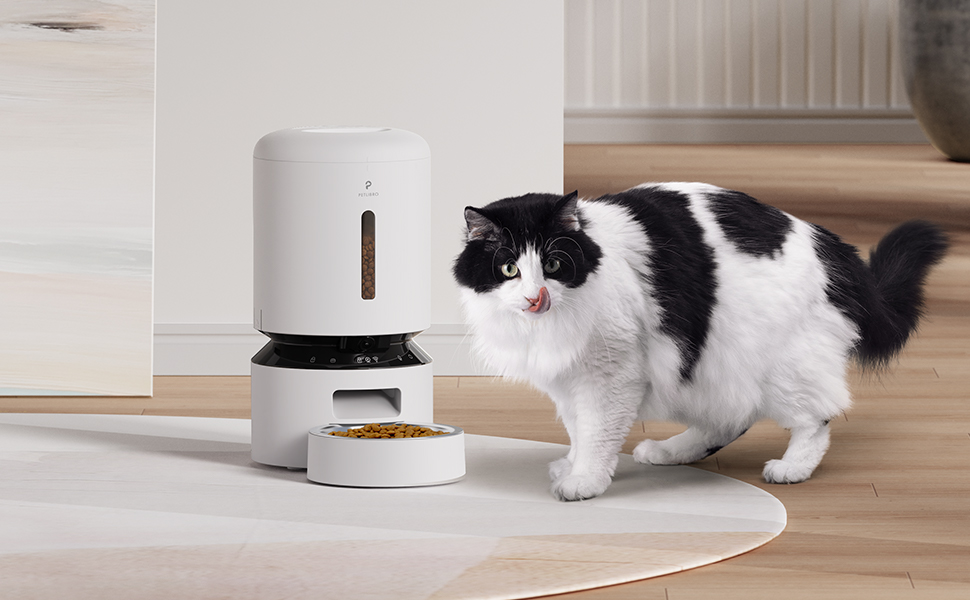
PETLIBRO Granary Smart Camera Feeder beside a black-and-white cat

Short answer: PETLIBRO does not have one universally “best” product. The strongest purchase is the one that solves a costly or repetitive household problem without adding a worse trade-off. Start with One RFID for controlled dry-food access, Polar for wet-meal scheduling with cooling limits, or Granary 2 for bowl-weight records. These solve different problems; their order is not a performance ranking.

Best PETLIBRO fits by problem

Food stealing between cats

Best fit: One RFID. The lid responds to one PETLIBRO collar tag. It is useful for separated dry-food access, but it does not read implanted microchips.

Check PETLIBRO One RFID Paid link

Wet food while you are away

Best fit: Polar. It schedules wet meals with active cooling. The advertised three-day window is a manufacturer claim, not independent food-safety evidence. Read our Polar review and cooling limitations before deciding.

Check PETLIBRO Polar Paid link

Bowl-weight tracking

Best fit: Granary 2. Its bowl scale produces records of food dispensed and remaining. Food leaving a bowl is not independent proof of swallowing or of which cat ate. Choose Vision only when visual records justify the extra cost.

Compare Granary 2 models Paid link

Less daily scooping

Best fit: Luma. Automatic scooping, an enclosed drawer and monitoring address a high-friction chore. It is large, expensive and still needs cleaning and consumables.

Check PETLIBRO Luma Paid link

Hydration trends and reminders

Best fit: Dockstream 2. The app tracks drinking patterns and maintenance reminders. Filters and hidden water-path cleaning remain part of ownership.

Check Dockstream 2 Paid link

Remote cat check-ins

Best fit: Scout. Pet tracking, night modes and a physical privacy cover make it useful for remote viewing. Cloud history and advanced AI can add a recurring fee.

Check PETLIBRO Scout Paid link

Compare PETLIBRO products by household need

Product Best for Main objection
One RFID Dry-food stealing and separated access Collar tag; one feeder per protected cat
Polar Scheduled wet meals with active cooling Only three meals; temperature limits
Granary 2 Portion and bowl-weight records Dry food only; no access control
Luma Less scooping and better odor containment Price, footprint and recurring supplies
Granary 2 Vision Duo Two-bowl intake records with video Does not stop bowl swapping
Dockstream 2 Hydration trends and refill reminders Filters and routine washing
Dockstream RFID Individual hydration data for several cats Requires proprietary collar tags
Scout Remote check-ins and pet activity clips Cloud dependence and subscription cost

Availability rechecked November 2, 2026: The official US series selector reviewed lists Granary 2, Vision and Vision Duo and also links a Granary 2 X manual. A manual link does not confirm that X is orderable in your country. Verify the exact selected model and delivery terms directly; do not substitute a monitoring model when physical diet protection is required.

Three checks before clicking buy

  1. Confirm the exact problem. Monitoring a meal is not the same as preventing food theft.
  2. Price the first year. Add tags, filters, desiccants, liners, cloud plans and any second device your setup needs.
  3. Check compatibility. Food type, kibble size, cat weight, floor surface, Wi-Fi, collar tolerance and available space can change the right answer.

How MeowBay chose

This guide groups products by the household task they address and states the main compromise beside each option. It is not a cross-category performance ranking: a camera, fountain and feeder cannot be scored as interchangeable solutions. Specifications remain manufacturer-reported; MeowBay has not hands-on tested these products.

Buy one solution before building an ecosystem

Start with the unmet job and compare the lowest-complexity way to do it. A matching app or product family is useful only when its functions improve the routine.

Decision or record How to apply it
Meal timing Compare a measured manual routine, a timed feeder and the food format each supports.
Diet protection Compare separate meals with documented identity-controlled access.
Remote observation Compare the view, saved evidence and physical caregiver response you actually need.

Choose the next device after the first problem is understood. Keep a list of replacement parts, subscriptions and fallback arrangements so a connected household does not become dependent on one forgotten consumable or account.

Use a problem brief before entering the ecosystem

Start with the repeated task or uncertainty that costs your household time. Write what happens now, what must improve and how you would verify improvement. This prevents a camera, fountain or feeder being chosen merely because it shares the same app.

Separate an action from evidence about that action

A scheduled feeder releases food. A bowl scale estimates a quantity change. A camera records a view. Selective access restricts an opening under the documented identifier rules. These functions can complement one another, but do not become interchangeable because they appear on one dashboard.

If the food is being stolen, more records may document the problem without preventing it. If a meal is mistimed, an access-controlled lid alone may not provide the schedule needed. Name the missing job before comparing model names.

Work through three household briefs

Brief 1: one cat loses its dry-food leftovers

First establish appropriate individual food and access arrangements. Observe whether the faster cat crosses into the other bowl or blocks the route. A protected station may be useful when the required identifier and moving cover suit the cat and the household.

Compare a supported selective-access option with suitable supervised separate feeding. Include the number of protected diets, training, missing-identifier fallback and floor space. Do not assume one protected device creates several independent protected stations.

Success means the intended cat can obtain its appropriate food comfortably, not merely that pairing succeeds. Keep a practical manual arrangement while the new routine is being established or support resolves an access fault.

Brief 2: the owner wants scheduled wet meals

Identify the required meal timing, food and handling instructions before considering the equipment. A cooled tray and a dry hopper are different categories. A manufacturer’s cooling duration is not a universal food-safety guarantee across all foods and room conditions.

Check the exact device manual, supported conditions, cleaning and the caregiver response to a missed rotation or power problem. Preserve the individual feeding plan, especially when treatment or a medical diet is involved.

Do not buy the largest advertised unattended window as a substitute for visits. Someone still needs to check the cat, actual food, water, litter and equipment. The useful purchase supports that care rather than replacing it.

Brief 3: the owner needs remote context

Decide which event a camera must show: approach to a food bowl, a room route or a general check-in. Position the supported camera for that view and review ordinary light and night conditions. A sharp image of the wrong corner does not answer the household question.

Live viewing, an alert and saved replay are separate requirements. Verify the current regional feature access and any service needed. A clip can prompt a caregiver to act, but cannot provide the physical care itself.

Keep a real response plan. If the view suggests a missed meal or another concern, who can inspect the home? A cloud subscription without a person able to respond may add information without resolving the underlying risk.

Build the first-year budget by job

Job Costs to establish
Protected feeding Number of stations, supported identifiers, compatible food and any chosen service.
Scheduled feeding Exact device, power backup, recurring permitted supplies and manual fallback.
Water access Compatible filters, serviceable parts, cleaning and independent sources.
Remote evidence Hardware, saved-history requirement, device coverage and renewal terms.
Reduced scooping Supported installation, litter, bags, maintenance and traditional backup.

Use actual delivered quotations and count annual subscriptions once. A promotional first year is not the renewal price. A bundle saving is meaningful only when its contents serve a requirement you actually have.

A fictional ecosystem calculation

Suppose two required stations cost $150 each and selected recurring supplies total $48 for the year. Those inputs create $348 of planned first-year spending before other costs. Adding an optional $60 service makes $408. These figures illustrate accounting, not current PETLIBRO prices.

The optional service should have a named purpose. If it does not change a useful decision or solve a record requirement, leaving it out may be reasonable. Do not interpret the lower total as proof that the remaining setup meets every need.

Check dependencies across several devices

Keep model identities, compatible supplies and current manuals in one household record. Similar-looking consumables or power arrangements should not be treated as interchangeable. Verify the precise local and offline behavior of each device.

A shared account may simplify management but can also leave a caregiver dependent on access they do not have. Keep ordinary care instructions usable without reinstalling software. Follow appropriate account security and sharing options rather than posting private credentials in a care note.

Make maintenance capacity part of the decision

Count the water paths, food-contact parts, waste areas and small components you will maintain. Purchasing several devices at once can create several unfamiliar routines simultaneously. Establish one supported arrangement before adding another optional device.

If the first purchase does not solve the original job, reassess before expanding the ecosystem. Another matching device may collect more evidence while leaving the same access, cleaning or caregiver problem unresolved.

A practical purchase order

Address inaccessible essentials and health concerns first. Next, choose the lowest-complexity supported solution for the repeated task. Verify actual use, maintenance and backup. Add optional tracking only when you can say what information it contributes.

This approach may lead to PETLIBRO equipment, a different supported product or a simpler manual arrangement. The brand is a candidate supplier, not the objective. The useful result is a routine that fits the individual cats and remains manageable on an ordinary imperfect day.

A one-page purchase memo you can reuse

Write five lines: the problem, the non-negotiable requirement, the proposed model, the unresolved question and the fallback. Keep the actual label and current manual with it. This is short enough to review before checkout and clear enough for another caregiver to understand.

An illustrative completed memo

Problem: the faster cat repeatedly reaches the slower cat’s remaining dry food. Requirement: appropriate individual access under the established diet plan. Candidate: a supported selective-access station, provided its required identifier is suitable. Unknown: comfortable use and what happens when the other cat interferes. Fallback: appropriate supervised separate meals.

The memo makes clear why a camera-only upgrade does not complete the job. It can document interference without providing the required barrier. It also shows why a paired identifier is only one milestone rather than the final acceptance result.

Review the memo after installation

Replace unknowns only with actual observations or documented support answers. “Pairing completed” should not become “all meals protected.” Keep the distinction between output, access and consumption visible.

If the original job remains unresolved, improve the practical arrangement before buying another matching device. If it is resolved, the next purchase can address a genuinely different need rather than an assumption that every task becomes better inside one ecosystem.

Sources checked

One RFID specifications, Polar specifications, Granary 2 series details, Luma information, Dockstream 2 details and Scout details. Checked August 25, 2026. Prices, stock and terms can change.

Representative portrait for Maya Bennett

Maya Bennett is MeowBay’s Cat Product Research Editor and is responsible for this research-led article. She evaluates manufacturer documentation, household fit, cleaning, and product limitations. This article does not replace advice from your veterinarian.

2 Comments on “Best PETLIBRO Products for Indoor Cats: Choose by Problem, Not Hype”

Comments are closed.